Are you going to Scarborough Fair?
Parsley, sage, rosemary and thyme.
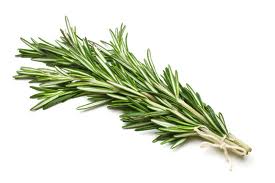
From biblical times and the Roman Empire to a folk song of the 1960s, rosemary has been a popular herb that appears in many myths, literature, customs and songs. The name “rosemar” suggests the plant might at one time have been known as the “rose of Mary” an allusion to the Virgin Mary. However, the name actually comes from the Latin word rosmarinus, meaning “dew of the sea,” suggesting its native origin around the Mediterranean Sea.
Rosemary is an evergreen plant (Rosemarinus officinalis) belonging to the mint family. It blooms clusters of small, light blue flowers and grows leaves that yield a fragrant oil used in perfumes and cooking.
Greek students often wore rosemary in their hair at exam time to assist their memories. Today, rosemary is most commonly recognized as a pungent herb used to season meats, vegetables and bread and to scent potpourris and bath fragrances.
Rosemary has been a popular plant and decoration during the Christmas season for centuries. In the Middle Ages, it was customary to spread rosemary on the floor so that when people stepped on it, a pleasant pungent fragrance wafted through the house. It is often placed at the altar to attract special blessings and to guarantee protection against evil spirits.
A legend explains the plant's association with the Virgin Mary. When she placed the swaddling clothes of the Christ Child over it on the night of His birth, the plant received the gift of its memorable fragrance. The rosemary bush also provided shelter for Mary during the Holy Family's flight into Egypt. When she threw her robe over the bush to create a hiding place, its white flowers changed into its familiar blue flowers, the color of her robe. Even today, it is a popular custom in Mediterranean villages to spread linens over rosemary bushes to dry and perfume them.
Rosemary is a popular plant for love and romance customs, culminating with special traditions at wedding celebrations. In medieval times, young maidens slipped sprigs of rosemary under their pillows to attract their true love in their dreams. Ancient Romans considered it an aphrodisiac. A spring of rosemary was tucked in bridal bouquets to symbolize happiness and was given by the bride to her new husband to ensure his fidelity to her. It was also added to the wedding cup shared by the wedding guests.
The pungent and poetic rosemary is a plant that honors both beginnings and endings. In times past, funeral mourners carried spring of rosemary as tokens of remembrance for the deceased and later planted it near the grave as a promise of eternal faithfulness.
Shakespeare’s immortal lines in Hamlet remind us to honor rosemary as a symbol of eternal remembrance:
There’s rosemary, that’s for remembrance
Pray love, remember. . .
Adapted from Decking the Halls - The folklore and Traditions of Christmas Plants - http://www.authorsden.com/visit/viewwork.asp?id=50119