Once upon a time, Memorial Day was a day set aside to remember our country’s veterans. It was observed as a holiday – or “holy day” from the Old English meaning - to set aside usual activities or business to commemorate an event or person. Communities, especially rural ones, decorated the graves of veterans with colorful spring flowers, in particular peonies and roses. Hence the original name, Decoration Day.
The first Memorial Day commemoration dates back to the end of the Civil War. In April 1865, former slaves gathered at a Confederate prison in Charleston, South Carolina, which had previously been a race track. More than 250 Union soldiers died and were buried in a mass grave there. To honor them, the slaves dug up the mass grave and reburied each soldier in an individual, marked grave. They surrounded the new cemetery with a fence and built an archway with the tribute, “Martyrs of the Race Course.”
On May 1 of that year, thousands of Charleston residents, from former slaves to white missionaries, children and Union troops marched around the cemetery, singing spirituals and carrying armloads of spring roses. Black ministers read from the scriptures, and a children’s choir sang.
Three years later in 1868, General John A. Logan of the Grand Army of the Republic, composed of former soldiers and sailors, proclaimed May 30 to be Decoration Day, “for the purpose of strewing with flowers or otherwise decorating the graves of comrades who died in defense of their country during the late rebellion.” General James Garfield spoke at Arlington National Cemetery where attendees decorated the graves of over 20,000 Union and Confederate soldiers. This tradition continues today with comments by the President or Vice President, placing a wreath at the Tomb of the Unknown Soldier and honoring each of the 260,000 soldiers buried there with an individual flag at his grave.
Because of its origin to honor Union soldiers, Southern states were slow to participate in the annual observance, choosing instead to honor Confederate soldiers on a separate day: April 27 in Alabama, Florida, Georgia and Mississippi; May 10 in South Carolina; June 3 in Louisiana and Tennessee and January 19 in Texas.
Southern states joined the national observance after World War I, when the holiday was expanded to include veterans of all wars. The name was also changed from Decoration Day to Memorial Day and designated as May 30. In 1971, the date was officially changed to the last Monday in May to create a three-day holiday weekend.
Through the years, the sacredness of the day has dimmed, replaced by a celebration of summer’s arrival, the end of school and retail sales events to lure shoppers to part with their cash. It’s become a time for picnics, ball games and the great race – the Indy 500.
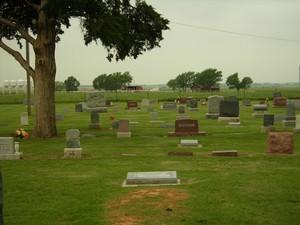
Rural America still keeps the traditions of the original Memorial Day alive with elaborate and colorful grave decorations, now mostly plastic and silk flowers and expanded to include all those who have passed, veteran or not. American flags are placed at each veteran’s grave to honor their service. Some communities still hold services with speeches, scripture readings and songs at the cemetery. It’s a time to reconnect with family and friends and to share memories and stories.
In 2000, the National Remembrance Act was passed to encourage all Americans to “voluntarily and informally observe in their own way a moment of remembrance and respect, pausing from whatever they are doing for a moment of silence or listening to “Taps.” A moment of time is the least we can offer to honor the service and sacrifice of our veterans.
From 145 years ago, General Logan’s words echo to us as a solemn reminder to the importance of memory and memorials: “Let us, then, at the time appointed gather around their sacred remains and garland the passionless mounds above them with the choicest flowers of spring-time; let us raise above them the dear old flag they saved from dishonor; let us in this solemn presence renew our pledges to aid and assist those whom they have left among us a sacred charge upon a nation’s gratitude, the soldier’s and sailor’s widow and orphan.”
Let us always remember.
Information referenced from:
A Brief History of Memorial Day by Laura Fitzpatrick - http://www.time.com/time/nation/article/0,8599,1900454,00.html
6 Things to Know about Our Country’s Memorial Day Observance by Kelly Kazec - http://www.al.com/living/index.ssf/2013/05/6_things_to_know_about_our_cou.html
Memorial Day History from the U.S. Department of Veterans Affairs - http://www.va.gov/opa/speceven/memday/history.asp





Thank you for sharing the history that I did not fully know. During those times my grandmother would forbid my father from playing “taps” on his bugle because it reminded her of so many of her friends and family who lost their lives in world wars one and two. I still have that bugle hanging from my fireplace with no one to play Taps on It.
Ron
KOOL--- I Am Veteran As My Close Friend
Tom Vietnam Veteran...
Until It Affects Wallet$ Of Millions
So Called Caring Americans Or Their
Children Raped,Molested
Sodomized Death By Pervert Child Molesters
Only Then: Listen To Them Scream...
Otherwise They Could Not Give
Care Flying F--k Less...
Etal: Visit My Web Site (Bottom)Home Page;
http://www.MeanMother.Com
TRASK...