This paper is a comparison of what I learned about the ancient Greek Philosophers and the Roman master of public speaking Cicero from my Humanities I Course. Admittedly, I learned more about the Greek Philosophers that Cicero, but I have learned to crave an understanding of Cicero and hope to quench that hunger soon. Still I have learned enough to make a fair comparison and finally in the last paragraph I will relate these teachings to modern day life in the United States. While these principles or natural laws do not know man’s political boundaries I am very familiar with the U.S. and would not want to assume that other societies relate the same way, without knowing.
The Greeks really instuitionalized philosophy and original thought. Additionally they were some of the first dynamic speakers. Their obsession with perfection and their understanding that even if they could not influence or change natural laws or principles, they could consider and study them revolutionized the power of humans to think. They learned and taught that questions were the route to achieve wisdom and that wisdom is as important as physical perfection. It is very interesting that sophist charged for knowledge as intellectual property and Socrates as I understand it gave knowledge to anyone who would listen (what would now be called public domain). I will never forget that until I admit that I know nothing, I cannot be wise. That principle is every bit as pertinent today as it was then. Plato was very beneficial to me because of his “Allegory of the Cave”. I still wonder if mankind has really broke the chains at all, what if we are still looking at shadows and interpreting. Remember we must admit that we do not know what is behind the wall before we can hope to understand or accept the wisdom that is available. What if because we think we know we are at the fire and already released from our chains we are still now not open to what lay beyond the next turn? I could continue on with this indefinitely, when we talk about the great breakwiths of society or the great advances of society were they all not due directly to someone who either knew not the traditional method or someone who suspended their experience long enough to say maybe I do not understand.Aristotle, wow I cannot explain how important it was for this guy to follow Plato and Socrates, The theories captured by these former public speakers had not test they remained abstract and difficult to apply in life. Aristotle may have been the first scientist; he tested and proved or disproved these theories use what is now known as the scientific approach. One of the biggest effects of his astuteness is that he could duplicate his experiments.Science without duplication is equivalent to philosophy without these gentlemen. I shudder to think life now would be like if these Greek speakers and their teachings had never been discovered.
The Romans most notable philosopher and public speaker was Cicero. I feel as if I know nothing about him at this point and I will learn more about his contributions. Based solely on the imitation of Cicero still evident in public speaking today and the fact that even the founding fathers of this country considered him the master of speech, there can bee no doubt that Cicero revolutionized delivery of logical thought. In essence he created a duplication method of speaking concentrating not on what was said but on how. How can a speaker get great masses of people to listen and to remember what was said. Indeed even Hitler was a student of Cicero, one could not easily remember when Hitler didn’t have his hand out to hush a crowd and show superiority. Even the salute of the Nazi forces is more like this, than a standard salute.
These two societies are the seed of modern education. They are different examples in that the Greeks were more concerned with philosophy that public speaking. I wonder if Cicero studied the Greek philosophers and based on his understanding of them and his practice public speaking developed his orations.
There are definite ties to modern society. I am currently a facilitator of Naval Leadership, Covey’s 7 Habits of Highly Effective People, and I have trained numerous beginning motorcyclists to ride more skillfully. In my experience now is the time when these ancient philosophies will be expanded on. For example, imagine Dr. Stephen Covey’s “7 Habits of Highly Effective People” without an understanding that principles are natural laws that exist even if we deny them. Every instructor course includes some amount of philosophy and public speaking. Most every college teaches public speaking. These philosophies and the structure of public speaking are even more important now because there are more people in need of understanding and inspiration.
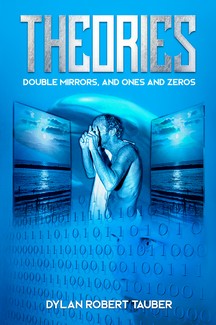
The Double Mirrors and Ones and Zeros theories, by Dylan Tauber. Parallel mirrors in our minds produce a vision of the infinite. Love is all that exists. Free PDF download.
This book chronicles an infinite allegoric odyssey of Absolute Awakening in which a learned man, a mute man, and a recluse woman are the principal players. The mute and the recluse are the learned one's Teachers and Guides on his journey of Enlighten
This combined narrative dialogue and play is about the uncreated, unborn and undying transcendent Self of God-consciousness and Buddha-nature. It describes an odyssey of transcendent Consciousness Awakening and Remembrance.