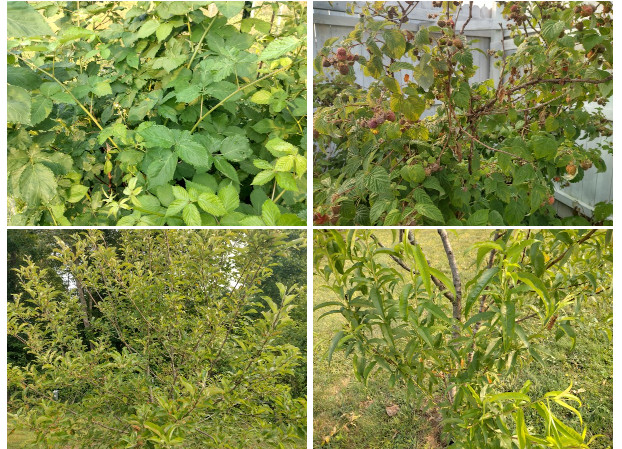
The Self Sufficiency series on my blog is excatly what it sounds like. The fifth part was just posted today and this is the introduction to it on Authorsden. Current series includes 5 parts: Intro, Fruit Plants (2 parts), Gardens, Protein, and Chicken Basics.
Self Sufficiency Blog Series 1-Intro
This is a new blog series that takes a look at what I've done, what I've learned, and what I plan to do in regards to being self sufficient as possible on my ½ acre property. Each post will cover a different topic, but this first one is the intro to the series.
First of all, why? Why go through all the work to be self sufficient when you can buy what you want from the store? And the answer to that is easy: poisons. The food from the large stores are full of poisons. These are in the form of insecticides sprayed on produce to keep bugs off them. They are steroids and antibiotics given to animals to keep them healthy in poor conditions and to make them grow faster. They are in the form of sweeteners like high fructose corn syrup and artificial sweeteners that are causing cancer and obesity in equal amounts. These poisons are in the form of many other ingredients that cause or are suspected of causing health issues like palm oil and dyes. You can't even get real meat from a large store, because it's shot up with saline solution to make it weigh more so that you're buying as much water as meat. There's other reasons to produce some or all of your own food such as food cost, wanting to know how the animals are treated, and economic purposes.
Just attempting to get into it can be very confusing. As with all things, the answer to 'how much land does it take to feed a person' is somewhere between X and Y. For instance, the minimum amount of land required to feed a person is given as a minimum of 150 sq feet to a minimum of 4,000 square feet (which is just short of .1 acre) to a minimum of 5-10 acres all per a single Google search. This means that my ½ acre would be able to support something like 0-50 people. That's a hell of a range.
As I get into this series, you'll notice such extreme estimates over and over and that much of the info you find is fundamentally wrong or extremely variable. As far as that goes, I'll simply say that your results are highly dependent on what you grow, what you raise, what grows on your land already, what can grow on your land that isn't there already, and how much time and effort you put into developing the skills needed. Bad land doesn't mean you can't grow anything and good land doesn't mean that what you want to grow will grow. If we go by numbers from Africa, when overpopulation got extreme in a couple countries back in the 80s and 90s, we can assume that 1/10 of an acre can support a single person if the entire thing is cultivated. This puts my ½ acre at being able to support 1-5 people at maximum capacity. This is a far better, and realistic, range to work with. Of course, you can increase your available space by going vertical, but that's not something I've done.
The basic things you want to research for a mini-farm are pretty simple, but each thing has a lot of details and a lot of trial and error involved. First and foremost, IMO, is fruit plants. Trees, bushes, vines or whatever you want that grows something you can eat. Nearly all these things take a while to get established and to start producing, ranging from 1-2 years for fast growing raspberries to up to 10 years for a a Kiwi plant. This means you want them in ASAP since they take so long to mature. Fruits are very important for being being self sufficient since they provide vitamin C and scurvy is the last thing you want to deal with if you have to depend on what you grow.
Second, IMO, would be a garden. You need to experiment for a few years to see what grows in your soil that you'll eat a lot of and then just focus on those things. Gardens are sorta one attempt per year things and can take a while to figure out. Build raised gardens if need be.
The third and last thing you want to add is some sort of protein. What is up to you and what you're willing to deal with, but the simplest is laying hens since they turn leftovers into fresh eggs and keep ticks out of the yard. However, there's many options, even with a small piece of property ranging from chickens to rabbits to pigs. Eggs are simply the easiest to produce source of complete protein, ie, protein that contains all the amino acids you need. The latest research has also not been favorable to plant based proteins since they lack so much when compared to animal sources. Animal husbandry has other benefits such as providing fertilizer and Fall cleanup. It takes a while to get a small flock or other population of animals going, but not near as long as it does other stuff.
That's a rundown of the food side of things, but there's other sides to it such as tools, skills, being able to keep predators away from livestock, and other details that will be looked at in other posts.
Visit my home on the web to read past part 1.
Link to Intro:
https://www.jeremiahdonaldson.com/blog/post/2240011/self-sufficiency-blog-series-1-intro