The Holy Bible, as it appears today, wasn't always in it's current form. The books chosen may have been chosen for reasons other than the ones most people believe.
The Holy Bible is a rich, ancient book filled with inspiring texts that have uplifted people for thousands of years. It has also given those in power the authority to exercise their influence over their followers in ways that defy human compassion.
What is the history of the Bible? Many are aware that The Bible contains books written by many different authors over many hundreds of years, but how did it come to exist in its final form? What about the recent discoveries of other so called Gospels of Jesus Christ? Does the simple fact that they are not included in the Bible disqualify any truth that they might have?
The Bible of most mainstream Christian churches is divided into two parts. The old testament, regarding stories that took place before the birth, death and resurrection of Christ, and the new testament, which covers the teachings of Christ and the subsequent events.
Christ was crucified around 30 AD. The first gospels were written ten to twenty years after that, and the last gospel was written around 90 AD. Were these books immediately put together and circulated as one? How about the many letter of St. Paul? When did these get put together with the four Gospels? What about other writings at the time, why were they excluded? What did they contain that was wrong, or what did the included texts contain that were missing from others?
Up until about 150 AD, there was a collection of thirty or so books that pertained to the teachings of Christ. In addition to the traditional Gospels, there were additional gospels written by James, Peter, Jude, and recently there has been speculation of a Gospel of Judas.
Then in 397 AD, at the Synod of Carthage, the church architects decided on an "official" collection of books, which is the current Bible that we have today.
In order to understand how they decided which books to include, and which to exclude, it is important to understand the political environment at that time. In 313 AD, Emperor Constantine made Christianity the Official Religion of the Roman Empire. Separation of Church and State, considered a norm in today's society, was unheard of back then. The church rulers were also the political rulers.
When they decided in 397 which books to include in the Bible, and which to exclude, questions of political motivations, influence and power unquestionably played a part.
Many argue that the collection of books was decided not for their religious truths, but for political reasons. Strangely, only the resulting decisions of the Synod remain, the actual proceedings, and the reasons for the choices, are lost. We may never know why the Bible contains the books that it does.
One wonders if these so called "Lost Gospels" may contain some uncomfortable truths after all.
Religion has a dark side. A side that some even willingly use to destroy. Find out what transformed such a shy, conservative churchgoer into a powerfully irresistible seducer of women, with deadly consequences. Readers everywhere are starting to realize that George Hutton's widely read Zapotec may be one of the most engaging and disturbing psychological thrillers to come out in years. Find out why many agree that Zapotec is both irresistible and controversial at the same time when you visit George Hutton's Zapotec.
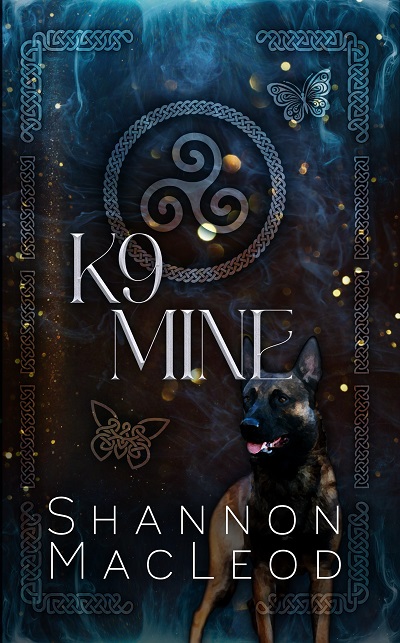
Corporal Travis dreamed of partnering with a police dog, but Fate handed him a faery and something unexpected instead.. As his normal world spirals into chaos, he is thrust into a centuries-old conflict with stakes higher than he ever imagined.
A gripping crime thriller for fans of fast twists, dark secrets, and adrenaline-fueled suspense
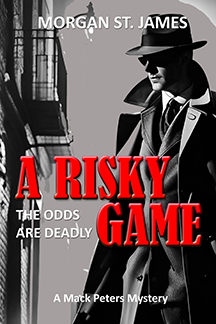
A mobster with a broken memory---A stolen fortune hidden for 15 years.
Mack Peters is about to play A Risky Game—and the next move could get him killed.
Black Leather and Blue Denim, A '50s Novel is adult literature for anyone who likes 1950s' teen culture. BL&BD has been given a 5 Star Rating by ebookpalace.com and by Midwest Review