
This essay is an effort to try to bridge the gap between political ideologies in America.
The Age of Ideologues and Misplaced Loyalties
During America’s formative years we were largely an agrarian society. Family life was centered on men as providers and on women as nurturers. Men did the farming, ranching, and trading, while women spun yarn from wool, knitted clothes, made candles and soap, and churned milk into butter. School houses were typically a single room with one teacher for all grades. The early settlers had little protection against severe weather, against most diseases, and life expectancies were very short. Even our Constitution was little more than a few pages of ideas stated in brief format and without a supporting history. Its interpretation amounted to reading and understanding the meaning of simple concepts and ordinary words. Politicians rose up from the people, and they represented their constituencies with a high sense of honor and devotion to duty.
For better or worse, that era is gone. Life today is a lot more complex. Now most professions require specialized education with advanced degrees, peer certifications, plus many years of experience, perhaps all of the foregoing. It is also the age of achievers. Advances in science and medicine, architecture and engineering, music and the arts can be seen and heard everywhere, and all of it is the product of the extraordinary skills of those who are driven by the sheer joy of excellence, accomplishment, and personal fulfillment. We are now better educated, we are living longer, and our expectations are higher. Those outcomes are the fulfillment of the American Dream—from the perspective of liberalism. Most Americans, however, do not share in it. That is because the doors of opportunity are becoming closed, locked, and barricaded.
Politics is now the major impediment to a better life for all. It has spiraled downward and out of control in a way that threatens to turn life in America into a hell on earth.
Today our political landscape is polarized into two vastly different camps. We are no longer liberals and conservatives who share a common set of values, but with different visions about how we can fulfill our destiny. Instead, we are combatants who want our own vision to prevail no matter what it takes to get there. We still use the ballot box as the way to bring about change, but we have subverted it in ways that would make our Founding Fathers aghast with horror. This is the age of television, and of “canned” messages, and clever “Madison Avenue” propaganda styles; where lies, distortions, and money control the content of the airwaves. It is the age of Citizens United where “money talks,” and where Supreme Court justices openly flaunt their biases. It is the age of ideologues and misplaced loyalties.
We still vote, but voting is becoming increasingly more difficult by legislative fiat. Vast numbers of qualified voters are kept away from the polls as conservative legislatures pass gimmick law after gimmick law under the pretense of “voter fraud” to keep the poor and the disenfranchised away from voting places. Those who do vote no longer size up candidates on their records of achievement and their good intentions. Now it’s all about money and ideology. We elect far too many individuals to public office on the basis of the amount of money that promotes them. It is the age of the “duped dope,” the brainwashed voter who marches obediently to the call of those who represent only the worst in us. The result is a Congress that cannot function, one that faces gridlock at every turn. Extremists have discovered that they can obstruct when they are in the minority, and they can legislate us into the fires of hell when they control.
Money has also turned a large percentage of our politicians into ideologues with no concern at all for anything other than fulfilling the wishes of their financial benefactors, for enriching themselves, and for doing whatever it takes to win re-elections. As a consequence many of our legislatures are passing unconscionable laws that reflect narrow religious beliefs, and they are joining forces into collective “group think” bodies of ignoramuses whose sole purpose is to defeat the opposition by passing restrictive laws against voters that favor the opposition, and against groups that support freedom and equality. In addition, they have created legislative gridlock by group obstructionism, and by tactics that reflect single-minded adherence to ideology--and the consequences be damned. They are dividing us as never before by lies, distortions, and dishonesty in political campaigns that are cast in deception of unparalled proportions.
Now is the time for re-thinking these issues.
The Anti-Dote
Our task would appear to be as simple as finding, promoting, and electing our lawmakers on the basis of a well-rounded education in law, economics, management, and foreign affairs, plus a record of achievement in those areas, plus a demonstrated ability to work cooperatively with others toward common goals. But insistence on and adherence to a rigid ideology are new prerequisites, even though we all know that ideology can never be a substitute for facts, for reason, and for achievement or the way to find the common good. Bridging the chasm between “what is” and “what ought to be,” however, brings us inevitably to the doorstep of that which is next to impossible to achieve: amending the Constitution. That procedure seems to work only for changing voting ages, or terms of office, and similar noncontroversial matters. It cannot be used to mandate a dysfunctional Congress into a state of harmony and functionality nor to direct it to work for the common good.
One technique for covering up a loyalty to persons and objectives that are different from their oaths of office is to camouflage their conflicts of interest in an artificial pledge to never raise taxes, a pledge that is as dishonest in its conception as it is disloyal to our values. It is a pledge of allegiance to the rich. Its sole purpose is to bind legislators to enacting laws that will forever widen the gap between the rich and the poor, and make those same legislators slaves to their wealthy benefactors. I will not honor this ugly, traitorous document by reprinting it here. Instead, I will offer its antithesis, a pledge that states our principles and our ideals with clarity, honor, and courage.
Before offering this pledge, here is its objective: Ideologues are not traitors; they are misguided. They march in lockstep to a drummer they did not choose, rather to one who chose them. They have not lost their honor; it has been shielded from them. They, like the rest of us, can find comfort in our core values. They, like the rest of us, need to return to our core values and ponder the wisdom of Thomas Jefferson and Abraham Lincoln and Andrew Jackson:
- We hold these truths to be self-evident, that all men are created equal, that they are endowed by their Creator with certain unalienable rights, that among these are life, liberty, and the pursuit of happiness. --Jefferson
- —that this nation, under God, shall have a new birth of freedom—and that government of the people, by the people, for the people, shall not perish from the earth. --Lincoln
- One man with courage makes a majority. --Jackson
A Call to Action (Readers: Copy from here to the end, and send it to your representatives and Senators. Ask them to return the signed pledge to you, and you can forward a copy to me at edwphillips.gmail.com. )
Let every member of Congress step forward and sign this pledge. Let two become four, and four become eight. Let them show us that we can have a new beginning; that this is our land; that they are willing to work for the common good; that life, liberty, and the pursuit of happiness is, was, and always will be American values; and they are willing to mutually pledge to each other their lives, their fortunes and their sacred honor to achieve those ends.
My Pledge to America
I am first, last, and always an American. I live here, I love here, and I will die here. I have the privilege and the duty to make my country stronger, to assure her survival as a beacon of hope for all who seek a better life—one that is free from tyranny, where all are free to fulfill their destinies. I am willing to bear any burden and pay any price to achieve her success. I will invest in myself, in my talents, and in my dreams, but I will not let those limited goals define me. I will defend my country against all those who seek to destroy her. I will rebuild her highways, her schools, and her institutions knowing that they represent the best means to equal opportunity for all. I will do my best to leave behind a stronger nation, a richer culture, and a more beautiful land. I will be a creator of new jobs and new opportunities. I will seek to give more than I take. I will sacrifice for the greater good when times are difficult; and I will always pay my fair share in blood, sweat, tears, and taxes. I will never ask for more than I can give; I will not expect more than I can do; and I will not accept more than the share of wealth I have helped to create. I understand and I accept that citizenship is not about me—it’s about us, and our children, and their future. I will lead, not impede; I will instruct, not obstruct; and I will forgive, and let live.
----------------------------------------------------------------------------------------------------------
(signed) (date)
|


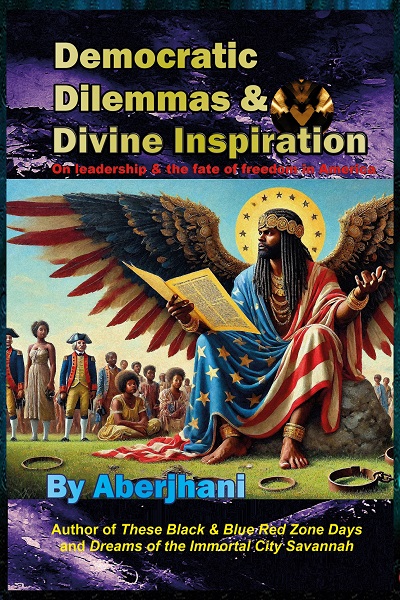

It is a time of polarization and distortion of the freedom those men sought. Yet our society is no longer like that of our founders. Our Constitution states that we have, "The right to alter or abolish it." It is easy to complain and decry our state of affairs and wish for some idealistic time in the past that never happened. It is harder to come up with reasonable solutions that reasonable people can agree on.
Ed Phillips has come up with a courageous and reasonable approach. We cannot change the two party system. We cannot change candidates who judge their ability to win elections on the money they raise rather than the quality of their character. We can ask them to pledge to behave in a manner worthy of our Founders. Even if they sign, they are too beholden to the money system to guarantee that they will change.
If fair, equitable change is not forthcoming, there may be another revolution in our country between the haves and have-nots. It won't be pleasant with patriotic parades and slogans. We can only hope it would be nonviolent like South Africa.
Ron