Mandela: Lessons for Life
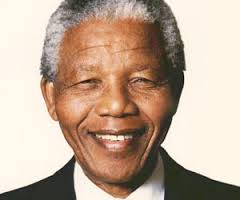
What lessons can we draw from the life and times of Nelson Mandela? He was a man who was instantly recognized by young and old, from all races and nations, and from those within many different political persuasions as someone who rose above his personal situation, and above the strife of his time, and who stood for something that transcends our differences. What was it about him that we admired? What can we learn from his life? Are there any enduring principles that he reinforced and from which we can extract a degree of spiritual sustenance?
Those are the driving questions to this limited inquiry. It is not an in-depth analysis of the man, nor of his ambitions; it is not about his struggles or his achievements. The lessons that we can draw from his life should go beyond his life and beyond life itself. They must connect us to his times, to the history he shaped, and to all times. Ultimately, they must connect us into the stream of human goodness that he personified at the spiritual level, and they must reveal something that approaches truth. Those are the enduring issues, the connections, and the lessons to be learned.
It is a worthy observation to note that Nelsen Mandela now belongs to the ages. The same thing was said of Martin Luther King, Jr, of Mohandas Gandhi, Mother Theresa, Lincoln, Olympe de Gouges, Jesus, Buddha, Socrates and to a host of other honorable men and women throughout history. We attach that notation to those whose lives affected us profoundly and for the better. The question that arises today is this: What is that fundamental sentiment, value, or principle that great men and women touch in us? I think it is love. Spiritual love. It is the essence of compassion, and healing, and new energies, and of finding a connection with the universe. It goes to the heart and soul of every living being—even to those who spend their energies in trying to extinguish them. It is not about religion. It is not about how you and I think differently. It is not about our politics, or our ambitions. It is about our commonalities. It is about who we are, the nature of our journey, and our quest for truth. We connect best with those who rise above the questions and who give us a glimpse of the answers.
The anti-thesis of love is selfishness. Those who are not moved by any of the spiritual elements of love are the ones who lust for power, money, and control. They are the tyrants, the dictators, the greedy, and the self-centered. I won't point them out. You know who they are—they are the enemies of Mandela and all like him. They are the enemies of humanity. They prey upon our weaknesses that arise from a lack of resources and the means to get organized. They emerge from force, and lies, and deceit. Once in power they imprison and murder in large numbers, thus they instill terror and they invoke it again and again to retain control.
History has many issues with the potential to affect its own course. Most of us know what they are, but few can intercede and effect change. To do so requires that we show others that we have the courage of our convictions, the will to make change, and the resolve to carry them through—even at the risk of own lives. Those of us with lesser developed virtues want to at least be on the “right side of history” when such issues come to the fore. Perhaps we cannot lead the way, but we dare not run from them. Leaders of change require large doses of insight to the human condition, the temperament to know what must be done, and the moral courage to take the appropriate actions.
In his adult life Nelson Mandela learned that love is stronger than selfishness, that kindness trumps imprisonment, and that perseverance in the cause of justice is a welcoming sight by all those who know the right side of history when they see it. That is his legacy. As a bonus he showed us that a lot can be achieved after the age of 70.





I read your article and was so touched by how perfectly you summed up Mandela, you write with immense passion and wisdom! I would very much like to send your article, with your name, to our local newspaper. The Cape Argus. It is brilliant. I understand if you would prefer me not to.
Barbara
We all seek out the goodness in us. All around us we see control and hierarchy where some have everything and many have nothing. When someone can break free from that hierarchy and change the way the world works, merely because he or she does what everyone really wants, it is quite amazing. And, like you have written, when someone does it over 70 years of age.
It gives you good reason to think that you have more years yet to pursue the good cause you are enlightened us with. You and I may live to see the world turn.
Ron