The Power of Why
[image: americanrhetoric.com]
Some people are not satisfied until they have prayed 8 or 10 times by day’s end. I’m not satisfied unless I have learned something new during the day. Today I learned a new twist on the old subject of persuasion that now has me thinking. And thinking is the critical step that starts the wheels of my imagination turning, and, who knows?—“this could be the start of something big”—to invoke a snappy line from an old song.
Why is persuasion such a grand topic, you ask? For starters many linguists and communication experts tell us that all speech is persuasion, that’s why. And “all speech” covers a hell of a lot of territory. We convey our thoughts to others mainly for the purpose of leading them away from their dreary way of thinking and toward our own pathway to enlightenment. We don’t dare put that objective into those words unless we have a latent desire to be tarred, feathered, and run out of town on a rail. So we add a little polish, a little pizzazz, and small doses of humor to our message and thus we engage in a little theatrical trickery to get others to listen to us while we enlighten them. There are, of course, many variations on this technique.
Humbleness is one that works sometimes. Simon Sinek is a humble guy. I listened to and observed his presentation on the TED (technology, education, design) platform and came away impressed by most of what he said. His objective was simple: He observed that when we present ideas to others, we tend to follow this format: First we describe “what” we have to sell or persuade them to accept; then “how” good we are at making (building, doing) it; then we tell them why they should buy it (or change their mind about something). It is a format that too often simply does not work, according to his thesis.
Instead, Simon says, we need to stand the order of our presentation on its head. We need to first tell others why, then how, then what. It’s the “why” that presenters need to master and tap into. It’s a matter of showing your listeners that your heart is in the right place, that you know how to lead them by inspiring them, and that your shared values are at the core of who you are, what you are, and why you are.
Nobody accepts us and our message because we are smart, clever, efficient, or good at what we make and offer to others. Listeners are not always impressed by price or quality. Those are all secondary or tertiary justifications in the art of persuasion. First and foremost, listeners want to know that the presenter and they have the same values, that the presenter is tapping into the same comfort zone that they both share, and that his values and theirs are in alignment.
How you go about mastering the “why” of presentation skills is critical to your ability to lead them to accept your message—not as your message—but as their message. You are the leader, the inspirer, and they become your new disciples, willingly and enthusiastically. And they do not act on your pleadings because they want to please you; they act because they want to please themselves.
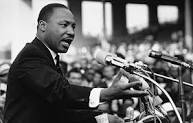
A great example of someone who showed his shared values occurred on August 28, 1963 on the footsteps of the Lincoln Memorial in Washington D.C, when Dr. Martin Luther King, Jr. delivered his “I Have a Dream” message to a quarter of a million people—black and white. His message resonated because he articulated a vision that he shared with them. He called it a dream (not a plan), and it soon became their dream.
He began with: "I am happy to join with you today in what will go down in history as the greatest demonstration for freedom in the history of our nation.
Five score years ago, a great American, in whose symbolic shadow we stand signed the Emancipation Proclamation. This momentous decree came as a great beacon light of hope to millions of Negro slaves who had been seared in the flames of withering injustice. It came as a joyous daybreak to end the long night of captivity.
But one hundred years later, we must face the tragic fact that the Negro is still not free. One hundred years later, the life of the Negro is still sadly crippled by the manacles of segregation and the chains of discrimination. One hundred years later, the Negro lives on a lonely island of poverty in the midst of a vast ocean of material prosperity. One hundred years later, the Negro is still languishing in the corners of American society and finds himself an exile in his own land. So we have come here today to dramatize an appalling condition." …
I have a dream that my four little children will one day live in a nation where they will not be judged by the color of their skin but by the content of their character…I have a dream that one day … little black boys and black girls will be able to join hands with little white boys and white girls as sisters and brothers.
I have a dream today! …
I have a dream that one day every valley shall be exalted, and every hill and mountain shall be made low, the rough places will be made plain, and the crooked places will be made straight; "and the glory of the Lord shall be revealed and all flesh shall see it together."
This is our hope, and this is the faith that I go back to the South with.
With this faith, we will be able to hew out of the mountain of despair a stone of hope. With this faith, we will be able to transform the jangling discords of our nation into a beautiful symphony of brotherhood. With this faith, we will be able to work together, to pray together, to struggle together, to go to jail together, to stand up for freedom together, knowing that we will be free one day.
And when this happens, and when we allow freedom to ring, when we let it ring from every village and every hamlet, from every state and every city, we will be able to speed up that day when all of God's children, black men and white men, Jews and Gentiles, Protestants and Catholics, will be able to join hands and sing in the words of the old Negro spiritual: Free at last! Free at last! Thank God Almighty, we are free at last!”
The old school of persuasion acknowledges that persuasion is part cognition and part affection. When blended together with care and expertise it can be effective in motivating listeners to take some action toward a goal. Sinek places strong emphasis on the emotional component. And clearly the elements of right time, right place, and a most propitious moment all came together to elevate King’s address and propel it into a place in history. He then delivered one of the most memorable speeches in human history.
The why of presentations is so important to Sinek that the who and the what are given little time or attention. I have not read his book, Start with Why. I am now motivated to spend $2.99 in order do so.
|



hug
Kathy
I've never quite mastered persuasive speaking, but I'm trying to keep learning.
Ron's
Kathy J Parenteau