“Don't let it be forgot that once there was a spot, for one brief
shining moment that was known as Camelot.”
[image: dangerouscreation.com]
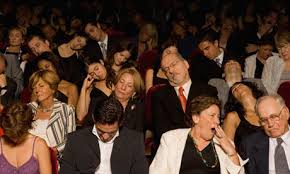
While America Slept
In 1940 when John Kennedy was a senior at Harvard, he wrote a thesis entitled “Why England Slept,” an inquiry into and critique of the policies of Western democracies in general, and those of England in particular during the 1930s. England was already at war with Germany, while a large part of the world was on the brink. His paper (and book) was timely, if not prophetic. His professor gave him high marks for the paper, but Providence was to give him the brief opportunity to make real changes in the climate and the times of his day just 20 years later. Most historians seem to agree that he made bold although measured steps to rekindle a sense of awareness and service among those of us who were there and who remember his tenure as President. At a minimum he awakened a sense of urgency and purpose in us to do something worthwhile for our country. Many of us are still nostalgic for those days of Camelot.
It is no exaggeration to say that America today is in a similar state of sleep, and from which we again need to be awakened and jostled into bold action. The critical political and economic changes of the past 45 years that have given rise to our crisis are now firmly in place, and the prospects for changing them are falling quickly toward zero. The changes in the workplace are nearly complete, with virtually no way to change them back. Incredible wealth distribution from the poor and the middle class to the wealthy is rising unimpeded with almost no way of reversing the tide of money flows.
The consequences of the changes from 1970 until today are far reaching; the great majority of them favor the rich among us, while they cast part of the middle class and all of the poor into an abyss from which there is little hope of extricating themselves. It is not hopeless, but the most charitable view of the future portends a very long and arduous road ahead that will require perhaps decades of struggle before we can reset the events that have transformed us from a democratic land of the free to a plutocratic life of servitude to the wealthy.
What Happened, and Why? With the election of Richard Nixon conservatives were awakened in the 1970s to the prospect that they could redo America into the image they had hoped for during the preceding 70 years. Their vision was bold but simple: Change the political landscape by capturing a larger share of state legislatures and Congress, and take the White House. This would lay the groundwork for scaling back civil rights, human rights, and workers’ rights, while shifting the fruits of all our labors from the bottom 90 percent to those at the very top of the economic ladder.
Without going into a detailed list of societal and legislative methods and means, suffice to say they have been very successful in achieving their goals. The effectiveness of and membership in unions has been greatly curtailed; right to work and employment-at-will laws have been expanded; taxes on the wealthy have been dramatically lowered; oversight of banks and Wall Street has been significantly reduced; inheritance laws have been bolstered; voting laws have been restrictively circumscribed; voting districts have been gerrymandered; political contributions have been greatly expanded; and we have engaged in a generation of evangelizing the minds of the world for democracy while curtailing it here at home. The rich have become so incredibly rich that they are now in control of elections. Political polarization is the new norm, while the expectation of changes emanating from Congress are buried somewhere under their self-made debris of legislative gridlock. We are “out there” proselytizing and evangelizing the world, engaging in wars with or without invitations; we are spending monies heretofore directed to infrastructure repair, to education, to the aged and disabled, and to food for the poor and redirected it into wars and nation building elsewhere. Among the conservative political visionaries this is called “mission accomplished.” Among those in the social psychological and psychiatric professions it is the natural denouement when politicians meet megalomania.
What to do? First, we need to awaken the sleepers. We must acknowledge that one-half the population cannot or will not see beyond their noses. They’re asleep. Apathy and indifference permeate the lives of 165 million residents. Members of this group will do just about anything those TV ads instruct them to do. The conservative mind benders rely on this advantage. It is a huge issue to get around even for the most astute among us. This is a call to action: Anti propagandists of America—awaken them. Great and charismatic leaders—awaken them. Great rhetoricians—awaken them. People with courage—awaken them. People with vision—awaken them. Thinkers and doers—awaken them. We need to know: How do we re-program the brain dead?
Until someone can lead the charge and show us how to surmount this challenge, we are left with only the prospect for uprisings, civil war, blood baths, marches on state and national legislatures, and the many kinds of failed movements seen in the Middle East, and in some parts of Africa and South America in recent years. Defeating a corrupt but entrenched ideology is not for the faint of heart, the weak, or for those who like to sleep.
Fortunately, the rest is duck soup. The rich and powerful are not very bright, they don’t know how to fight, and they are so self-centered they eventually believe in their own propaganda. Still love them? They also hide $21 trillions of dollars in offshore tax havens (Forbes, Inc.) to avoid paying taxes. Where? In the Cayman Islands, Bahamas, British Virgin Islands, Turks and Caicos, Lichtenstein, Switzerland, Channel Islands, Seychelles, Sicily, Cook Islands, Singapore (International Consortium of Investigative Journalists). They’re dumb, but they know how to buy a lot of help. They don’t even know that 96 percent of all their wealth was inherited, or it grew passively from that same inherited wealth. Most of the rest came from diverting productivity earnings (from you and me) to them via bonuses, stock options, golden parachutes, retirement packages, poison pills, and other diversions. There you are America: Love them, leave them, or begin to get mad enough to take back what is rightfully yours.
|


Love ya!
Jane
I agree with Lark that much of those in the next 30% who are losing ground to the 1%, and somehow are disillusioned enough to think the same way as the 1%, create an even more formidable foe, because they may be small business owners and well-paid professionals and the backbone of productivity and prosperity.
As for Camelot, I was active in civil and human rights during the Kennedy years. In those days we had what could be called, apathy, toward most of the things that Kennedy was promoting. Many were hiding from the Vietnam War by going to college, getting married too early, and even fleeing to Canada. Only a small portion of Americans, led by churches and the ACLU, actually participated in civil rights in the trenches, the boycotts, sit ins, and freedom rides.
I do remember that the Young Republicans were very strong and organized during that period and probably had more devoted followers than any of the liberal groups, some of them like the Black Panthers, despised as much as the Ku Klux Klan and American Nazis.
Most of the hippies I knew during that time were from well-off families and were just generally goofing off and having a good time hanging out until they ran out of money for their drugs and other indulgences and returned home to have mom and dad put them through college or join the family business.
Camelot only came to pass when Kennedy was assassinated. His death galvanized public opinion, and Johnson, using his political clout, ramrodded a few of Kennedy's ideas through Congress, much to the dismay of conservatives like Goldwater.
This is not mean that your article isn't important or that we can't do anything about it, it is just that generally most people tend to go along with the status quo, are unwilling to change don't speak out even if they have strong opinions, and don't vote because they don't think their vote counts. It is only when something drastic happens… Pearl Harbor, the Kennedy assassination, 9/11, or the like before we become one people and act for a change.
The few responses you get your articles even though many read them, is a good example of apathy and a sleeping public all around us.
Ron
I currently can't find an affordable nursing home for my 92 y.o. mother, and I am damn mad about that.