The California State Legislature just gave final approval to a bill that would allow doctors to help terminally ill people end their own lives. Four other states — Oregon, Washington, Montana and Vermont — already allow physicians to prescribe life-ending medication to some patients. In a bit of irony some legislators have voiced their opposition to this bill on moral grounds. I would ask them “Where is the morality in helping people die from any preventable cause when it is within your authority and your ability to help them?”
I don’t believe the state has any business in helping anyone end his or her life. My belief, however, goes far beyond making medications available for that purpose. It means the state also has no business in helping people starve by not providing the hungry with food; or in helping them to freeze to death by not providing a warm place to live; or in helping them die from various diseases by not providing them health care. The state has no business in stripping away hope by not helping them find employment; or in not educating them so they can make themselves employable.
Still, the state has no business in becoming the savior of first resort. Each of us must accept that responsibility. But those who must live in squalor can hardly be expected to pull themselves up by using resources they do not have and cannot find; or by employing skills they do not have; or by creating something from nothing. There is no dishonor in their seeking out free kitchens, or free clinics, or free shelters—if they exist. And there is no dishonor in setting up any of these—if you or I have the means of doing so. And there is no dishonor in helping those ends if you have a business or are part of a church or charity, and you can make some provision for them.
There is much dishonor in turning our heads away from any or all of these issues whether we are private citizens, business owners, church leaders, or government employees. Government is the focal point. It needs to encourage churches, schools, charities, and businesses to work cooperatively against poverty in all its forms. There is no dishonor in raising taxes to help toward those ends. There is no dishonor in supporting the government when it must meet its responsibilities by paying a higher tax. There is no dishonor in voicing our encouragement for life, or in shouting our outrage against the apathy of anyone who stands in the way of liberty and justice for all.
There is much dishonor when we sit on our asses—one by one or altogether—and do nothing. We double down in dishonor when we complain about prescriptions that kill or when we are silent about killing in many other ways.
J. Quantaman has a very good, and reasonable, addendum to your very cogent article on the subject of equal right to life. We all want life, except when we want to end it. Somewhere, a convoluted idea that, "right to life," could be used as a dictum for making people do what "good" people are supposed to do came along to haunt us.
George HW Bush described a, "thousand points of light," as some kind of way of taking care of all those that have been pushed off the edge by Ayn Rand idealists with money. As you so eloquently stated, those points of light cannot near solve the problem that is occurring. It will take all of us. And your article is another wake-up call.
Civilized society should allow peaceful avenues for everyone to achieve self-esteem, which is hardwired into the human psyche. We all want to be the best we can be. If society enacts a policy of guaranteed income for everyone, most folks will still want to work at something. They won't accept the paint-by-the-numbers tasks envisioned by CEOs on the umpteenth floors of glass towers; but they will find new niches and provide original services. Voluntary workers will be more creative and innovative. I reckon the national productivity would increase by 200%. It's only mean-spirited folks (who think they're better than everyone else) who will refute this intrinsic maxim of human behavior.
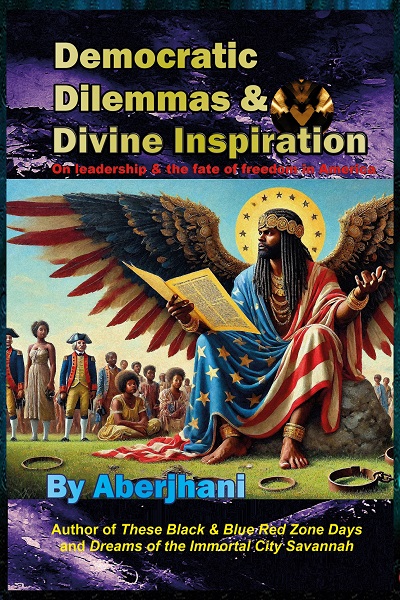
Democratic Dilemmas and Divine Inspiration examines the significance or relevance of the idea that the U.S. Constitution was, as many believe, divinely inspired. How much did that belief matter to founders of the nation and how much does it matter no
Democratic Dilemmas and Divine Inspiration examines the significance or relevance of the idea that the U.S. Constitution was, as many believe, divinely inspired. How much did that belief matter to founders of the nation and how much does it matter no





George HW Bush described a, "thousand points of light," as some kind of way of taking care of all those that have been pushed off the edge by Ayn Rand idealists with money. As you so eloquently stated, those points of light cannot near solve the problem that is occurring. It will take all of us. And your article is another wake-up call.
Ron
Love ya!
Jane