AuthorsDen.com   Join | Login    
Where Authors and Readers come together!

SIGNED BOOKS    AUTHORS    BOOKS    SAMPLE CHAPTERS    AUDIOBOOKS    eBOOKS    STORIES    ARTICLES    POETRY    BLOGS    NEWS    VIDEOS    SUCCESS    TESTIMONIALS

Featured Authors:  Stephen Murray, i Aberjhani, iRaven West, iEdward Patterson, iBryon Smith, iLinda Alexander, iShirley Woods, iRichard Cederberg, iJudith Bailey, iDavid Arthur Walters, i

  Home > Essays > Articles Popular: Books, Stories, Articles, Poetry      Authors: A B C D E F G H I J K L M N O P Q R S T U V W X Y Z     

E D Phillips

 Follow Me  

· Contact Me
· Success story
· Books
· Articles
· Poetry
· News
· Stories
· Blog
· 1,302 Titles
· 6,063 Reviews
· Save to My Library
· Share with Friends!
·
Member Since: Dec, 2008

E D Phillips, click here to update your pages on AuthorsDen!


Books by
E D Phillips


See all Books
by E D Phillips


70 Years Later, We Still Haven’t Apologized for Bombing Japan
by E D Phillips   
Rated "G" by the Author.
     
Last edited: Wednesday, October 21, 2015
Posted: Wednesday, October 21, 2015

Recent articles by
E D Phillips

• Spiritism Explained
• Segments from a Bifurcated Life
• AI at Its Best
• July 4, 1776: 250 Years Later
• A Sage or a Saber-Toothed Renegade?
           >> View all

We’ve somehow convinced ourselves that Hiroshima was an act of mercy.
By Christian Appy, Nation Daily, August 4, 2015

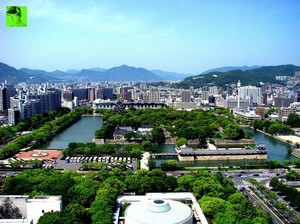
[image: Hiroshima Today[

70 Years Later, We Still Haven’t Apologized for Bombing Japan
-------------------------------------
An Open Response to Christian Appy:

It would be easy to note that Japan has yet to apologize to us for their sneak attack on Pearl Harbor, on that Sunday morning, December 7, 1941—a date that has and will forever live in infamy. No, that would be too easy. As unprepared as we were for war, we nevertheless rallied together, pooled our resolve and our resources, and pushed them back—way back—to their own shores. It did not come easy. They were fierce fighters in a cause that had not an iota of merit or justification. Japan sought lands to conquer, oil to ravage, and an empire to build in much the same manner as had megalomaniacs for most of human history.

During the course of that war, Japan’s leaders boozed up hundreds of their warriors with saké, put them into Kamikaze planes with just enough fuel to fly one-way into our fleet of ships, with this numbing message resonating in their skulls: “Die for your emperor, die for your country, and take as many of those maniac Americans with you as you can.” I have never read or heard of an apology for their suicidal attacks. Still, I won’t make that my main point.

And when they captured 80,000 Americans and Filipinos and marched them 80 miles along a path of death known as the Bataan death march, and dealt out butchery, untreated disease, exposure to the blazing sun, lack of food, and lack of water that took the lives of approximately 5,200 Americans along the way. Many prisoners were bayoneted, shot, beheaded or just left to die on the side of the road. "A Japanese soldier took my canteen, gave the water to a horse, and threw the canteen away," reported one escapee. "The stronger were not permitted to help the weaker. We then would hear shots behind us." The Japanese forced the prisoners to sit for hours in the hot sun without water. "Many of us went crazy and several died." This eyewitness account appears in: Dyess, William E., The Dyess Story (1943). No apologies from Japan for this death march, and still, this is not my main message.

But after fighting to the death at Iwo Jima and Okinawa, where thousands of Americans died in trying to end that war, my patience wears thin about apologies. Especially, when bombing their factories and their war-making machinery in at least 64 of their cities brought not the faintest hint of surrender, just a determined mindset to battle until the last Japanese warrior or civilian fell. We faced two equally bitter choices: To invade or to bomb. In a study done by the Joint Chiefs of Staff in April, the figures of 7.45 casualties/1,000 man-days and 1.78 fatalities/1,000 man-days were developed. This implied that a 90-day Olympic campaign would cost 456,000 casualties, including 109,000 dead or missing. If Coronet took another 90 days, the combined cost would be 1,200,000 casualties, with 267,000 fatalities. A second study done for Secretary of War Henry Stimson's staff by William Shockley estimated that conquering Japan would cost 1.7–4 million American casualties, including 400,000–800,000 fatalities, and five to ten million Japanese fatalities. The key assumption was large-scale participation by civilians in the defense of Japan. They chose the latter, not us, and we acted on their intransigence. And for that, Mr. Appy, they earned no apology, and they got none. (Frank, Richard B. (1999). Downfall: The End of the Imperial Japanese Empire. New York: Random House). Still, there is much more to this story.

Here is my main gripe about your story: You conveniently left out the part that in the aftermath of that war, under our direction, we helped the Japanese people rebuild their country, restored their immense plant and equipment to become second only to us as the leading economic power in the world. Today they are a prosperous country. I am sure that most of Japan’s men and women of good will appreciate that bit of compassion and honor on our part, even though their own government showed none of the same. By my reckoning, our actions of immense compassion and restoration to the Japanese people—sustained for 70 years--go far above and beyond your hollow call for an undeserved apology.


Web Site: AuthorsDen,com


Want to review or comment on this article?


Need a FREE Reader Membership?
Reviewed by Corrine Ardoin
Reviewed on August 18, 2022
Thought-provoking and well-written. Not having lived during that time, nor with parents who were old enough then to understand what was going on, I have only movies and documentaries, books, etc. to draw from. Nevertheless, what I have gathered is much like today's news about US Naval officer Lt. Ridge Alkonis being sentenced to three years in Japanese prison for what he and his family claim resulted out of his bout with mountain sickness. Anti-Americanism is alive and well in the world and pride is a terrible thing in leaders who will bring down their entire nation rather than surrender or admit defeat...or that they lied. Fine writing.

Reviewed by Kathleen McDonald
Reviewed on October 28, 2015
Another great write.

hug
Kathy

Reviewed by Ronald Hull
Reviewed on October 23, 2015
Points well taken by you and by the commenters. I especially liked your description of the analysis of how many lives, not to mention the economic cost of continuing the war and bringing it to the mainland, versus the bombs.

I especially like the idea of dropping the bombs offshore as a show of force. Unfortunately, the Japanese leaders at the time, might take the gesture as bad delivery (missing any target of value) and may have had intelligence that the only bomb ready fissionable material the United States had at the time was used for those two bombs of distinctly different design.

Another good one.

Ron

Reviewed by Eva Pasco
Reviewed on October 22, 2015
Correct you are: our nation's apology came in the form of rebuilding Japan to where it has become an economic power.

Reviewed by Jansen Estrup
Reviewed on October 21, 2015
Empires have never apologized to each other, and never will. They simply meld in unhappy marriages. We haven't apologized for Plymouth Rock, yet, either, or Columbus (a far less admirable situation than WWII) after 520-odd years. But we may have to admit that August 1945 was our high-water mark. We haven't won much in the way of war since, so perhaps Hiroshima and Nagasaki were unnecessary to win a surrender but they served well to keep us dancing with the Bear.

Reviewed by J. Quantaman
Reviewed on October 21, 2015
History is always written by the victors. After more than four years, every participant of WWII had gone slightly insane. The atomic bomb was used to shorten the war and save lives on either side. It was a mistake to drop bombs on cities, when the planes could've been dropped the bombs offshore. Atomic bombs were afterall demonstrations of overwhelming power. After each explosion the allies could've sent a demand for immediate surrender. Ground-zero would've been close enough so that scientists would still have gotten data on the effects of fallout. Blame Churchill for Hiroshima. Truman caved in because he was inexperienced and conceded to Churchill's agenda of revenge.

Reviewed on October 21, 2015
Right on!

Love ya!

Jane

Popular Essays Articles
  1.  Where Have All the Authors Gone?
  2.  The Advent of ALICE 1.0 Advanced Logis
  3.  War and the Earth we need to live on.
  4.  An Era of Stupidity and the Challenge
  5.  Down with Group Chat
  6.  Critical Race Theory & the 1619 Projec
  7.  Needed: A Progressive Grand Strategy t
  8.  Less Words, More Results
  9.  Takeaways from Adam Smith's The Wealth
  10.  Mr. Trump, have you no sense of decenc
  11.  The Crisis of Opioid, Fentanyl, Cocain
  12.  Verifying Ones Self
  13.  Where, oh where, has my Porsche dream
  14.  Critical Race Theory
  15.  Just a Kid
  16.  Super Spreaders Disguised as Congressm
  17.  Daylight Saving: Stop Legislating the
  18.  Are You Writing for Me?
  19.  The Compassion of Christ
  20.  Why Excessive Inequality Matters
  21.  Bone-headed Supreme Court Decisions
  22.  Rhode Read: RI’s Tobacco-Based Wealth
  23.  Genghis Khan Rides Again!
  24.  The Cozy Mystery: Death by a Thousand
  25.  American Fascism and the Bush Administ

Free Book Review Program
Select a book to read and review today!

RAM: Random Articles and Manuscripts by Jay Dubya

RAM: Random Articles and Manuscripts, a non-fiction collection of 38 stories and essays, is author Jay Dubya's 32nd book.  
Member BookAds

Democratic Dilemmas and Divine Inspiration (A Kindle Short) by Aberjhani

Democratic Dilemmas and Divine Inspiration examines the significance or relevance of the idea that the U.S. Constitution was, as many believe, divinely inspired. How much did that belief matter to founders of the nation and how much does it matter no  
Member BookAds

Democratic Dilemmas and Divine Inspiration (A Kindle Short) by Aberjhani

Democratic Dilemmas and Divine Inspiration examines the significance or relevance of the idea that the U.S. Constitution was, as many believe, divinely inspired. How much did that belief matter to founders of the nation and how much does it matter no  
Member BookAds