Can Brain Power Transform American Politics for the Better? by E D Phillips
Rated "G" by the Author.
Last
edited: Wednesday, November 4, 2015
Posted: Wednesday, November 4, 2015
Can Brain Power Transform American Politics for the Better?
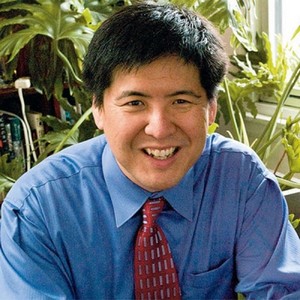
High achievers come in many shapes, sizes, and ethnicities. Sam Wang is the new guy at the top of my list. This first generation son of Taiwanese parents is a California bred neuroscientist who graduated from the California Institute of Technology at age 19 before receiving a Ph.D from Stanford in neuroscience. Along with a stellar curriculum vitae that is laced with awards and achievements, he runs the Wang Laboratory in the Neuroscience department at Princeton University. He is also the leading spokesperson for the Princeton Consortium, a center with many accolades for accurately predicting elections.
I feel good when bright people with sterling credentials are perfectly placed doing critical work in their chosen fields. Sam’s research is in cognitive/emotional processing with a major emphasis in autism. Anyone who knows someone with that affliction would be pleased to know that Sam Wang’s talents are hard at work in this vital research area. Humanity can benefit greatly from it.
Neuroscience is far removed from my expertise. But I fiddle with statistics, while Sam Wang excels with this scientific tool. Using meta-analysis and probabilistic methods in ways others have not, he has accurately predicted virtually every election since 2004. In the 2012 Presidential election, he accurately called 49 out of 49 states; he nailed the total U.S. vote outcome; and said Florida was too close to call. Florida’s vote was so close it was not tallied until Saturday, four days after the election.
So what is so special about election calling? The answer appears to be that it can be used in many other worthwhile applications. For example, this week Sam Wang took one giant step for truth and justice with his work. He filed a friend-of-the-court brief in the Harris v. Arizona Independent Redistricting Commission case (S. Ct. 14-232). In it he argues that the Supreme Court should reject Harris’s case on the grounds that the intelligent application of statistics shows there was no partisan injury, contrary to the Appellant’s assertion.
In his brief he has given the Supreme Court exactly what they have asked for with respect to determining when state legislators or commissions have violated the Constitution in seeking to gain an unfair advantage when changing voting districts. The court has noted in recent years that they need guidelines to know when a violation has occurred. That is a fair demand. Even Supreme Court justices need help when it comes to statistics.
Sam Wang answered their demand. His methodology is elegantly simple, but accurate and unique. The reader may view his research paper at this location:
In his Harris v Arizona brief he shows quite clearly that the Arizona commission did not restructure Arizona’s voting districts to favor Democrats as the Appellants allege, rather they slightly favored the Republicans although the bias was not statistically significant.
When applied to many other states, Sam shows convincingly on his website that state legislators have gone far astray in rigging voting districts in favor of Republicans. Perhaps in the next several years his work will find its way into the inboxes of major newspapers, statistics departments, legislators, law schools, and others in time to unrig voting districts everywhere. His work in disclosing the arrogance of Gerrymandering might cause sadness among a few, but it should bring joy of honest people everywhere.
His interest in calling elections was driven by his desire to know when to contribute to any given campaign. That is an interesting motive. In reviewing his results it occurred to me that he could really be onto something. By knowing when to ramp up any given campaign, it appears that “small money” can beat “big money” in this era of profligate spending by the wealthy in trying to buy elections. How sweet would it be to be able to negate the spending of brutes and other intellectual lightweights in their quest to buy elections by pin pointing the key moments to spend small amounts intelligently with the brain power of someone like Sam Wang on your side?
My question was rhetorical, John, and for campaign managers, not for voters. The idea is to spend money when the polls are trending against a candidate, and a lot less when they are moving in his/her favor. Across 535 elections, this approach could be very cost effective. Let the Big Spenders use the shotgun approach and spend their butts off.
The answer to your question is yes... but only if enough people would open their minds to consider what a guy like Sam has to say and take action. Don't hold your breath.
Democratic Dilemmas and Divine Inspiration examines the significance or relevance of the idea that the U.S. Constitution was, as many believe, divinely inspired. How much did that belief matter to founders of the nation and how much does it matter no




John