[image: anmnews.com]
What about Justice?
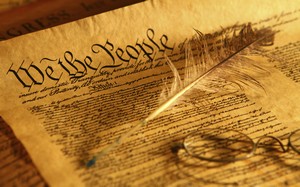
The United States Constitution is the supreme law of the land; it is not the document that sets forth our supreme moral principles. That document is our Declaration of Independence. Our courts, including our Supreme Court, need to stop looking for every nuance of interpretation—plus a burgeoning case law covering more than 200 years—in which our laws have been twisted in many different directions to be made to conform to narrow political ideologies. They need to stop looking for more and more ways to give advantages to the already advantaged in their search to make greed the driving force behind our laws. Instead, every case that comes before our Courts for review should first be put to this test: To what extent does this law flow from and support our four fundamental founding principles; namely, that “all men are created equal, that they are endowed by their Creator with certain unalienable rights, that among these are life, liberty, and the pursuit of happiness.” The reason behind this needed overhaul is simple: Every interpretation of our Constitution, however well-intentioned, that violates our four founding principles, is an abomination. This practice needs to end now and forever.
We have too many laws, too many lawyers, too many legal precedents, too many case histories, and too many law books setting on the shelves of law offices and court rooms across our nation that have been immersed in, twisted by, and bent to conform to somebody’s warped view of how to give him or his wealthy constituents some advantage over others. That is the consequence of a legal system run amok.
We all have the endowed right to be treated equally: Blacks, whites, Asians, Hispanics, Eskimos, men, women, children, the elderly, different ethnicities, different religious beliefs, or various physical limitations or orientations. Whenever anyone becomes a lesser citizen by virtue of a disability, or a limited ability, or by the prejudices of others, it would be appropriate to level that disadvantage in society by modifying a law to accommodate them. But instead of listening to a lengthy discourse in which the advocate obscures his true motivation with obfuscating language swamped in case law, in which validity is presumed to favor the position with the most connections, all of that could be replaced with this question: Does this law support or deny equality, life, liberty, and the pursuit of happiness for our citizens and residents?
How refreshing it would be to listen to arguments for and against these founding principles when deciding the merits of any given case. It would force the arguments to be coherent and understandable to virtually all listeners. Lawyers or other presenters could still demonstrate their abilities to persuade, and they could use arguments from analogy, from allegories, from parables, from experiences, from logic, and from critical analysis. They could cite statistics, and scholars, and learned treatises from many different sources and disciplines. They could ask rhetorical questions, even call upon such wise persons from the past such as Socrates, Thomas Jefferson, or Abraham Lincoln. Ultimately, every one of them would need to show how their total presentation supports those four fundamental Truths. What is more, those sitting in judgment of the arguments would not need to have credentials in law, rather they would need to be wise and scholarly, compassionate and understanding, caring and forgiving, and remain as far removed from political bias as we could make them. The present practice of giving lawyer judges life tenure over this process would need to end immediately. That is analogous to putting foxes to stand guard over the chicken coop.
Consider this: Laws that blatantly promote sexism, or racism, or that deny anyone the right to earn a living, to marry, or to pursue an education, or to find his or her place in life would be much easier to spot. Anyone who dared to argue about the connections between one interpretation of one law, as it connects to and modifies another law, in a long line of pointless connections over an extended period of history would be traveling down a pathway to defeat.
Conversely, we could be moved to a new level of enlightenment by someone who rose up and spoke with sparkling eloquence about the virtues of injecting new hope to the downtrodden; with expunging social ills; with finding redemption by burying past oppressions; with giving new life to those who are afflicted with infirmities; and with the restoration of rights lost. If those ends are not what we stand for, the continued denial of them will bring us down as surely as night follows day.
OK, I will not make this essay an endless tirade like those I’ve called into question. This brief outline is but the beginning of how we might fix our legal system. We would still need a Constitution that sets forth guarantees of free speech, of religion, of assembly and the like; we would still need a strong national defense; and we would need to ban such practices as failing to fund programs that are passed into law; and to forbid shutting down the government for any reason. Our Constitution would need a new preface in which we stated in the clearest language possible that equality, life, liberty, and the pursuit of happiness are the supreme moral and legal principles that declare to one and all forever why we are distinct among nations. Perhaps a Constitutional convention for the sole purpose of such a re-write is the appropriate way. What do you think?
|





I stopped by your website and find it well designed. Good luck as you develop it.
Ron