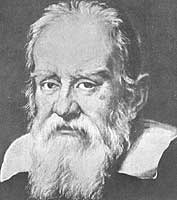
[image: Galileo, conocereisdeverdad.org]
A Short History of Freedom in America
I do not feel obliged to believe that the same God who endowed us with sense, reason, and intellect intended us to forego their use. –Galileo Galilei
Neither principles nor beliefs nor history itself tells us much about who we are today. Most of us would agree that we are—or we desire to be—patriotic, that we believe in God, country, and freedom. We also believe in private rather than government ownership of the means of production. We respect life, we approve of opportunity for all, we support upward mobility, and we protect our own and others’ rights to believe in and to practice the religion of their choice, or none at all. We also tend to agree that we should be free to move about and to seek our own pursuits without interference from anyone, as long as we do not step on others’ rights to do the same. We also believe in private ownership of assets, the right to accumulate wealth, as well as a fair day’s work for a fair day’s pay in a safe workplace. And we support a limited government, one that sets the rules for our daily conduct, and in our right to defend our way of life from others. All of these beliefs and principles apply equally regardless of our age, gender, color, ethnicity, religious beliefs, or country of origin. We support a representative government to protect our rights and our way of life and to act fiercely and fairly in our interests at all times.
We believe in all these elements of freedom, but most of us are no longer free to practice many them. Indeed, the same “rule of law” that we heretofore professed as one of our cornerstones of democracy is the one now that stands in our way and is most in need of modifying.
Few of our original events happened by chance. Our founders were statesmen, idealists, farmers, craftsmen, deists, atheists, and religionists, all driven by a common goal: To disengage themselves from the feudalism of Europe, from a central church, and from more than 600 years of a hierarchy of popes, kings, barons, vassals, and slaves. They were inspired by such intellectuals as John Locke, David Hume, James Harrington, William Blackstone, Baron de Montesquieu, Voltaire, and John Stuart Mill. Among our early heroic figures who were instrumental in forging our nation stand Washington, Madison, Jefferson, and Thomas Paine. They were men of vision and resolve.
Those were the basic elements of life and notable persons back in 1776. We soon adopted free enterprise and the “invisible hand” of supply and demand in the marketplace first given a voice by the Scotsman, Adam Smith. His vision also subsumed most of the beliefs stated in the first paragraph. His vision worked very well in a small, growing nation that consisted of tradesmen, craftsmen, bartering, farming, and goodwill. But soon after industrialization became a fact, and commerce, products, and organization became complex, wealth began to increase substantially, and income and wealth inequalities began to appear. The notion of a level playing field and semblances of equality soon fell by the wayside. Large corporations arose, spurred on by huge concentrations of wealth, and great disparities in lifestyles became the norm. A representative government was replaced by a bifurcated government of politicians either beholden to those with the most wealth, or to those who were the majority but had the least.
Dishonesty also accompanied all those who lived and thrived here in the intervening 240 years. We first mistreated Native Americans in successive waves as we stole their land and squashed their heritage; then we brought in Black slaves and abused them body and soul for most of those 200+ years; then came our mistreatment of Mexicans as we stole their land under the banner of “Manifest Destiny”; then we brought in Chinese workers to build a railroad westward under conditions of squalor and deprivation; and then we abused citizens of Japanese origin based on their ethnicity. Today we seem to fear, hate, and mistreat Muslims the most. Suffice to say our history in living up to our beliefs and our moral values is spotty at best—something that gives us pride and shame, hope and caution, but nothing yet on which to rest our laurels.
Honesty also requires us to acknowledge that unequal outcomes are inevitable for many other reasons among which are luck, different skills and aptitudes, different tastes, different goals, and different starting points based on different inheritances. Also some of us are at a disadvantage physically or mentally. Mainly we rely on churches, schools, charities, and government to provide safety nets and to help level the playing field with specific laws and programs to allow all to participate in society.
Fast forward this narrative to 2016. Today, we are fast becoming best at mistreating ourselves as we regress back to the days of feudalism long ago. Our societal structure now resembles a plutocracy, or rule by the wealthy. We have both the most wealth and the most unequal distribution of that wealth in the entire industrialized world, perhaps in all of recorded history. At one end the highest one percent has more wealth than the other 99 percent combined. In a country of 100 million households, and with a total net worth of $86 trillion, our per household wealth stands at $86,000 each apportioned across 3.25 individuals. And that reduces down to per capita wealth of $26,400 for every man, woman, and child. Even at that modest average, the bottom 50 percent of Americans (162,500,000) all have close to zero wealth. The top family at the high end is reported to have $140 billion in wealth (on which they pay zero taxes), while the top individual’s wealth stands somewhere near $75 billion.
But in order to gain additional personal advantage over others—or to maintain an advantage regardless of how or why that advantage came into existence—we also tend to coalesce into groups with common goals or aspirations. Others who have become disadvantaged—regardless of how or why those disadvantages came into being—tend to coalesce into other groups that seek to re-level part of the playing field, or merely to reach a subsistence level. Therein lays the basis for politics, for gamesmanship, for competition, and for tossing aside our principles and beliefs to be replaced by labels that mislead, misinform, and defile our character.
Labels try to accomplish what argument cannot. The speaker defines the contents of his label, and then he pushes those inside the box he has constructed while he demonizes them. He faults them for their circumstances, calling them lazy, or takers, or the creators of their own conditions. Those who commit suicide lack courage; those who steal are morally corrupt; those who resort to drugs have no self-respect; those who are hungry will not seek a job; those who need medical care are too lazy to work for it. Those who are uneducated need only to accept their rightful place at the bottom of the economic totem pole—even those with incredible potential. Never once does the labeler acknowledge the scientific conclusion that excessive wealth is the cause of poverty. Never once does he link the conditions of poverty as the residual that is left when wealth is taken away. Indeed, those who hold these intractable points of view are prepared to bring the economy to a halt to see that the rich get more and more, while the poor get less and less. He fails to see or to believe that the wealth pool is finite, and sooner or later it will run dry.
History tells us that intellectuals illuminated the pathway out of feudalism and oppression and cleared the way for the age of enlightenment. Perhaps they can do it again. To that end let’s start by adding this new virtue to our list of values and beliefs: “God gave us a brain, and he expects us to use it.” [i] This means we cannot call upon God to solve our problem for us. We must do it ourselves. Can we not also reasonably surmise that is precisely how he intends us to work—both individually and collectively toward a common goal? Moreover, neither the richest nor the most powerful person in the world can stop us from thinking. So let us get about the task of solving this most complex and depressing state of inequality that is hampering progress, while it is holding back the greatest minds in our land from finding our way out of our own mess.
The Way Forward
I believe the answer starts with the scientific method, and in particular with the sciences of game theory and simulation. With these tools we can model a host of human behaviors under thousands or millions of different combinations of conditions, wants, and needs. Investigators can model what we want, what we are willing to do to achieve our desires, what our strengths are, and where our limitations lay. With the appropriate use of agent-based learning algorithms, feedback, and refinement, we can find the best answers—and the most efficient answers—to the most desirable outcomes. When the solutions emerge and repeat again and again, under the direction of different investigators, in different locales, and in different times, then we are well on our way to applying that knowledge to real people and to real circumstances. Sooner or later, hundreds or thousands of scientists reaching the same conclusions cannot be denied.
One scientist with impressive credentials in modeling and predicting human behavior is Bruce Bueno de Mesquita, [ii] Ph.D., professor at New York University, and senior fellow at Stanford University's Hoover Institution.He is a specialist in foreign policy, international relations and state building. He is also a leading scholar of rational choice theory, which posits math as underlying the nation-scale consequences of individuals acting for personal benefit. He has created a forecasting technology that has repeatedly exceeded the accuracy of old-school analyses, even with thorny quarrels charged by obscure contenders, and often against the odds.
Another authority is Safa Motesharrel et al [iii]. Using simulation in a model called HANDY, he and his colleagues modeled nature and wealth inequality among elites and commoners in a simulation that predicts the ultimate outcome to U.S. society. Their model shows we are now on course to a societal collapse.
A big advantage of using computers, modeling, and mathematics in solving large problems is that such methods are all beyond the comprehension and the labeling by ideologues. Neither plutocrats, nor politicians are a match against science, the scientific method, and those who can think, explain, and tell the truth. It is a course of action that we must pursue sooner rather than later.
A large problem with wealth inequality is that it is an outcome that is set into law and held together by laws—all passed by Congress and all passed in defiance of facts, principles, and the original handiwork of our forebears. Such laws violate every principle and every belief set forth in the opening paragraph to this essay. It is worth noting that it took the Western World nearly one thousand years to work its way out of the stranglehold of feudalism and the Dark Ages. We are now well on our way to digging our own graves once again because we have allowed greed to trump all our founding virtues. It is nearly a certainty that, left uncorrected, Nature will neither be as gentle nor as forgiving this time around in squashing plutocracy. Solving this issue is a high priority that we continue to ignore at our peril.
[i] The shortened version of Galileo’s quote.
[iii] Safa Motesharrel, Jorge Rivas, Eugenia Kalnay, “Human and nature dynamics (HANDY): Modeling inequality and use of resources in the collapse or sustainability of societies,” Ecological Economics, Elsevier, Vol. 101, May 2014, pp. 90-102.
|


noteworthy piece of both critical thinking and compassionate empathy for the ills it outlines is to feel a sense of lexiconic impotency. For within each and every paragraph is an inspiring group of words not only giving simple understanding to some our history's most complex outcomes, but proffering a quiet, yet desperate, plea for readers to pause and reflect on their own participation in today's historical do's and don'ts. For this reader, the takeaway is a sense of pride in knowing such a writer as yourself, and the willingness you share over and over again to better inform and motivate your readers to think, be thankful, and stand not without action in preventing more of the poverty's migration beginning to suffocate the planet. (I particularly appreciated the affixed paragraph below)
A big advantage of using computers, modeling, and mathematics in solving large problems is that such methods are all beyond the comprehension and the labeling by ideologues. Neither plutocrats, nor politicians are a match against science, the scientific method, and those who can think, explain, and tell the truth. It is a course of action that we must pursue sooner rather than later.
I take umbrage only with one belief: representative government. Democracy is like a New England town hall where everyone gets together and hashes out community problems, resulting in solutions. Our forefathers, in their wisdom, realized that citizens could not travel the great distance to Washington DC to participate in their government, so they created representatives to do so for the citizens.
Unfortunately, representatives today will do anything to get their constituency to vote for them, and then turn around and do the bidding of their largest contributors.
Recently, I've seen the power of petitions used to change the minds of people in government at all levels. These petitions are grassroots democracy and are not beholden to money or power. The Internet allows this to happen. It can also allow a way for the citizens to vote on laws directly and not through representatives who do not represent them. New laws have always needed to be passed to deal with new technologies. Hopefully there will be laws that will change the way representative government is done.
Ron