Time to Act
According to the US Census Bureau, the US population today is 327 million. One-half that count is 163,500,000. That number is more important than merely identifying the mid-point in our population distribution. It is also a statement of embarrassment because all those who exist within that number have less wealth than just the top three wealth holders in the land. They are: Jeff Bezos, Bill Gates, and Warren Buffett. Toss Mark Zuckerberg into the mix, and that population number soars much higher.
So, what is my problem? Am I anti wealth, anti prosperity, anti success? Not at all. I support all three conditions wholeheartedly. I don’t even have a problem that is unique to me. America has a problem. Humanity has a problem. Justice has a problem. I could easily make the case that Mark Zuckerberg has pushed me into the ranks of the almost disenfranchised, but this tale is not about me. It is about justice in America.
America is inflicted with a case of chronic and ever-expanding inequality. The fact that we are also #1 in this race to the bottom, only makes matters worse. At issue is inherited wealth, and the huge amount of new wealth that is flowing toward and into the accounts of those with lots of inherited wealth. That condition means there is both a dwindling opportunity for the poor to rise up and an increasing probability that any given person who most live in the bottom half of our wealth curve is doomed to stay there all of his or her life. Yes, you can point to exceptions to these numbers, but for every person who manages to escape from the bottom half, two others from the top half must fall into the abyss. That is not an opinion; it is a fact. The strength of mathematics, alone, supports that statement, to say nothing of that insidious statistic known as the inequality measure, the Gini coefficient. It is so top-heavy it is a wonder our economy hasn't already collapsed from its weight.
There is also a weak and faulty argument that surfaces at about this point in the discussion of inequality. It goes like this: “Yes, but our poor people are better off than are the poor people of Zimbabwe, or Uzbekistan. So, what have you to say about that, dude?”
My impulse is to say: “I don’t think you can prove your assertion, as logic requires.” Logic is the wisdom of the ages, and it states that “the burden for proving any assertion falls on the asserter.” But I will do what I can to add to that burden with a multitude of facts:
The US leads the industrialized world in each these measures of poverty (the residual condition that remains and foments when too much wealth flows from the bottom to the top): Illiteracy rates, obesity rates, teen pregnancy rates, crime rates, incarceration rates, suicide rates, mental health issues, drug usage, and social immobility. Moreover, in the US those who must live in squalor can see opulence all around them. From a short distance they can see glorious mansions, new automobiles, lavish restaurants, well-manicured people dressed in stylish clothes, private airplanes, beautiful yachts, chauffeured limousines, easy enrollments to the best universities for some, the best health care for some, and lifestyles of leisure for the few. These stark contrasts only increase the poor's perceptual differences while it lowers their self-esteem and increases their despair, unlike their counterparts in Zimbabwe or Uzbekistan who get to see very little in opulent living.
Still, insofar as I can tell, each of the four wealthiest Americans is also a decent individual. But even decent people are not inclined to give up much of their wealth. They may part with a few million dollars for humanity, but their wealth expands nonetheless. Indeed, each could give away all his wealth and little would change. No, what is needed is a new consortium of deep thinkers who can generate a lot of new ideas about how to stop and reverse this insidious condition. It will take time mainly because there is a formidable amount of opposition to changing any part of it. And those who fund the opposition also control all three branches of our national government, thus they are in a position to demand passage of legislation to counter most of our efforts to bring about change. It is a tall order to meet wealth without wealth; power without power; and an intractable ideology head-on with nothing but justice on our side--and expect to win. Most of the needed changes require legislation, and there is no chance today for that option to happen. Still, there are a few changes that can do battle against inequality and other injustices on the margins.
Here are five ways in which we can make small changes that can take place “under the radar” of those with wealth who are against almost anything that is good for humanity. This list can be helpful only if readers will pass the entire narrative on to others, who will also pass it on to still others, etc.
1. Change your personal banking from a bank to a credit union. If a million people made this change, it would put a lot more money in circulation in our communities. That would translate into more local GDP, more jobs, more income, more tax revenue, and more prosperity for everyone—especially those who are in the bottom 90 percent of the wealth curve. Credit unions serve their members and their communities, not the wealthy. I cannot make it happen. But you and I together can. Pass this information on to those who believe in justice.
2. E-petitions seem to be the wave of the present. They make narrow-minded legislators discover that there is an enormous opposition “out there” to most of what they believe in. And that makes them uneasy. Petitions can also expose their closed minds and vile motivations to the light of day. Sign more and more of the good ones, and pass them on to your friends.
3. There is such a thing as an ecological footprint. It is a measure of how wasteful we are in terms or what we are doing to the world around us. We each should strive to leave a smaller footprint. It’s good for everyone including that very dear lady, Mother Nature. Cleaner physical living can lead to more pride and determination by us all in many aspects of our lives. Find out how you can reduce your footprint here: http://www.footprintcalculator.org/signup
4. Exercise, eat healthy, stay hydrated. It is nearly impossible for anyone to be too fit. It lowers your high blood count data, it raises your low numbers, it helps to clear your mind, and it does wonders for your mental and physical health, as well as for your motivation. I am making a leap of faith that those kinds of improvements will “spill over” into our collective "humanity quotient." They are working for me.
5. Give one dollar to the next beggar on the street that you would most likely pass by. It is more likely to go to his/her nourishment than to feed a drug habit. Karma will smile and the scales of justice will wiggle…a tiny bit toward equilibration.
I challenge others to think about this issue, and to pen your own ideas about what we all can do to bring about changes for the better. If ours is an 80/20 society where 20 percent do all the heavy thinking, that’s OK with me. Twenty percent of 100 million adults is still 20 million brains with resolve at work. That’s about the number of Americans who pulled together to help win WWII—the last time we fought together for freedom. In the immortal words of Pogo, this time “We have met the enemy…and he is us.”


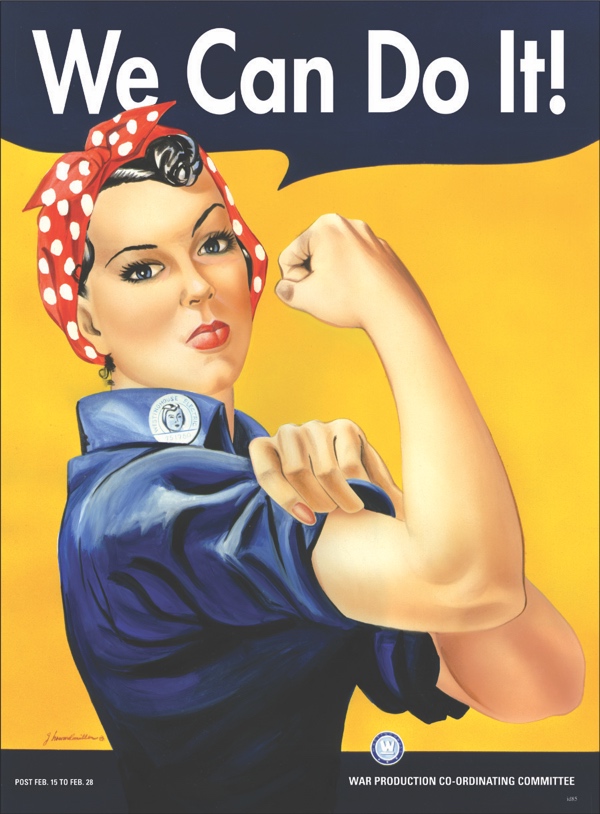



Love ya!
Jane
I would like to point out two more problems: population increase and global warming that have been looming for 50 years largely argued against or ignored. Paul Ehrlich came up with a very strong argument against overpopulation. But the world continues to grow its population. Two of the billionaires you pointed out, Bill Gates and Warren Buffett, have invested huge sums in eliminating diseases that kill children. They are succeeding in the population, by the absence of these killers, increases. Poor people also tend to have more children and the poor population grows as a result.
Global warming was first detected in the 1960s with much debate upon what was causing it. Those causes have all but been determined, but the effort by Vice President Al Gore has turned it into a political football rather than a serious problem that we are running out of time to solve.
My advice would be to have every organization look at its hierarchy and not justify higher salaries for those in administrative positions without direct involvement in making product or service being rendered. These white-collar executives add no value to the service/product, only tend to the myth that through schooling and the right connections, one does not have to work hard to make a good living. Making these middle-management jobs similar to the heirs of great fortune.
The idea that a Chief Executive Officer (CEO) should earn 267 times more per hour than a custodian, is outrageous and should be stopped from ever happening.
Ron
I always appreciate your wisdom- another gem.
John Bidwell