Three Paths to Human Extinction
The world faces three immense challenges today. Left unsolved they will become insurmountable in the next 50 years. Each is of such enormity that failure to act effectively against them will almost certainly mean the end of humanity as we know it. They are: 1) climate change, 2) wealth inequality, and 3) nuclear war. Their rank ordering will not change the urgency of the need to control each of them.
There are also two kinds of people who make such claims. They are the mentally deficient, and the mentally proficient. Occasionally, I like to test the keenness my own mental abilities. For the past 81 years every measure of my own mental abilities has placed me in the second group. Losing the ability to retrieve a few words or the failure to remember a few facts today is disconcerting, but it has yet to make a noticeable impact on my ability to collect facts, to analyze them, evaluate their potential, and to reach reasonable conclusions about them. Like an artist, an athlete, or a musician, it is what I do and where I excel. Enough said on that subject.
First, here is the present state of inequality in the U.S. Epidemiology studies by others support the same conclusions for humanity. Our wealth (assets minus debts) totals $110 trillion. The top 10 percent of our population holds $100 trillion of that wealth. In 50 years at the same growth rate as in the past 50 years, that total will grow by 32 times. That rate of growth means they will have $3.2 quadrillion worth of wealth, and the gap between “them” and “us” will be 32 times wider. Their wealth (nearly all inherited) will be ample to solve all our issues with a huge sum left over. There is not one shred of evidence, however, that the holders of that wealth will part with any noticeable amount of it for humanitarian purposes. We all face the three challenges, and we need to fund the necessary changes to save us from the ravages of poverty, but also to fund the next challenge—climate change.
I must defer to climate scientists about what climate change portends for humanity. Rising temperatures mean hotter summers, more hurricanes and tornadoes, melting polar ice caps, rising ocean levels, massive forest fires, flooding on virtually all shorelines around the world—far inland in many instances—plus food shortages, transportation issues, and a host of others including clean fuel and health needs. In combination with the immense inequality issues, we are on an unsustainable course. Stemming the tide will require money that few are willing to make available.
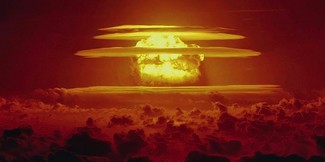
The potential for a nuclear war increases with the troubles of the day, their gravity, and with the mental instability of those who have control over the use of nuclear weapons. Today, the mental health of the trio of Trump, Putin, and Kim Jong Un gives me very little assurance that the world is safe from any one of those ideologues. All three have virtual dictatorial control over their nuclear arsenals, and all three display both a disposition and a propensity to use them. When we add Pakistan and Israel to that list, the potential for reducing the world to piles of radioactive rubble in a matter of minutes burgeons to frightening levels.
There are my three major threats to humanity. Others can make the case for the next 3, 5, or 25 threats. Little serious discussion is taking place about them. Before it is too late, I can only ask: Where are the rational, clear-headed humanitarians now that they are so desperately needed? The year 2069 is probably the outer time limit. D-day could come much sooner.





Forty years ago, I challenge my MBA students in public policy and private enterprise classes to come up with the ways the world could end. I believe there were eight or nine. Some don't fit your criteria, like a meteor strike. And one, as a result of business and public cooperation worldwide, deterioration of the ozone layer, has been reversed. It's the leading example of what we can do if we put our minds and bodies toward accomplishing the right thing.
Ron