The Wealth Gap and the Coming Tsunamis
In 1776 the United States declared its independence from England. In the same year, the Scottish economist, Adam Smith, published a treatise entitled “An Inquiry into the Nature and Causes of the Wealth of Nations.” These two seminal events marked the beginning of a new era in human affairs that have changed the course of history. Both our Declaration of Independence and our Constitution embodied the resolve that we are all the rightful judges of who we are and what we want to become. The Wealth of Nations set forth an outline of how private ownership of the means of production could better serve humanity in its quest for creating and distributing the fruits of its labors. This short essay is a summary of our progress along those two fronts.
The Economic Front: Today, the U.S. is a country of 330 million residents. We hold $113 trillion of personal wealth. On a per capita basis, we have an average $342,000 of wealth. By family units (households), we have an average of $1,113,000 each. But are we a nation of millionaires? Not even close. The numbers are accurate, but they do not reflect the actual distribution of our wealth. That is because the top 10 percent controls approximately $100 trillion of our wealth, the next 40 percent controls $12 trillion of wealth, while the bottom 50 percent controls less than $1 trillion. Around the world a similar pattern exists. Exceptions are Norway, Sweden, Finland, Denmark, and Japan where prosperity is shared with a closer proximity to equality than it is here.
Put another way, those at the top in the U.S. live in regal splendor, while those at the bottom languish in squalor. Those extremes do not overstate the disparities. The polite name for squalor is poverty; which is better understood as crime, hunger, high imprisonment rates, mental health issues, many suicides, high illiteracy rates, and unacceptable drug usage rates. What is more, the composite actions of our laws are the drivers of this state of affairs. Similar patterns from around the world support the causal link between wealth inequality and poverty. Differences in individual abilities, purposes, and determinations are not the primary reasons for the outcomes. The outcomes arise mainly because of inheritances that transfer easily and compound over time, thus they perpetuate and accelerate the gap between the “haves” and the “have nots.” The land of opportunity is now just a cover story better classified as fiction. In addition, we tend to falsely penalize those who must live in poverty as the cause of their own conditions. The two major factors that contribute to poverty are lack of health care and lack of an adequate education, both of which are costly and beyond the reach of the 165 million residents who must live in the bottom half of the wealth distribution curve.
This wealth gap is at the heart of nearly all we say and do in our lives. It explains most of our economic and social statuses, most of our political differences, most of our motivations, most of our crime rates, most of our educational needs, even most of what we are willing to fight and die for. What is more, our wealth gap will be 32 times as great in 50 years as it is today, thus exacerbating all the differences cited above. We are on course to a destiny of our own making.
Put another way, our economic future looks grim--almost beyond hope. A wealth gap that is 32 times as great as that which is already in place is beyond the perceptual reaches of our minds. It portends a looming economic tsunami that will impoverish all in its path. It will make wars, and famines, and climate change, and poverty all seem like just a day at the beach by comparison. We have no defenses in place today to guard against an onslaught that is certain to wipe out all remaining remnants of a level playing field.
This is not a child’s tale about falling skies and other diversions. Our wealth has been growing at 7.2 percent annually over the last 70 years. Projected forward that same rate becomes 1.072^50 = 32.34 times as bad in 50 years. We will hold $3.5 quadrillion worth of wealth featuring family dynasties more powerful than the wealth of many countries. It will be a country of monarchs beyond the imagination of Adam Smith. Will it happen? Yes, with a high degree of cetainty. Will it become the reason for an international calamity? Yes, with high certainty. Will it change world history? Yes, also with high certainty. The only unanswerable questions are these: How soon will it arrive? How long will it last? And what will the landscape look like when the turmoil settles?
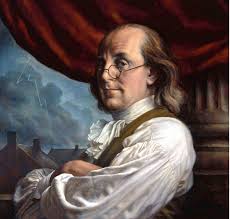
Let’s now turn our attention to the political landscape. There is a story, often told, that upon exiting the Constitutional Convention, Benjamin Franklin was approached by a group of citizens asking what sort of government the delegates had created. His answer was: "A republic, if you can keep it."
The Political Front. We live under a republic, or a representative form government. It began innocently enough. On the national level, we devised three separate but equal branches: the executive, the legislative, and the judicial. In theory this triad was intended to provide a “check and balance” on each other. We also adopted a Constitution intended to last for a very long time. But here we are just 233 years later with a government that is in shambles. Our government acts of, by, and for the wealthy with very little regard for all others. We are also in the pathway to a literal life extinction, with the unimaginable power of a nuclear arsenal in the hands of a dictator masquerading as an imbecile, or vice versa. And we are apathetic to fix any part of it because we are powerless to do so.
We can quibble about who or what else is at fault on the edges, but not a single person to my knowledge has set forth a comprehensive outline that tells us how to fix it. We know that our Constitution needs a major overhaul. It has outlived its usefulness. It has been interpreted too many times by biased minds. It needs to be changed and fortified with safeguards against intrusion by both foreign and domestic ideologues toting corrupt ideologies.
The four major flaws in it are: 1. The establishment of a lopsided and malleable electoral voting system; 2. The virtually unlimited right of dangerous residents to possess deadly firearms; and 3. huge numbers of residents who succumb to political ideologies as easily and as swiftly as propagandists can pollute their minds; and 4. it needs to be a lot easier to amend for the better.
Our electoral system was originally devised and rigged by wealthy landowners who were also slave owners who felt they were deserving of a much larger voice in who is elected to what office. It also remains subject to a host of other abuses including attacks from our individual states in the form of rigging election districts; by states that pass obscene voting restrictions, by purges of voting rolls to favor one political party over others, and by selective and cheap cyberspace meddling by internal hacks and foreign government meddlers. We need to adopt a nationwide voting system in which the candidate that wins is the one who garners the most votes. Period. We also need to forbid within and outside meddling as our highest priority in our domestic and foreign policies. We can and should threaten massive economic, political, and legal sanctions against violators.
Recent revelations suggest that our 2nd Amendment was insisted on being inserted as an amendment to our Constitution by wealthy slave owners who had “militia patrols” out and about with instructions to shoot to kill escaping slaves. The right to keep and bear arms was likely intended only for those “well-regulated states” with armed militia patrols. We've never had a national militia. Gun ownership needs to be severely restricted and controlled. Our children’s lives depend on it. And so do the rest of us.
Lastly, the philosopher, George Santayana, warned us that “those who cannot remember the past are condemned to repeat it.” How true ! We need to learn “how to think” clearly and logically early in life. It needs to be introduced into our public schools from the start. It is our best defense against propaganda. Children need to be held back who fail simple tests that reveal how to protect themselves from tyrants, ideologues, false religionists, politicians and other ne’re-do-wells who rely on insidious promises, fake news, and phony/baloney ideas they want to implant into unsuspecting minds. The 50 million deaths stemming from Nazi rule via propaganda is a fact. Our most recent presidential election is living proof that this urgent need is alive and living among us. The fear that one demented dictator can instill in others could not be clearer than it is now.
Addendum. I have reported on these subjects many times. I’ve done my best to reveal the enormity of their outcomes from many different angles and approaches. I don’t deal in assertions, in fear mongering or in hyperbole. I am a social scientist who reports facts, who then analyzes, synthesizes, evaluates, and reports on them in as simple a format as I can devise. It’s what I do. I have no ulterior motives. I am often attacked by false prophets with hidden agendas, political motives, and by ideologues who arise from the depths of their swamps. I can deal with them. Can you? Praemonitus, praemunitus! (forewarned is forearmed!).
Copy and forward this essay without changes if you agree.




Mary Cecil
Rebecca