AuthorsDen.com   Join | Login    
Where Authors and Readers come together!

SIGNED BOOKS    AUTHORS    BOOKS    SAMPLE CHAPTERS    AUDIOBOOKS    eBOOKS    STORIES    ARTICLES    POETRY    BLOGS    NEWS    VIDEOS    SUCCESS    TESTIMONIALS

Featured Authors:  Cynth'ya Reed, iFrances Altman, i Dadfire, i Aberjhani, iCharles Keller, iT. Weber, iWilliam Potter, iNeenah Davis-Wilson, iBruce Humphrey, iPamela Wiedenbeck, i

  Home > Essays > Articles Popular: Books, Stories, Articles, Poetry      Authors: A B C D E F G H I J K L M N O P Q R S T U V W X Y Z     

E D Phillips

 Follow Me  

· Contact Me
· Success story
· Books
· Articles
· Poetry
· News
· Stories
· Blog
· 1,302 Titles
· 6,063 Reviews
· Save to My Library
· Share with Friends!
·
Member Since: Dec, 2008

E D Phillips, click here to update your pages on AuthorsDen!


Books by
E D Phillips


See all Books
by E D Phillips


One Person, One Vote
by E D Phillips   
Rated "G" by the Author.
     
Last edited: Thursday, March 25, 2021
Posted: Thursday, March 25, 2021

Recent articles by
E D Phillips

• Spiritism Explained
• Segments from a Bifurcated Life
• AI at Its Best
• July 4, 1776: 250 Years Later
• A Sage or a Saber-Toothed Renegade?
           >> View all

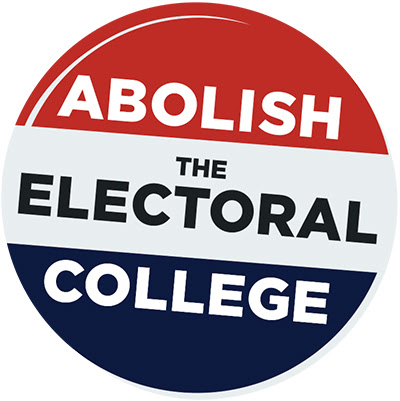
[image: AECpact.org]

One Person, One Vote

The US states have an average population of 6.64 million residents each. But each state has two votes in the US Senate. Thus on a one-person, one-vote basis, those states with less than 6.64 million residents have an advantage in every vote cast by the US Senate. Is that fair, democratic, representative, or does it make any sense at all?

For example, California has 53 times as many people as Alaska, yet they each have two votes in the US Senate. California has two Democratic senators, while Alaska has two Republican senators, and that makes California’s Democratic residents greatly under-represented, while Alaska’s Republican residents are hugely over-represented.

“Yes, but”...say the Alaskans, “we have more mountains. And they can’t vote. So we vote for them.”

“True, but we have more sand, and trees, and cars, and homes, and hospitals, and oranges, and highways, along with more lettuce, tomatoes, and grapes that can’t vote either, say the Californians. But who cares? Your population is perfectly represented in your state legislature. And that is how it should be according to the US Supreme Court (in Reynolds v Sims, 1964). Besides, each US Senator has an obligation to vote in the national interest, not just how it could impact those in his or her home state. That is less likely to happen with a population-based Senate.”

“Oh, so you think you’re smarter than our Founding Fathers?” say the Alaskans,

“Except for Thomas Paine, yes,” is a worthy reply. “The Founding Mothers are an entirely different matter.”

This dialogue is typical of the high-school debates heard in the halls of Congress. Truth be told, the entire Electoral System of voting is a biased mess. That is because it was devised to give an advantage to wealthy landowners, who were also slave owners. Today, it continues to be milked for all it’s worth by the ultra-wealthy so they can maintain control over their commercial and financial interests by flexing and adding to their wealth accounts that have soared to more than $100 trillion dollars. They have exploited every crack and crevice in the system to give them an advantage in who is elected, which laws are passed, the issues that are defeated, while they hold those they support accountable to them and obedient to their needs. It is a class-servitude relationship that defies life, liberty, and the pursuit of happiness to the great majority of Americans and legal residents. It also promotes dynasty-building and continued exorbitant wealth-accumulation to them and their offspring now and in perpetuity. It defies the intentions of those who signed the Declaration of Independence in which they pledged their lives, their fortunes, and their sacred honor. That’s the short answer.

Ultimately, the Constitution needs to be changed to eliminate the Electoral System and replaced by a direct vote of the people made as easily, fairly, and as honorably as possible without concern for where voters live, who they work for, their wealth status, or their reading abilities. Those ends can be achieved by the Popular Vote Interstate Compact advocated and organized by the organization known as Abolish the Electoral College. To date 15 states plus DC have signed a pledge, giving them 196 of the 270 votes needed to make the Electoral System irrelevant.

You can join in this effort by clicking here.

Web Site: AuthorsDen.com


Want to review or comment on this article?


Need a FREE Reader Membership?
Reviewed by Corrine Ardoin
Reviewed on October 23, 2021
Very good article and a well-thought out argument for abolishing the Electoral College. I agree, one person and one vote. Period.

Reviewed by Patricia Hilliard
Reviewed on March 26, 2021
One person - one vote! That would be real democracy, something we have not yet had. It will take a mighty struggle to obtain this!! Let's get to work!!

Reviewed by John Herlihy
Reviewed on March 26, 2021
So sensible and "fair". I agree completely and support this suggestion.

Reviewed by Odin odin@aflx.com
Reviewed on March 25, 2021
Here, again, your essay begs for everyone to live in the 21st, not the past. If only this were the only problem with voting. If Georgia is any sign of the future for other states, voting laws that rule it unlawful to give food and drink to anyone in line to vote is barbaric and, yes, Neanderthal thinking (although it's hard to believe even the primitive would act this way.)

Popular Essays Articles
  1.  Where Have All the Authors Gone?
  2.  The Advent of ALICE 1.0 Advanced Logis
  3.  War and the Earth we need to live on.
  4.  An Era of Stupidity and the Challenge
  5.  Down with Group Chat
  6.  Critical Race Theory & the 1619 Projec
  7.  Needed: A Progressive Grand Strategy t
  8.  Less Words, More Results
  9.  Takeaways from Adam Smith's The Wealth
  10.  Mr. Trump, have you no sense of decenc
  11.  The Crisis of Opioid, Fentanyl, Cocain
  12.  Verifying Ones Self
  13.  Where, oh where, has my Porsche dream
  14.  Critical Race Theory
  15.  Just a Kid
  16.  Super Spreaders Disguised as Congressm
  17.  Daylight Saving: Stop Legislating the
  18.  Are You Writing for Me?
  19.  The Compassion of Christ
  20.  Why Excessive Inequality Matters
  21.  Bone-headed Supreme Court Decisions
  22.  Rhode Read: RI’s Tobacco-Based Wealth
  23.  Genghis Khan Rides Again!
  24.  The Cozy Mystery: Death by a Thousand
  25.  American Fascism and the Bush Administ

Free Book Review Program
Select a book to read and review today!

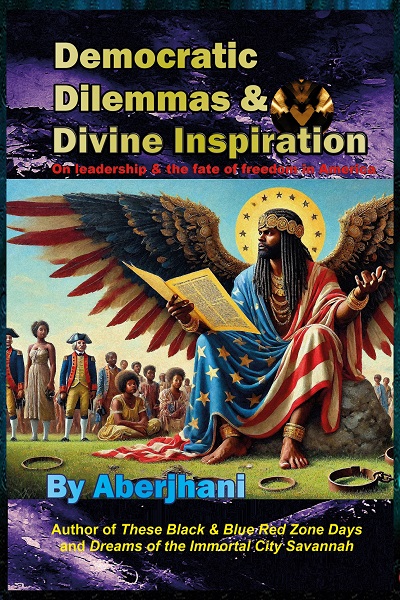
Democratic Dilemmas and Divine Inspiration (A Kindle Short) by Aberjhani

Democratic Dilemmas and Divine Inspiration examines the significance or relevance of the idea that the U.S. Constitution was, as many believe, divinely inspired. How much did that belief matter to founders of the nation and how much does it matter no  
Member BookAds

Democratic Dilemmas and Divine Inspiration (A Kindle Short) by Aberjhani

Democratic Dilemmas and Divine Inspiration examines the significance or relevance of the idea that the U.S. Constitution was, as many believe, divinely inspired. How much did that belief matter to founders of the nation and how much does it matter no  
Member BookAds

Democratic Dilemmas and Divine Inspiration (A Kindle Short) by Aberjhani

Democratic Dilemmas and Divine Inspiration examines the significance or relevance of the idea that the U.S. Constitution was, as many believe, divinely inspired. How much did that belief matter to founders of the nation and how much does it matter no  
Member BookAds