[image: creative commons]
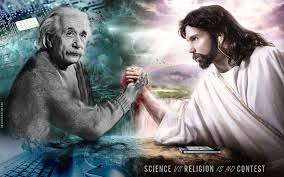
Religion v. Science
Science is the search for enlightenment, also called the search for knowledge. It uses a methodology that limits what we can do to reach that lofty plateau. It is our surest way to find enlightenment because it lets us assume nothing while it places very demanding limitations on us. In contrast religion is the search for purpose; mainly, it is about answering why we are here. It assumes that which cannot be established by a methodology; namely that God is the driving force behind everything in the universe. Are these two pursuits mutually exclusive? Or can they coexist without the need for anyone to mock, maim, or kill to get others to believe them? I tried chasing down these two pursuits long ago. I found a middle ground that has served me well.
Technically, I am a scientist committed to finding answers to issues by using the best tools at my command. I draw upon six physical measurements, (length, mass, time. temperature, luminescence, and amount of substance—all extent in the universe). My task is to use mathematics and logic in reaching tentative conclusions about issues that are accurate, reliable, and useful within the boundaries determined by a set of procedures that establishes those limitations. I have never felt the need to debate anyone on the merits of science and religion or the differences between the two. Science is verifiable, while religious beliefs are not. Religious beliefs, however, too often find their way into our lives when legislators feel compelled to impose their beliefs on all within the scope of legislative duties to do so.
Religions draw upon dogma and assertions in reaching their conclusions about important issues. Western religions are chock full of assumptions, guesses, and surmise that are often based on many different interpretations of tales or dubious accounts handed to them, or on faith alone. I also do not know enough about Asian religions, or those found in Iran, or Africa in order to make a judgment about them. I am satisfied that when the two perspectives clash, science holds the upper hand. The following definition about Deism, however, satisfies my curiosity on the subject of God and the afterlife over all religions that I know something bout..
Deism is a philosophical belief that posits the existence of a single creator God who does not intervene in the universe after its creation. Deists believe that God created the universe and set it in motion, but does not interfere with it or the lives of the beings within it. They reject the idea of divine revelation and supernatural events, and instead rely on reason and logic to understand God’s nature. Deists also reject the notion of prophets and the need for worship or specific behavior on the part of followers . They believe that any knowledge one has of God should come through one’s own understanding, experiences, and reason. Deism is sometimes considered to be a reaction against theism in its various forms, which is the belief in a God that intervenes in the lives of humans and with whom you can have a personal relationship.
Deism also removes all clergy from the discussion, the rules they make, the need to attend church services, the validity of the Bible, the Koran, and other books of questionable origin; or when, where, or whether to make donations to anyone or to any cause. In short, Deists ask others to leave us alone to make what we will of the subjects of God, purpose, life, and the afterlife. I am inclined to accept the testimonies of millions who have had near-death experiences (NDEs) about an afterlife described by Spiritism—a nonreligious set of principles based on the findings of psychologists, psychiatrists, and those who have studied subjects of the mind. Thus, I am free on logical grounds to believe whatever I will about life drawing on empirical proof, and to live within the rules of decency set by society on others. The Golden Rule and following a set of behaviors that are consistent with my own perception of purpose lead me: Help the poor, the young, the sick or disabled, and the elderly within my abilities to do so, irrespective of their personal beliefs.
I believe in the goodness of Providence, the goodwill of others, and simplicity as my guiding star in all other matters. Greed, selfishness, and cruelty are my enemies. I don’t let the Perfect become the enemy of the Good, nor hate over Love. Free will and Justice are two essential goals that guide me.
Legislators need a lot more facts, a lot less guidance from their wealthy benefactors, and a bit more humility in their motivations when called upon to vote for or against any issue that affects us all.
|



I encourage you to check out a great book written Physicist, Michael Gullen titled, "Believing is Seeing" copywrite. 2021. Dr. Guillen is a graduate of UCLA and Cornell University, with degrees in physics, math and astronomy. He was also the Science Editor for ABC News and taught physics at Harvard for eight years. He was the host of the History Channel series, "Where Did It Come From?" and is the president of Spectacular Science Productions and speaks to audiences worldwide. In his book, Dr. Guillen explains how science is God's gift to humanity and is a brilliant way to explore God's transfinite nature and stunning creation. Dr. Albert Einstein believed in a creator and one of his most important quotes is we should, "Question Everything" and in this boor Dr. Guillen leaves very few stones unturned. Enjoy the read and let the world know your opinion of his book! Respectfully, Dr. John Michael Domino
Personally, I find that the best of the Christian upbringing that I had did not come from the regimen required by the church but by the best philosophy found in the writings of those who contributed to the Christian religion and the older, Jewish religion like the 10 Commandments and the Golden Rule. Poetry like the 21st Psalm. However, I am not bound by them, especially the commandments that are obviously unsustainable, scientifically.
If I leave the clutter of religious dogma and ritual behind along with the annoying concerns about whether there is a God or not, I find my mind free to wander without worry about if I'm stepping on some spiritual toes that I don't fully understand. It helps me stop fearing the unknown. Rather, see if there is a way to find out what it is. Science has revealed so many mysteries and altered so many beliefs in just the last century that is nearly mind-boggling how ignorant we still are.
Ron
Rebecca