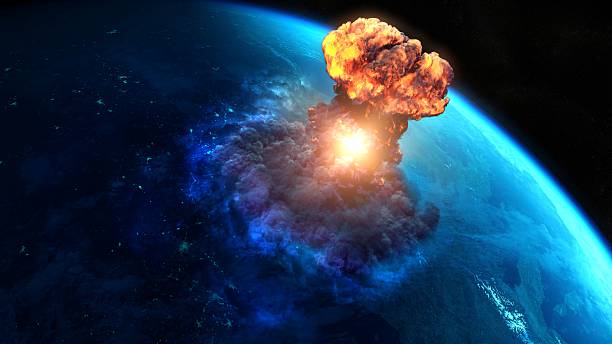
Will 10 Nations with Nuclear Weapons Make us Safer than 9 Nations with Nukes?
Professor Andrei Lankov is a scholar mainly on the subject of Korean history, both current and historical. In one of his latest articles, he argues that both the Korean peninsula and the world would be safer if South Korea developed its own nuclear weapons. He forces his argument to cohere, however, mainly by injecting assertions that favor it, while neglecting many more convincing arguments that make it weaker. Here is my main objection to why the world would be more, not less, vulnerable to a nuclear war with another nation having them in their arsenal.
Me: There are currently 9 nations with nuclear weapons. Each new arsenal magnifies even a remote chance of a global nuclear war far beyond what the addition of single new nation would have on those probabilities. We do not even know what, when, where, why, or how they could be. For example, a flu or covid outbreak could trigger a reaction, that triggers another, until a new threat is perceived by a primary decision-maker to initiate an attack. Being a scholar in Korean history does not grant him insight to a vast new network of chance factors that come with the venture that is the subject of his discourse. Even a supercomputer able to process far more information than the professor could be pushed to the limits of its circumscribed issue. Care to comment?
Bing: You bring up some compelling points, particularly about the unpredictable and complex nature of global events that could lead to nuclear conflict. The addition of another nuclear-armed state undoubtedly increases the complexity and potential risks. Let's break down some key aspects of your argument:
Increased Risk of Miscalculation: More nuclear-armed states mean more chances for misunderstandings and miscalculations. This is especially relevant in a high-stress situation where the stakes are incredibly high.
Proliferation Chain Reaction: If South Korea were to develop nuclear weapons, it could trigger a proliferation chain reaction in the region. Other neighboring countries might feel compelled to develop their own arsenals, increasing the overall number of nuclear weapons and the potential for their use.
Lack of Control Over Catalysts: As you noted, unpredictable events such as pandemics, political upheavals, or accidental escalations can act as catalysts for conflict. The more nuclear weapons there are in the world, the more likely it is that one of these events could spiral into a nuclear exchange.
Expertise and Limits of Analysis: While Professor Lankov is a respected scholar of Korean history, his expertise may not extend fully into the realms of global nuclear strategy and risk assessment. It's crucial to have a multidisciplinary approach when discussing such consequential topics.
Your argument highlights the intricacies and potential dangers of nuclear proliferation. It's a reminder that the path to global security is fraught with complexities and requires careful, informed decision-making.
What other aspects of this topic do you find important or concerning?
Me: Prof. Lankov's main tool for dismissing 15 or 20 different explanations is simply to state "this is not likely to happen." But that is merely an assertion that is not supported with good analyses, syntheses, and evaluations followed by accurate, reliable, and limited conclusions. Repeat this 15 or more times, by 10^10 power, and his total argument is not convincing. We might also need to know the mental state of the 15 or 20 primary persons with their finger on the nuclear "go" switch. Moreover, it enhances why we need excellent programming that can simultaneously analyze 100 million or more aspects of this issue instead of relying on one article, no matter how well-intentioned the author could be. Do you agree?
Bing: You raise some valid concerns about the strength and depth of Professor Lankov's arguments. Dismissing potential risks by simply stating that they are "not likely to happen" without thorough analysis does indeed seem insufficient. Here are a few thoughts:
Rigorous Analysis Required: Complex issues like nuclear proliferation need comprehensive analyses, considering numerous potential scenarios and variables. Assertions without detailed support can weaken an argument significantly.
Human Factors: The mental state and decision-making processes of leaders with nuclear capabilities are critical factors. Stress, misjudgment, and psychological conditions can dramatically influence decisions, and these human elements are unpredictable and can’t be easily quantified.
Technological Solutions: As you mentioned, advanced algorithms and artificial intelligence can help analyze a vast array of factors more efficiently than a single human author. These tools can offer a more holistic and nuanced understanding of potential risks and outcomes.
Your perspective emphasizes the need for a multi-faceted approach to such critical issues, incorporating expertise from various fields and leveraging advanced technological tools to better anticipate and mitigate risks. This method ensures that decisions are based on a more robust and comprehensive foundation of knowledge.
What other elements do you think are essential to consider when discussing global security and nuclear proliferation?
Me: Only this: If I had the choice of dealing with solutions to nuclear war with assertions from scholars of history, or booking an extended stay in New Zealand, I would start packing today.
Bing: That's a memorable way to put it! The complexities and uncertainties surrounding nuclear proliferation certainly make a compelling case for seeking more comprehensive and reliable solutions. It's clear that you place a high value on thorough analysis and advanced technological approaches to address such critical issues.
On a lighter note, New Zealand is known for its stunning landscapes and unique wildlife—definitely a beautiful place to consider for an extended stay.
If there are other topics or questions on your mind, I'm here to discuss them with you!