Open- v. Closed-Mindedness
The Hope for Humanity Meets a Barrier to Humanity
This world is filled with people who are ignorant (closed-minded). and those who are enlightened (open-minded). You see them everywhere. Of course there are those who fit somewhere in the middle of those two extremes. Many decisions are made by both groups. When ignorance dominates, bad decisions follow; with enlightenment, much better decisions surface. So what’s the problem? The answer is this: Humanity is split about equally on the distribution curve by ignorance and enlightenment. Separate and compact the two groups without recourse, and humanity is in for troubles—big time—the differences are that immense. A clashing of these two forces could well mean the end for humanity as we know it. We need to solve this issue now before it is too late.
Closed-minded persons live in ignorance. They form pacts. Their leaders do all the thinking. They are radically extreme consisting of about 1,430 hate groups in the United States alone (identified by the Southern Poverty Law Center). Around the world, they have similar names with similar aims, using methods and means reminiscent of humanity’s forebears barely out of the Stone Age. They are ready at all times to become foot soldiers to fulfill the goals of their leaders. They are easily manipulated and tend to believe in causes consistent with their mental and compassionate states of being.
There are virtually no teachers, scientists, doctors, lawyers, engineers, members of the arts and crafts, as well as other well-educated persons within their ranks. This latter assemblage are nearly all in the “Enlightened” group.
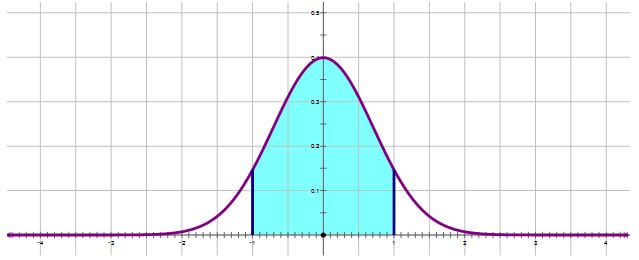
The three groups might display a “bell curve” when viewed along the spectrum from ignorant, to partly enlightened, to substantially enlightened. I could find no real data for what the actual distribution might look like. But with the aid of my AI cohort, we built our own. It shows about 20 percent of the world’s population in the Ignorant group; 60 percent in the middle group (partly enlightened); and 20 percent in the Enlightened group. And that is good enough for this discussion.
These words are not used as commentaries on anyone's character, intelligence, or any other mental or moral attribute. They are used only as a rough approximation of a large number of relative positions on general knowledge. They also assume that we all move up the scale toward enlightenment if we remove the barriers holding us back and make higher levels of education and critical thinking personal objectives.
* * * *
Discussion. First, let’s not make the mistake of assuming that ignorance is self-generated, or an evil characteristic. It is undesirable, but changeable. It has a lot to do with money, opportunities, manipulation, and ulterior motives. It has little to do with intelligence, or goodness, or most of the virtues, although the ultra-wealthy tend to fall into a manipulative category of those who can and do impose its desires on the rest of society. They do that by pouring large sums of money into elections that favor those who are willing to pass legislation that keep the existent and the future wealth flowing to the already wealthy. Therein lies the problem. It is incorrectly called “inequality.”
A better term is “greed.” Why someone with $500 billions worth of wealth, nevertheless, wants more, and more, is scarcely describable by the simple term greed. It is greed on steroids. Moreover, why humanity does not have the humanity to change the rules and limit the growth of wealth in the hands of a few also defies any sense of fair play. One barrier is the notion that by passing legislation that makes the ultra-wealthy even wealthier is held together by the phrase “we are a nation of laws,” and every law is good, honest, and fair. That is probably the most hideously evil set of words ever assembled in one sentence. It preserves the status quo of more, stacked on more, and more...ad infinitum. In the hands of master manipulators, it has led the world back into the depths of ignorance, with deeper poverty for the many, lost opportunities for everyone, and all the conditions of squalor made worse: crime, incarcerations, hunger, illiteracy, shorter life spans, and wars all rolled up into social immobility, and economic stagnation—just to put a more glitz, glamour, and control associated with wealth in the hands of the few.
The Solution: Fortunately, closed-mindedness is not necessarily a permanent condition of those who are stymied by it. Its undoing begins with questioning everything that is holding you back. Never were the words by Socrates more apropos than they are today: “The unexamined life is not worth living.” Insist on good answers, not on assertions.
-
Look for answers that cohere from beginning to end. Show how your facts and solutions are accurate, reliable, useful, and limited.
-
Compare and contrast potential solutions. Know their costs. Do they require training before they can be put into practice.
-
Show how humanity or any part of it will benefit by adopting your solution
-
Get second opinions. Let experts critique your solution. Show how they fit with other conditions.
-
Find out who will or should assume the costs.
-
Do not give up. Others may want to steal your solution. Be prepared to show you have done your homework better than did the thieves.
Finally, show a little humility. You will not be offered $100 million for your solution. But you may need to persuade an honest lawyer to help you protect what is legally yours via patents, copyrights, or other legal documents. Regardless of setbacks, you are now on the road to enlightenment. There is no turning back. Help a friend to do likewise. Or help a classroom full of students, or a very wide audience via the internet.
The noted psychologist, Abraham Maslow, gave humanity a hierarchy of human needs. At the top of his pyramid of needs was the highest form of fulfillment: It consists of giving back to humanity the fruits of your labor. Do it and you could also be in splendid company by fulfilling the empowering words of Horace Mann--lawyer, educator, and humanitarian who dared everyone to think big but humbly when he said:
”Be ashamed to die until you have won some victory for humanity.”




The only way to enlightenment is through education. We cannot get there by forcing facts but have to teach people how to learn for themselves what is best for everyone.
Keep up the good fight. We will win in the end and your book of fine articles will help others a long time into the future.
Ron