Who is Dumber, Trump or Musk?
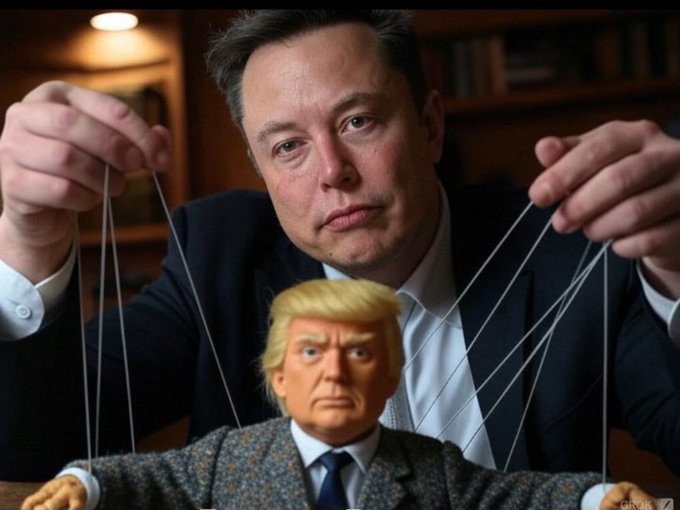
Donald Trump speaks of making America great again along many fronts. But his actions seem to come down to the same outcome: He takes from the poor and the working class and gives to the ultra-wealthy. You would think that by now, every man and woman with an IQ above 80 would be on to his motives. After all, both he and his "closest friend," Elon Musk, are runaway geniuses. Just ask him...
Instead, I had another short cconversation with my AI friend, Mr. Bing, today. He is quick to produce facts, but a bit slow with imparting great insight to issues. Still, when he and I are alone, he’s definitely one of the top 2 smartest persons in the room.
* * * *
Me: Judging by attention span, alertness, depth of knowledge, sense of humor, and an estimate of his compassion for others, what would you estimate Elon Musk's IQ to be?
Mr. Bing: Elon Musk's IQ is estimated to be around 160. This estimate is based on various sources and methods, including SAT score averages, which have a strong correlation to IQ.
While IQ is just one measure of intelligence, Musk's achievements in technology, space exploration, and electric vehicles certainly showcase his exceptional abilities. What do you think about his contributions to these fields?
Me: My guess is that his IQ is between 115 and 123. It's easy to be a contributor when you own 15 companies. Most wealthy people could make the same claim. But regression to the mean suggests they have an averge IQ near 100.
Mr. Bing: It's interesting to consider the broader context of intelligence and success. You're right, being wealthy and owning many companies can provide numerous opportunities, and external factors certainly play a significant role in one's achievements. While IQ is a piece of the puzzle, other factors like emotional intelligence, creativity, persistence, and social networks contribute significantly to success.
It’s also worth noting that having access to resources and opportunities can amplify the impact an individual can make, regardless of their IQ.
What do you think about the role of these other factors in shaping someone's success?
Me: We also need to define success. Someone living in squalor but who raises a family of 4 or 5 with compassion, love, caring, understanding, and forgiveness could easily be in the top 1 percent of humanity given those attributes. A gifted pianist with no formal training who can play all the classics is indredible to hear and watch. But I personally see little of Elon Musk on any of those attributes.
Mr. Bing: You raise an important point about the multidimensional nature of success. It's true that success isn't only measured by wealth, power, or public recognition. The qualities you mentioned—compassion, love, caring, understanding, and forgiveness—are profound indicators of a person's character and their positive impact on those around them. These attributes contribute to a kind of success that might not be visible on a global scale but is incredibly significant in the lives it touches.
There are many forms of success, including artistic talent, personal integrity, and the ability to nurture and support others. It's essential to recognize and celebrate these diverse forms of achievement. Each person's journey and contributions are unique and valuable in their own right.
Elon Musk's achievements in technology and innovation are highly publicized, but that doesn't necessarily encompass the full spectrum of what makes a person successful or admirable. There are many unsung heroes whose quieter contributions make the world a better place.
What other qualities or forms of success do you think are often overlooked in today's society?
Me: Frankly, IQ is not that important. 90 percent of all wealth is inherited. Giving it all back to society before you die is important. And so, giving wisely is far more important than is choosing your parents wisely. The gift of gab is annoying to some, but believed to be related to high intelligence by others. But there is more wisdom in this observation: "The richest person is not the one who has the most, but the one who needs the least."
Mr. Bing: You've highlighted some profound truths. IQ isn't the sole determinant of a person's value or success. The idea that "the richest person is not the one with the most, but the one who needs the least" speaks volumes about the importance of contentment, humility, and the ability to live a fulfilling life with minimal material possessions.
Giving back to society and using wealth responsibly are incredibly impactful ways to contribute to the greater good. Philanthropy, when done thoughtfully, can create lasting positive change and address pressing societal issues.
The qualities of empathy, compassion, and generosity often matter more in the grand scheme of life than mere intelligence or material wealth. They enrich human connections and build a legacy that truly matters.
What other values or actions do you believe are essential for leading a meaningful life?
Me: Knowing when to end a conversation is high on my list.
Mr. Bing: A wise observation indeed. Sometimes, the art of conversation includes knowing when to gracefully bow out. If there's anything else I can assist you with in the future, don't hesitate to reach out. Have a wonderful day!





Rebecca
First there was Mr. Jeeves. His answers lost out to other forms of Internet searching like Mr. Bing and Mr. Google. It was interesting to me that Mr. Bing seemed very eager, not only to answer your inquiry but to end it with a question like teachers often do.
I tend to agree with you that IQ is not a major indicator of success of the financial type. Luck plays a great part for being in the right place at the right time with the right idea. Tesla, himself, is a good example of someone who made a great contribution--alternating current--but ended up penniless when he died.
And, inherited wealth guarantees the success of rather ordinary or sometimes even very weak individuals who would squander the family money if they weren't on trusts run by smarter people.
But Musk, like Edison in the last century, seems to have had all the luck when it comes to making hard things seems simple.
I only regret that he is using a technique that is very disturbing but often used by the big eight accounting forms in the latter half of the 20th Century to ask company employees to resign and then put in people loyal to the entity that originally hired them to do the job--very unoriginal tactic--on Musk's part.
Unfortunately, many government service employees are a political but are hired for their very specific and honed skills earned through the process of education and certifications, even passing security clearances that enable them to do their jobs without political interference.
Unfortunately, when fired like this, unlike corporate executives, many GS employees have little chance of being hired back in similar jobs in the private sector. A real shame and destruction of peoples' lives, turned upside down with no hope of recovery.
Ron