AuthorsDen.com   Join | Login    
Where Authors and Readers come together!

SIGNED BOOKS    AUTHORS    BOOKS    SAMPLE CHAPTERS    AUDIOBOOKS    eBOOKS    STORIES    ARTICLES    POETRY    BLOGS    NEWS    VIDEOS    SUCCESS    TESTIMONIALS

Featured Authors:  Paul Lonardo, iLloydene Hill, iCynth'ya Reed, iJohn Henning, iDr. Patrick ODougherty, iRoger Vizi, iFrank Whyte, iMary Lynn Plaisance, iDebra Kraft, i RickthePoetWarrior, i

  Home > Essays > Articles Popular: Books, Stories, Articles, Poetry      Authors: A B C D E F G H I J K L M N O P Q R S T U V W X Y Z     

Ken Brosky

 Follow Me  

· Contact Me
· Books
· Articles
· News
· Blog
· Messages
· 33 Titles
· 7 Reviews
· Save to My Library
· Share with Friends!
·
Member Since: Before 2003

Ken Brosky, click here to update your pages on AuthorsDen.


Writing about family for fiction and non-fiction
by Ken Brosky   
Rated "G" by the Author.
     
Recent articles by
Ken Brosky

• Five places to find a plot for your novel
• Creating a realistic setting in your fiction novel
• How to build your author web site
• 4 tips for beating writer's block
• A beginner's guide to writing a novel
           >> View all

Writers looking for a unique, original idea should look no further than their own family, which has its own unique conflicts, characters and settings.

Writing for family can be fun, but writing about family can be an emotionally exhausting process. Many writers don't take advantage of family history and events in their writing because of a fear of what the family may think or how family members may react to seeing their histories and themselves in the writer's stories. It's important for writers to understand that writing about family doesn't need to be a difficult chore. Here are some tips for writing about family without alienating family members.

Combine Family Members to Create New Characters

When writing fiction, writers can based characters on any number of family members, combining qualities of different members to create an entirely new, unique character who won't necessarily offend family members. A goofy uncle who drinks heavily and listens to country music? Simply take his goofiness. An overweight aunt who collects junk and stores it in one big room? Take her junk collecting qualities. A grandmother who lives out in the country and is convinced President Obama is a secret Muslim? Take her conspiracy theory.

Now combine these qualities. Create a character who enjoys collecting junk, acts goofy and enjoys passing around conspiracy theories. This new, unique character has been based on family members but isn't so recognizable that the character may offend any particular family member. For physical characteristics, writers can look outside of family.

Every Family's History is Unique and Useful for Writers

No two families have the same history. Writers can take advantage of this by digging through family history and records to see what has made their family unique. The events that happen in a family and the trials each family go through can be experiences that readers will not only enjoy reading, but also find useful in their own lives and dealings with family. Writers should express this to family members who are hesitant to see their "dirty laundry" aired on the written page.

Some of the best writers in fiction have used traumatic family experiences to craft important, far-reaching novels. Louise Erdrich's Shadow Tag is a great example. The events that happen in Erdrich's novel are based on her experiences in her own close family and she's not afraid to use it.

Write Non-Fiction When the Story Needs the Facts

When deciding whether to write a fiction or non-fiction story about family, writers should ask themselves how many of the facts are necessary to send the correct message to readers. If the family event that took place needs to be portrayed just as it happened, then writers should not try to fictionalize the story, even if it means alienating some family members. When it's possible to "hide" family members by creating new characters, or if the facts need to be tweaked in order to convey a stronger message, then writers should create a fictional work.


Want to review or comment on this article?


Need a FREE Reader Membership?
Popular Essays Articles
  1.  Where Have All the Authors Gone?
  2.  The Advent of ALICE 1.0 Advanced Logis
  3.  War and the Earth we need to live on.
  4.  An Era of Stupidity and the Challenge
  5.  Down with Group Chat
  6.  Critical Race Theory & the 1619 Projec
  7.  Needed: A Progressive Grand Strategy t
  8.  Less Words, More Results
  9.  Takeaways from Adam Smith's The Wealth
  10.  Mr. Trump, have you no sense of decenc
  11.  The Crisis of Opioid, Fentanyl, Cocain
  12.  Verifying Ones Self
  13.  Where, oh where, has my Porsche dream
  14.  Critical Race Theory
  15.  Just a Kid
  16.  Super Spreaders Disguised as Congressm
  17.  Daylight Saving: Stop Legislating the
  18.  Are You Writing for Me?
  19.  The Compassion of Christ
  20.  Why Excessive Inequality Matters
  21.  Bone-headed Supreme Court Decisions
  22.  Rhode Read: RI’s Tobacco-Based Wealth
  23.  Genghis Khan Rides Again!
  24.  The Cozy Mystery: Death by a Thousand
  25.  American Fascism and the Bush Administ

Free Book Review Program
Select a book to read and review today!

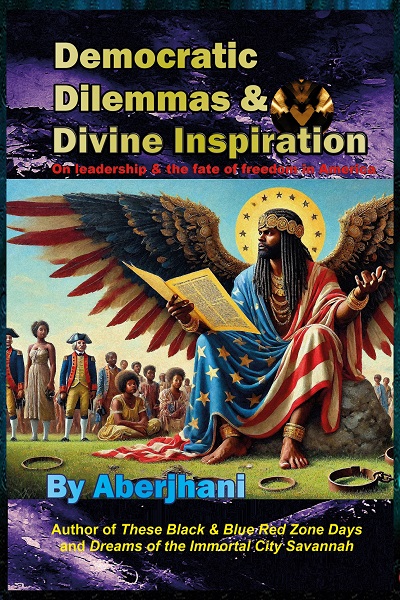
Democratic Dilemmas and Divine Inspiration (A Kindle Short) by Aberjhani

Democratic Dilemmas and Divine Inspiration examines the significance or relevance of the idea that the U.S. Constitution was, as many believe, divinely inspired. How much did that belief matter to founders of the nation and how much does it matter no  
Member BookAds

RAM: Random Articles and Manuscripts by Jay Dubya

RAM: Random Articles and Manuscripts, a non-fiction collection of 38 stories and essays, is author Jay Dubya's 32nd book.  
Member BookAds

RAM: Random Articles and Manuscripts by Jay Dubya

RAM: Random Articles and Manuscripts, a non-fiction collection of 38 stories and essays, is author Jay Dubya's 32nd book.  
Member BookAds