A look at proper sci-fi...oops, I mean SF...etiquette. First published in The Illuminata in February 2002.
Sci-Faux pas
By Bret Funk
Early last month, I found myself caught on the fringe of controversy, drawn inexorably toward a swirling maelstrom of high-strung emotional turmoil, semantics, and condescension. To my inexpressible shame, I made a grave mistake, an error so heinous that, to some, it not only besmirched my good name as an author, but cheapened the very body of my work. In my ignorance, I referred to literary science fiction, not as SF, but as sci-fi.
I've been a fan of science fiction – in all its many and varied forms – since my early childhood, but I was a recluse even by the standards of my SF brethren. I shied away from conventions, attended neither reading nor support groups, and avoided nonfiction articles – even ones with an SF spin! – like the plague. Consequently, I was unaware that a controversy existed, let alone that I had contributed to it, and fell neatly into the trap set for me by Hollywood and the power-hungry media.
I was not alone in my transgression. In an unrelated incident, Tyrannosaurus Press was brought to task for using the dreaded word. Of course, their notice came in the form of a polite and professional e-mail, the criticism neatly ensconced between kind comments. When they addressed the issue and sent a response, they received a pat on the back for making an effort.
I, on the other hand, received a scathing, defamatory letter written with all the verbiage of a seasoned wordsmith and all the passion of a zealot. My commitment to writing, my lineage, and even my love of science fiction were called into question. I read the letter with the callousness I extend to all fanatics, whether political, religious or literary. Nevertheless, the accusations hurt, and I jotted off a short, but apologetic, response.
And what did my goodwill earn me? A second diatribe, one that included a list of shortcomings long enough to make my mother proud.
Though angry, I was also intrigued. I wanted to know why this was an issue, why such a simple thing evoked such strong emotions in fans of SF. And I wanted to know what the words really meant, since they obviously couldn't be used interchangeably.
My quest before me, I went in search of knowledge. This is what I found:
Science fiction, according to Webster, is ‘fiction that imaginatively uses scientific fact and speculation to create a fantastic situation.' By this definition, Jules Verne would be a science fiction writer, as would Arthur C. Clark, Issac Asimov, Kim Stanley Robinson, and a host of others; drama- and humor-oriented writers, such as Weis & Hickman, Timothy Zahn, and Douglas Adams would not make the list.
SF is an abbreviation used for two similar, but not identical, terms: science fiction and speculative fiction. In either case – to the best of my knowledge – when SF is used, it refers specifically to literary science (or speculative) fiction. Though the terms are often used interchangeably, even by those disgusted by ‘sci-fi,' they, too, have disparate meanings.
The definition of science fiction was discussed above, but speculative fiction goes a step further. It is broader in scope, covering not only traditional science fiction, but also fantasy and other genres. Which other genres, though, I'm not quite sure. Despite reading numerous articles, I was unable to find a consensus. Alternate history was generally considered speculative fiction, but historical fiction that fits neatly into Earth's documented timeline was not. Some definitions included horror, others did not. The best explanation I found defined speculative fiction as being ‘set in a world that has not happened.' This clearly separates it from general fiction, which only requires that the events have not happened.
But what of sci-fi? Where does it fit in? Sci-fi (pronounced skiffy by its opponents) is currently in a unique position: it has two distinctly different definitions. By hardcore fans of literary SF, it is a term of derision, a word that encompasses all that's wrong with today's view of science fiction. The mere mention conjures images of ‘50s B-movies, foam-rubber monsters, and Star Trek pseudoscience. Sci-fi is a Hollywood creation, a collection of unoriginal and often silly movies, television shows, and ideas. It is science fiction without the science; it doesn't care that there is no sound in a vacuum, that insects can't grow to giant sizes, or that the odds of all sentient life in the universe being human-shaped is a near impossibility. Sci-fi is not concerned with extrapolation of science fact; it is a tool of the entertainment industry.
While speculative fiction should have little problem with sci-fi (alluding to the definition above, a world in which sound exists in a vacuum is certainly a world that has not existed), one can immediately see the rift between sci-fi and science fiction. One reveres science, the other ignores it.
Though to the elite of literary SF, sci-fi is anathema, Hollywood and the media have taken up the gauntlet. Using the billions at their disposal, they gave sci-fi its own television channel, plugged it shamelessly in news media and magazines, and quickly made it synonymous with anything science fiction. In doing so, they have created an alternate definition. In the minds of millions, sci-fi is not a term of contempt; it is a word as all-encompassing as speculative fiction, a term that includes not only true science fiction but horror, fantasy and a handful of other genres besides.
Which definition will ultimately dominate is anyone's guess. The Hollywood definition is supported by the media's fortunes, and its reach is far greater than that of the literary community. But fans of science fiction are as fanatic as they come, and unlike other extremist groups, the vast majority of them are highly intelligent. In the end, their faith and single-minded determination may persevere, and sci-fi may return to its ignominious origins.
To me, it makes little difference which definition wins. As I said at the beginning of this article, I am a fan of science fiction in all its varied forms. I appreciate the science fact behind a well-crafted SF tale, yet I also enjoy the drama and excitement of space operas like Star Wars and Farscape. For my part, I will endeavor to use the terms more appropriately: SF for literary science fiction, sci-fi for the Hollywood creation, and speculative fiction for the whole shebang. If I never get another ego-bruising letter on the subject, I'll consider my mission a success.
Very nice piece, Mr. Funk. I give it a "thumbs up"! Unfortunately, you must understand that what you have described is common after any groups of people subscribe to a certain way of thinking over time, this usually bought about and maintained by intercultural influences. In religion for example, you first had Christianity. Simple, right? Uh uh. Because eventually sects formed such as Protestant, Roman Catholic, Eastern Othrodox, etc. Or in Islam - Shiite, Sunni, Sufism and so on. I could go on regarding subsects of such sects but you get the idea. What you are bound to see eventually, I fear, in sci-fi, SF and/or speculative fiction are areas that would include anthropological fiction, bioligical fiction [I don't know if "Creature from the Black Lagoon" would ever qualify but you never know these days], physics fiction, geological fiction and quite possibly New Age fiction. As for any one who has a problem with the way you prefer to categorize science/speculative fiction for now, why not suggest they categorize their own concerns regarding this highly inconsequential matter as "Get a Life!" Again, well-written article considering its obvious complexity and the pains you had to go through in order to compose it as well as conduct the appropriate research. A word to the wise, though, young Mr. Funk: be very wary of any far right fundamentalist sci-fi readers such as those you describe or those who insist that dilithium crystals do, in fact, exist and can cause a spacecraft to supersede the speed of light because Gene Roddenberry said so. Keep the faith.
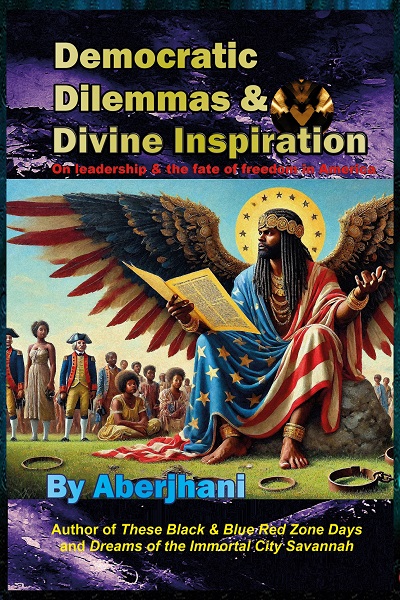
Democratic Dilemmas and Divine Inspiration examines the significance or relevance of the idea that the U.S. Constitution was, as many believe, divinely inspired. How much did that belief matter to founders of the nation and how much does it matter no
Democratic Dilemmas and Divine Inspiration examines the significance or relevance of the idea that the U.S. Constitution was, as many believe, divinely inspired. How much did that belief matter to founders of the nation and how much does it matter no