Born to Learn
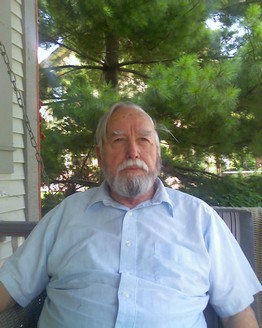
Benjamin F. Plybon
Emeritus Professor of Mathematics, Miami University
A long time ago, when I was a small child, I set out on the royal road to knowledge. Obviously, as an elementary child I didn’t know there was a “Royal road to knowledge”. I just enjoyed learning new things, and that has been a life long experience. I don’t know where this gift came from, but it was a gift. I feel sorry for those who have never received that gift. I think a love of learning, when it exists, probably has it’s roots in the early life of the person. I believe, somewhere in this background lies the roots of my love of learning, and I hope yours. The roots go deep and wide.
With or without gift, we expect, and demand, that children learn; meaning the lessons taught in public schools. Some find school easy, and enjoy, but most do not love the learning experience provided in public school days. As an elementary child in 1930’s depression America, I enjoyed school, and I loved to read books. I loved to read animal stories about dogs, wolves and horses. I also loved to read adventure stories about Don Sturdy and Bomba, the Jungle Boy. Most of my reading was fiction, but I did also read school textbooks, the non-fiction side. I don’t remember being fascinated by any textbooks, but I studied them as a matter of course, and none made any particular impression on me in my Elementary days. I’m sorry to say, I only remember two memorable teachers in those days. No names. Despite a dearth of great teachers, or fascinating textbooks, I did well in school and enjoyed reading, writing, spelling contests and various word problems. Over all, elementary school was an enjoyable experience for me. I wish everyone could say that, when looking back as an adult to their school days.
The book that most impressed me in those days was the arithmetic book owned by my father. That small book was one of his school books, saved from school days long time ago in 1890’s West Virginia. I own it today. My father was born in July, 1884, in a cabin on the side of a hill in West Virginia. Albert Einstein was a 5 year old child in Germany at that time. My dad grew up on a West Virginia farm, with nine brothers and sisters; they were very poor, financially speaking. Nevertheless, my dad and his family members were rich in other ways. They were people of faith who attended church regularly, and most were blessed with intelligence and musical talent.
Dad was allowed to attend school only one, solitary year in his life. He made the most of it. The school was a one-room school, covering grades one through eight. In his one school year he covered the basics for all eight grades and left school, forever, with a good understanding of reading, writing and arithmetic, plus basics of history and geography. He had memorized the names of all the presidents and vice presidents and kept the list updated until he died. His last president was Ike. In his one year in a school room, he covered all of the arithmetic lessons normally offered in that school in the eight years most students spent there. He spent only one year in that school, but he left school well on the way to a life of learning. He was poor all of his life, and learning was the one joy and pleasure that cost him no money.
Dad knew some science, but he never mentioned to me any school lessons in science. The science he knew came from years of working on a farm and working out doors. He knew how to grow plants, and care for animals raised on the farm, the basics of running a farm. Of course, planting had to be done by the proper sign of the moon. This was the science he needed to know. I remember one time, while I was a teenager, Dad and my oldest brother, Ellsworth, began working to build a perpetual motion machine. Any physicist or good science student knows it is impossible to build a perpetual machine. They didn’t know that, so they tried to do it anyway.
Brother Ellsworth learned his science from magazines, like Mechanics Illustrated and Popular Science. This brother of mine had to leave school in the fourth grade because of a severe vision problem, so he had limited formal education. Despite his vision problem, he read everything. He had a strong desire to learn, and was self-educated in many ways by the time he became an adult. He later became a master mechanic, during WWII days. In those days, he worked on his perpetual machine. Some how he had not heard of the principle of conservation of energy.
I was born in 1930, and my early memories of my childhood are already fading, after 80 years. I remember very little about the early years in my life, when my father owned a grocery store/general store on a rural highway leading out of the big city of Huntington, West Virginia. Then came the crash in 1934. Many could not pay their unpaid grocery bills. All was lost. My father was a devout Republican, so he blamed everything on FDR. We left the grocery business and moved into the city.
My best memories were times spent with my father. He taught me to love riddles, and solving problems, problems of all kinds; a great activity for any bright child if you want to stimulate the mind. He taught me more about arithmetic, from his personal owned textbook, than I could ever have learned in public school. He was a learner, and maybe that is contagious. He was known over a wide territory for arithmetic and honesty. He taught me to love arithmetic, especially the word problems, the problems most students, and some math teachers, do not enjoy. A great beginning for a life of learning focused on mathematics and science.
Today we live with an erroneous education theory. As a nation we put huge amounts of money into public schools, hire the best teachers, provide materials and resources and then expect our children to become world-class scholars and learners. Very few succeed. Most feel fortunate to survive their school days. An important factor is missing. Long ago, as a teacher myself, I became convinced that motivation to learn is more important than all of the other beautiful textbooks, well-trained teachers, computers, you name it. Abe Lincoln had none of that, but he was motivated to learn and succeeded. A student unmotivated to learn will not succeed and is doomed to be a poor student.
On the other hand, a well-motivated student cannot be stopped from studying and learning. Abraham Lincoln and Thomas Edison are sufficient proof of that. Instilling a desire to learn new things is a job for teachers and parents, or older siblings. I believe each and every child is born with a need and desire to learn, but that desire can be encouraged, or destroyed. For many, the encouragement is not there. My family played a key role for me. Unfortunately many parents are not learners. So they see no need to encourage children. Our greatest need in our schools is teachers who love to learn. A teacher who loves learning will pass that love on to students. It is contagious.
I had no real formal introduction to science and mathematics until the ripe old age of 15, while in Junior High School. Besides arithmetic, I knew basics about geometry. I received my first introduction to Algebra in Junior High; this is where mathematics begins in my opinion. Arithmetic is just arithmetic, not yet mathematics in my language. I had no problems with arithmetic or elementary geometry but my troubles began with algebra. That is true for many students. Now after years of teaching, I know that even the simplest mathematics can be confusing to any student if the material is presented improperly. Good teaching is hard work.
There are many good teachers in our public schools, but there are too many others who do not want to put in that extra effort. The desire to learn can be killed by a thoughtless or inept teacher. I have seen it happen. But a highly motivated student does not go down easily. I found the motivation to learn mathematics, including algebra, in a love of astronomy. The year after a disastrous introduction to algebra, I discovered a need to know Algebra, and a fascinating subject known as Calculus, to learn Physics and astronomy, my first love. That was all the motivation I needed. Within a few months, without a teacher to assist, I had learned all I should have learned a year before.
All four of my children were good students, eager and able to learn, having no difficulty with their schoolwork. We did not drive them to get better grades. We encouraged and motivated. But their experiences with teachers were mixed from good to awful; too many on the awful side of the balance. Fortunately, both my wife and I are well educated with some teaching ability. We used that asset to counteract the negative impact from some teachers they faced every day in classrooms. Learning to deal with unpleasant people is an important learning experience in and of itself. We made our own effort to motivate, encourage and support their learning efforts. None were casualties of the public schools. Unfortunately, children without support and help from their family, or other friends, do sometimes go down, hating school forever. A modern tragedy.
I cannot leave these memories without mentioning the special contributions of my mother. She loved and encouraged her children. My mom, as we always called her, was born in a cabin, on the side of a hill, in 1899. Her family was a farming family. They were very intelligent people, with very little formal education. Mom never attended public schools one day of her life, but she was a learner. My grandmother, the mother of my mother, taught Ruby reading, writing and arithmetic. Today we would say she was home schooled. That was common in her day. She became a lifetime learner also.
All of my family has been a family of readers. In my opinion, love of reading and love of learning go hand in hand. Beginning with my oldest child, I urged them to focus on reading in their first years of school. Their grandmother, Ruby, read widely all her life. She loved a good novel and Newspapers and magazines kept her informed about current affairs. She was better educated than a typical High School grad today.
Mom did not attend church during my lifetime. She did not talk about the Bible very much, but like all people in West Virginia in her time, she attended church when she was young, was raised on the Bible and was well acquainted with the book. She grew up with people who regarded knowledge of the Bible more important than other “school learning”. There are some of us today who still believe some knowledge of the Bible should be part of the learning of every educated person. It has been acclaimed by experts as a work of literature. The Bible motivated much of the thinking of our founding fathers for this land we call America. My father knew the Bible from cover to cover and loved to talk about that book. He was a man of two books: the Bible and his Arithmetic book.
It is clear, from the preceding family memories, my father and my mother were lovers of learning. They had a hunger for knowledge. I think this desire to learn was also stimulated by their lack of formal education. An intelligent mind craves feeding. They were hungry to enlarge their small initial base of knowledge, by wide reading and exercise of active, questioning minds. Learners read, and ask questions. Not just any random questions, but good questions with worthwhile answers.
While I proceeded with my education, high school on into college, I shared some mind-boggling conversations with older brother, Ellsworth. He had a great imagination, not restricted by formal education that stifles imagination of the young. I tried to share with him some of the education I received, learning never available to him. He read widely before losing his eyesight at the age of forty. He loved to challenge me with difficult questions, probably suggested by his reading. We learned together. His questions were intended to lead him to new knowledge, or press me to think more carefully about what I thought I knew. He questioned everything and suggested very creative answers. I know today his questioning attitude is exactly the kind of mind-set that is essential in science. Very little formal education but he had the scientist’s questioning mind.
My serious interest in science, and then mathematics, began with astronomy. At the age of 15, I became hooked on astronomy and physics. As a result of my interest in astronomy I needed a telescope. I couldn’t afford one so with help from brother Ellsworth I set out to build my own. He was fascinated with the idea of a telescope and astronomy; this was clearly an opportunity to learn for both of us. He helped me with the money to purchase the optics needed. So we made our first telescope. This was definitely an impressing learning experience for me and for Ellsworth. I will never forget those first looks at moon craters, Saturn and its rings and the belts of Jupiter. I decided to learn astronomy. I had enough motivation to last a life time. I learned from my personal experience as student and teacher how important motivation is for all learners.
In those student years I encountered many questions needing answers. I did find some answers of course, but I still have unanswered questions left over from those long ago student days, over 60 years ago. Questions often streamed through my mind, a river of ideas, when out under the sky observing the moon, planets, star clusters or nebulae. Many of my questions were answered later by NASA space age explorations since 1950. Observations by space telescopes gave some answers but many questions remain today.
Other questions were suggested during my conversations with my brother while answering his challenging questions. A good question often suggests other questions. Some I could answer, or we found answers together, but some remained unanswered. There were also questions suggested when struggling to solve problems proposed by authors of books I studied. At the age of 80 something, I am still looking for answers for questions left over from my teen years. I believe, the search for answers to questions plays an important role in learning. Questions can point and motivate learning.
I have written articles about the role of questions in learning, both answered and unanswered questions. Many of the questions that interest most have been with me all of my life; questions that still bother me after all of these years. At age 18 I asked myself. “Why does E= mc2 ?” We really don’t know, a hundred years later after Einstein taught the world that fact. It’s true that many of the questions I kicked around as a teenager, with limited knowledge of science and mathematics, were answered as I learned more in my university days. I thank NASA for answers to some of my astronomy questions. In time, I discovered other learners had already answered many of my questions, so I learned from others. I found answers for some questions through my own research efforts. These are of course most treasured. Frustrating, but stimulating the learning mind, are those questions that have bugged you for months and are still unanswered. Some of us have those questions we have lived with for a lifetime. No one can ever expect to finally find answers to all of their questions. Neither should anyone want to reach such a point.
There will always be unanswered questions in connection with religion and philosophy and several other subjects. Some of these will remain with us forever in this life. Some are important, but we are all aware that there will never be total consensus to answers to most such questions. I do not dwell on such questions. I spend much time thinking and writing about questions and their role in our thinking and learning. I prefer questions that are expected to have answers understandable by an educated, intelligent questioner when answers are found.
A questioning mind is a learning mind. Curiosity is a sign of intelligence in children. Curiosity leads bright children to ask questions. Never discourage a child from asking questions. Guide their efforts to find answers. While observing students learning, I have often thought about human learning; why we learn and how we learn. I am convinced that learning is a vital activity for all of us. It is a process that begins as an infant, immediately after birth. The healthy infant begins learning about the environment automatically if there is no impediment. A failure to do so would result in a premature death. Experts have studied this process in the infant and in early childhood; volumes have been written on that subject. The details we will leave to the experts. It will suffice to say, their researches have confirmed the belief that we are meant to be learners.
Our success in life in so many ways is dependent on our ability, and willingness, to learn. We all have some capacity to learn. We are meant to enjoy this ability to learn and grow in our understanding of our world so we will not wander aimlessly like lost souls through life. Some learn to enjoy this activity as one of the joys of living, truly a gift from the Creator of all life. Some fail to learn that elemental fact.
Jesus was a teacher to many, but he was much more than that. He taught his disciples and all who would listen, night and day. He taught about our relation to God the Father and how to live peacefully and joyfully with other humans just like us; irregardless of color of skin, creeds or ethnic differences. Briefly, he taught us to love God and love our neighbors, fellow humans. If you love God you will love your neighbor. If you learn to do that, all will be well in your life and the world. That is the heart of his Gospel, the Good News. Cease the hate and fighting over creeds and religious rules.
It is also true that too many Christians have heard the Gospel preached every Sunday but still do not understand. So the message given by Jesus becomes lost. We truly have here, “a failure to communicate.” Learners must be listeners. Most of us do not listen well. So we have a failure to listen carefully and learn. Over and over, when Jesus spoke to the crowds, he spoke the words, “He who has ears, let him hear." He realized many were hearing the sound of his voice but not truly listening. So they did not learn the lessons. That is still happening today. The result is this troubled world.
Learning should be a lifelong activity. Learning the great truths about God, and the world he created, requires more than an hour, a day, or a few decades. A lifetime is needed. The moment of Death itself will be a great learning experience for those of us who love learning. For God will be there, face to face with me and you, teaching the final lesson, showing the way as we learn to move from life on earth to life in heaven with God. This will be a glorious moment of Truth, when Truth is met face to face. All things will become known. Listen to the words of a great learner and learn.
For now we see through a glass, darkly; but then, face to face: now I know in part; but then shall I know even as also I am known. 1 Corinthians 13:12
(Copyright 2013 Benjamin F. Plybon. All rights reserved.)





I've had a similar experience. Both of my grandmothers were schoolmarms and I had enough time with them to learn from them. Grandma Hull read every book in several libraries. My mother was salutatorian of her very small high school class. The valedictorian went on to be a captain of industry and my mother got pregnant with me at 17 and didn't continue her education. However, my twin brother and I, by the time we entered a two-week kindergarten at five years of age, could already read, knew most of the animals and many other things that our mother taught us at home.
My first memory of teachers was Mrs. Colburn (we called her Cold Burn) who decided that my grade in arithmetic would be a D. That was the only D I got in public schools, and I remember it vividly. Some English teachers stand out because they inspired me with great classics to read and practice in writing. My eighth grade algebra teacher whose name I can't remember right now spent much of class "lecturing" us on behavior rather than algebra, but I liked the book and the word problems and got my first A+ one quarter. I also loved statistics in high school with Mr.Vorba who also taught geometry and trigonometry and had a "hot" daughter who substitute teached some days in various classes. Vorba also played the stock market and gave the local clinic $250,000 when he retired from teaching.
My twin brother and I were very competitive, so we always challenged each other about subjects and were continually looking up answers in the World Book Encyclopedia that our parents gave us for both our birthday and our Christmas gift, the only one we got, in third grade. We couldn't believe that mom (I think she paid $10 a month) got such a gift that cost $120 in 1952!
My way of thinking was that I learned from every teacher, good or bad, because the good ones taught me something new and the bad ones taught me what not to do. For some reason I could never wrap my mind around calculus and was only able to do a few "applied" calculus problems in later life. Theoretical mathematics and physics tended to escape me in favor of more proven, practical applications like statistical quality control and inventory management (where I used one or two calculus solutions).
Most of my nieces and nephews went to public schools and have done well in school. I credit that to good genes and good parenting, and not necessarily the schools.
Finally–I've rambled on too long–I didn't get into lifelong learning until I studied philosophy at WVU during my doctoral studies. As a result, I continue to learn and grow, resisting all the efforts to get me "trained" like some monkey in a highly specialized field of nonsense.
Ron