Einstein and Bohr were men of faith
Benjamin F. Plybon
Emeritus Professor of Mathematics, Miami University
What do we mean by faith? Words get their meaning from the way they are used in every day human communications. The word faith is used in various ways, so this is a word with several meanings. Some samples from Webster’s dictionary are the following:
1. Unquestioning belief that does not require proof or evidence
2. A religion or a system of religious beliefs
3. Anything believed
4. Complete trust, confidence, or reliance
5. Allegiance to some person or thing
Christians often speak of themselves as people of faith. “I have my faith”, or “My faith keeps me going from day to day”, are common expressions used by Christians. This can be interpreted various ways. Sometimes it sounds like faith in faith, as if faith were a thing. This is consistent with definition number two given above if they are speaking of their faith in their religion and its system of beliefs. Muslims and Jews have that kind of faith also, of course.
I think many people use this expression as a statement of their faith in God apart from any organized religious beliefs. In this sense many people who are not Christian are people of faith. Gallup polls in recent years have indicated that ninety per cent or more of the people in the USA claim to believe in God in some sense. Of course simply believing God exists in some intellectual sense does not make one a person of faith. Faith in God, as Christians use the term, includes trusting in God, and other beliefs about God that go beyond merely believing God exists.
A Christian definition of faith is found in the book of Hebrews in the New Testament. The writer states in Hebrews Chapter 11 verses one through three,
Now faith is being sure of what we hope for and certain of what we do not see. This is what the ancients were commended for. By faith we understand that the universe was formed at God's command, so that what is seen was not made out of what was visible.
These verses are followed by several other verses illustrating examples of faith by Noah, Abraham and others. This definition of faith sounds like dictionary definition number one given above. But it also includes definitions four and five. Both Noah and Abraham demonstrated total allegiance to the God in which they believed and they also had complete trust and confidence in that God. I am sure all of these Old Testament people of faith also believed they had seen evidence of his existence. According to the Biblical account Abraham, Noah, Moses and many others talked with God and experienced his presence. To them this was powerful evidence. They were truly men of faith.
Although some individuals profess to have no faith in anything I find that hard to believe. All of us have faith in something. Certainly all thinking and reasoning proceeds from some set of assumptions we can neither prove nor disprove. These basic assumptions may have been suggested by personal experiences or observations but that is not proof of their truth. The philosopher Rene Descartes spent some time thinking about this problem. What can I say with absolute certainty that it is true ? There is an old story about a King who asked this question of his wise advisers. They eventually came back with the response, “This too will pass away.” Rene Descartes chose a different starting point in his search for truth. He gave us the oft-quoted basic truth, “I think therefore I am.” This seems like a reasonable statement but accepting it as true is an act of faith. We can neither prove nor disprove it is true .
So faith is not restricted to religious beliefs. Some form of faith is a fundamental part of the life of all persons. Most people live with faith that the Sun will rise tomorrow, I will go off to work tomorrow (job or school), our country and our government will still be in existence tomorrow, etc. Most of us have faith in some people around us daily. It is hoped that you have faith in the competence of your physician. But even good doctors sometimes make mistakes. Sometimes the truths we believe in are destroyed by a disaster such as a tornado, hurricane, automobile accident or a breakdown in personal relationships. But we need to live each day basing our lives on some such assumptions about how the world works for us. Anyone with no faith in anything, or any person, would have difficulty finding a reason to get up in the morning and face the new day.
We are reasoning, thinking creatures. Our survival depends upon that fact. When faced with a financial problem or a difficult situation we human beings try to reason our way through it. But all thinking and reasoning proceeds from some assumptions. We can fail to solve a life problem either because our reasoning is faulty, or because our assumptions are incorrect and unworkable. Even the person claiming to have no faith in anything has some fundamental beliefs. Such a person just hasn’t thought about the matter, so they aren’t aware of them. As Christians we are advised to examine our faith periodically. As a Sunday School teacher I feel part of my job is to urge people to think carefully about why they believe what they believe. This is good advice even for those who are not Christians and not religious in any way. What makes you tick?
All of the above applies to scientists also, both in their daily, personal life and in their work as scientists. From their writings I know Einstein and Heisenberg were aware of this, but some scientists are not. Most scientists today view their day-to-day operating assumptions as facts, rather than merely assumptions, until they discover that some of their facts are not really facts. Some would argue that this is necessary in order to do scientific research. Spending too much time examining foundation assumptions about their work could slow down the output of research papers and jeopardize their professional position. There is certainly some value in this attitude. From a purely professional viewpoint one could argue that the best tactic is to become familiar with all experimental results and other information related to the problem at hand and proceed on that basis to see what should follow from this information and established theory. How does this apply to the current problem? At this point one does not usually question the data and theory at hand. The investigator proceeds on the assumption the information available is correct and accurate. We never know that for sure, so this is an act of faith.
New experiments and measurements suggested by analysis of the available information may in fact indicate that there are errors somewhere in our assumptions, guiding theories or experimental data. Sometimes students or new researchers are bothered by this situation but experienced scientific researchers know this is where the action is. This situation calls for a re-examination of our “facts” and all assumptions that have been made. New discoveries often emerge from such apparent errors and inconsistencies. The nucleus of the atom was discovered from such a case. Einstein produced Special Relativity and his famous explanation of the photoelectric effect in response to such situations. The key here is the realization that assumptions, that are not necessarily true , have been made. Have faith and trust that the needed revised assumptions will be found.
At the beginning of the twentieth century revolutionary theories were created by Albert Einstein and Max Planck. Their work was followed over the next two decades by predictions that had to be tested. Experiments were conducted, measurements were made and papers reporting conclusions were published. The papers published by physicists in the first two decades of the twentieth century are filled with errors in measurements and conclusions concerning electrons, atoms, and other phenomena under investigation at the time: radioactivity, spectra, molecules, atomic structure, etc. The physicists of the day had faith that over time experiments would be repeated and measurements would be corrected; theories would be reviewed and corrected.
Electrons were discovered shortly before 1900 by J.J. Thomson. The atomic nucleus was discovered in 1911 by Ernest Rutherford. The Bohr model of atomic structure was introduced in 1913. The Bohr theory was a good theory in it’s time but we know today it is incorrect. Quantum mechanics was developed during the period of time from 1900 to 1930. Understanding atomic structure, radioactivity, elementary particles and their interactions was not possible before Quantum Mechanics was developed. The process of refining and correcting extended over thirty years and is still not totally finished; it is a never-ending story.
Between 1890 and 1915, revolutionary ideas about space, time, energy and mass had been presented by the physicists Einstein, Planck, Lorentz and Bohr. Their ideas were not immediately accepted. Their papers were studied carefully, criticized, even ridiculed by some, but these eventually became an accepted part of the body of knowledge we call physics. It was a long, slow process and again never ending. Sir Isaac Newton’s theories about mechanics were firmly accepted by the scientific world for two hundred years, and are still a part of the physics curriculum, but after Einstein introduced special and general relativity we discovered that Newton’s theory of mechanics is only a very good approximation to the way the world works most of the time, dynamically speaking. Newtonian mechanics does not suffice in the world of high speed, high-energy particles or when dealing with large scale problems in astrophysics and cosmology. Assumptions at the foundation of physics needed to be revised or discarded.
So, Einstein changed the very foundations of mechanics; he didn’t just add some corrections to the existing theory. He made some simple assumptions about motion of bodies. He placed his faith in those assumptions and proceeded to derive the consequences. He could not prove his assumptions were true . He placed his faith in them because they seemed reasonable to him. As a consequence, he discovered the classical views of space, time, and mass had to be replaced. He made the necessary revisions. Twenty six year old Albert knew his work led to strange results, not consistent with the classical physics of his day. But he had confidence in his work and proceeded to publish his results. Needless to say, most other physicists were slow to accept his ideas; but eventually their correctness was established, and the world of physics moved into a new era.
And of course the quantum idea introduced by Max Planck in 1900 was very difficult for others to accept. Planck introduced his quantum hypothesis to explain blackbody radiation; Einstein used the quantum idea to explain the photoelectric effect; Bohr used the quantum idea to develop his model of the atom and explain spectra. Einstein and Bohr had faith in Planck’s radical assumption and proceeded to use it in their work. Many physicists working during the time period from 1900 to 1925 took the viewpoint, “It works but I don’t believe it.” Einstein used quantum mechanical ideas in his studies of radiation and matter but he never totally accepted the quantum mechanical view of the world. This fact has been noted in his own writings about science, and in commentaries by other physicists. He regarded quantum mechanics as a temporary explanation of physics at the atomic level. His faith in science told him some day a better theory will be found.
But here we have a good example of the way scientists do their job. Even though Einstein did not feel the basic assumptions in quantum mechanics were totally satisfactory he proceeded to use quantum mechanics as a tool to analyze physical systems. Why? Because it was the best, most workable theory available as an explanation of the behavior of matter at the atomic level. Einstein made one of the first successful application of quantum ideas in his paper on the photoelectric effect. He introduced the concept of photons in that paper. As a result of his faith in the correctness of the new quantum physics, over the following years he wrote many papers making his contribution to quantum physics.
His contemporary, Max Planck, introduced the idea of energy quanta in a paper written to explain a problem involving black body radiation. Classical theory did not fit with experimental data. He knew there must be something wrong with theory. He found if he assumed energy was emitted from atoms like pellets rather than continuously, he could obtain a satisfactory fit with the data. So, he decided to change one of the fundamental assumptions used by theoretical physicists up to that time. He was not comfortable with this assumption for many years, so we are told, but it worked. He had faith in the correctness of his work. Since that time no one has found a better way to handle the problem so quantum physics was born. Quantum mechanics is one of the most successful physical theories ever produced but it is still only a theory. There is nothing wrong with that. It works extremely well as a physical tool so all physicists today place their faith in it as a correct description of physics at the atomic and sub-atomic level.
Some may be puzzled that I label the work done by men like Planck, Einstein and Bohr in those early years as acts of faith in the quantum hypothesis. Someone having no experience with the work involved in trying to solve difficult problems, like the problem with black body radiation, may not realize the time and energy that must be invested in such work. There is a risk involved. Weeks, months or years can be lost in a fruitless effort. Some assumptions must be made initially and along the way. Quite often making the right assumptions is the key to success in solving problems in mathematics or physics. One can struggle for months with work based on faulty assumptions leading to nothing. Proceeding with a set of assumptions that do not produce instant success is a trip into the unknown and requires faith to proceed.
There is tremendous pleasure in finding a solution to a difficult problem requiring days or months of work. But it requires faith to continue when first attempts fail. A person with no faith in anything, as some claim to be, would never be able to do the kind of work done by these pioneers in quantum physics. These were men of faith in the value of their work and their ability to do the job. They had faith in the results found by many physicists who preceded them.
Since 1900, physicists have spent most of their time and energy dealing with concepts and phenomena far beyond our usual every day experience. No one has ever actually seen an electron or a proton or a neutron. Physicists today believe in the existence of a large number of fundamental particles they will never see. The wave functions in quantum mechanics are not observable objects. They are purely mathematical objects. We think we know how radioactive decay processes work, but we have never seen, in the usual sense of the word, an individual atom decay. We do know that the predictions from quantum mechanics are exceedingly accurate. Similarly our knowledge of decay processes permits us to predict with great precision the behavior of radioactive matter, and to build a working atom bomb. But all of this knowledge has a foundation of assumptions and beliefs about space, time, dynamics of very small particles, and much more; and these beliefs change over time periods of a hundred years or more, as anyone familiar with the history of science knows. Making assumptions and proceeding to operate on those assumptions, risking your career and credibility on those assumptions is indeed an act of faith.
We have great faith in the reasoning abilities of scientists like Albert Einstein, Richard Feynman and J. Robert Oppenheimer. Even Einstein made mistakes, however, and he has become our ideal of a scientific thinker. Between 1890 and 1920 the English physicist named J. J. Thompson made great contributions to physics. He is credited with discovering electrons and he did tremendous experimental work. He was also a theorist and a brilliant thinker. He made many attempts at producing models of the electron to explain his observations. His theories contained many errors, all of which were pointed out by other physicists. The errors were not logical errors. They were errors in basic assumptions used to create his theories.
All reasoning proceeds from some set of assumptions, both stated and unstated. If these are faulty then the conclusions may be incorrect. It is possible to reach correct conclusions from incorrect assumptions, however. This presents another problem. Even if the predictions from a theory seem to be correct that does not prove the theory is necessarily true . Our faith in the theory increases as more predictions are confirmed but there is still room for doubt.
So the literature of science is full of facts (observations) and theories that are true to the best of our ability to test them with our current state of knowledge. But are they true unquestionably, positively, with no room for doubt? Not necessarily. That is a matter of faith; faith in those who observed and measured; faith in those who analyzed data and drew conclusions. It is an historical fact that errors have been made in both observations, analysis and conclusions in the past history of science. That will always be the case, even in the science of physics, the most precise and demanding of the sciences.
The work of any scientist is based on many assumptions that underlie all of his or her work. All logical thinking in science rests on many assumptions; both conscious and unconscious ones. The basic assumption in science is that there is a real world out there that we can detect with our senses. We see, hear, touch, feel and smell something. Our brains interpret the sensations and form images and concepts that we try to piece together to form a mental picture of that “real world.” At this point the scientists of the world are making another assumption: that we are logical reasoning beings and the world is inherently logical and reasonable. Some credit the ancient Greeks with first introducing this assumption into our investigation of the world; away with supernatural beings, magical powers and angry gods. These things are irrational and cannot be included in our explanations of how the world works because we live in a rational world that can be understood through careful observation and reasoning. Science as we know it is not possible without this assumption.
No one has seen an electron in the usual sense of seeing, that is theoretically impossible. But observations and measurements in the laboratory motivated certain physicists to invent the concept of the electron as a particle of electricity. Certain conventions lead us to think of the electron as a particle of negative electricity, or as we prefer to say it is a negatively charged particle. Other observations and measurement motivated the concept of a proton as a positively charged particle; and so it goes in all areas of science. We begin to visualize a world formed from protons, electrons, neutrons, and a long list of other particles, all interacting through the action of electrical and nuclear forces. Over the centuries a beautiful logical structure, filled with concepts and theories, has been constructed to explain the structure of matter; that is essentially what physics is about. The working physicist must have faith in the value of his or her work, the correctness of work done by others, the correctness of assumptions made jointly by the community of physicists; faith in many things.
Over the centuries thinkers and philosophers have learned the difficulty of determining absolute, unshakable truths anywhere; not only in religious thinking. The history of science has taught scientists today to beware of claims of truth even in their work. Most educated people today place their faith in many so-called scientific facts. As a teen-ager I joined that crowd of people proclaiming the wonders of science as the hope of the world. As a speaker at my high school graduation in 1948 I spoke enthusiastically about the great future I saw ahead for all of us graduating that long awaited day. Thanks to science. I had been awarded the Bausch and Lomb science award that day and had already placed my faith in science as a way of life. Not Jesus and his God. I studied calculus books and astronomy and physics books. Not my father’s beloved Bible. By the time I reached 40 years of age my experience with science had taught me that scientific facts and theories change over long periods of times. My faith was shaken.
We have come a long way from the time of Galileo and Newton. In the two centuries from 1700 to 1900 Newtonian science reigned. There was great faith in Newton and his science. His famous masterpiece, the Principia, the first mathematical physics textbook, became the Bible for 19th century physicists. In 1890, some physicists were saying there is nothing left today but measure some physically important numbers with more accuracy. Over the next hundred years so many amazing discoveries have been made that the 1890 view of the future sounds foolish. The classical physics, the object of their faith, has become history.
A beautiful residue of classical physics remains, and some of the truths are still used, but the twentieth century physicists moved on to a new faith based on quantum physics and relativity. Mathematical physics is still a beautiful, powerful intellectual edifice. It has been and will continue to be the center of my life work until this life ends. Science will never be abandoned by the world as a source of knowledge about our universe. There will always be new questions requiring answers. After this life is over I expect to meet the greatest mathematical physicist of all and learn some of those answers from him. I have unshakable faith in that truth.
(Copyright 2015 Benjamin F. Plybon. All rights reserved.)

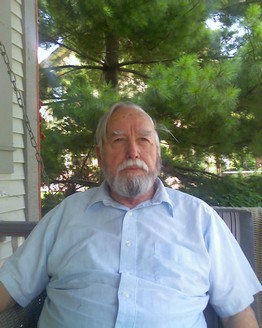



I'm sorry to say your review this time was unresponsive. Your remarks this time were unrelated to the content of this article. The article was simply about the meaning of faith to me and millions of others. Even atheism is a kind of faith and you have every right to be an atheist if that works for you. It wouldn't work for me. Science is a matter of faith for some, too. That was undoubtedly true for Einstein and Feynman. When I was young that was my only faith, the foundation for for my intellectual life. Now that I am older and wiser I have two faiths. They are very compatible.
Please understand, I do not write these articles trying to convert you or any one else. Most atheists I have known were very ethical in their behavior. Why not? The Bible, Jesus and Christianity you deny are not the real ones. In my opinion atheism is based on many false ideas about God and life. I always search for truth in all things. That is where we disagree.
The articles I write are educational. Atheists do not understand who Jesus was. If they did they would not be atheists. Far too many people still do not understand Christianity and many have false beliefs about science. I am making my small effort to correct some of those misunderstandings.
Thanks for your reviews.
Ben Plybon
I do not believe that there is an all powerful god that is shaping the universe. But I am grateful that I have a mind and others have a mind so that we can figure out the great mysteries of the universe and our place in it.
I admire your great knowledge of physics and mathematics, but I can't see why you were "shaken" by scientific theories that didn't hold up over time. That's only natural and it doesn't bother me. What bothers me is people who hold onto beliefs and have faith in absolute nonsense.
Ron