AuthorsDen.com   Join | Login    
Where Authors and Readers come together!

SIGNED BOOKS    AUTHORS    BOOKS    SAMPLE CHAPTERS    AUDIOBOOKS    eBOOKS    STORIES    ARTICLES    POETRY    BLOGS    NEWS    VIDEOS    SUCCESS    TESTIMONIALS

Featured Authors:  Charlene Proctor, iJoy Pedersen, iTichaona Chinyelu, iRobin Ouzman Hislop, iConnie Amarel, iTrennis Killian, iJudith Bailey, iMichael Gorton, iJohn Burns, iPatricia Sims, i

  Home > Essays > Articles Popular: Books, Stories, Articles, Poetry      Authors: A B C D E F G H I J K L M N O P Q R S T U V W X Y Z     

Althea M March

 Follow Me  

· Contact Me
· Articles
· Poetry
· News
· Stories
· 20 Titles
· 21 Reviews
· Save to My Library
· Share with Friends!
·
Member Since: Apr, 2007

Althea M March, click here to update your pages on AuthorsDen.


What is Pidgin?
by Althea M March   
Not "rated" by the Author.
     
Recent articles by
Althea M March

• St. Ann's Church for the Deaf
• How a Deaf Child Integrates in Public School
• Ten Rules for Mothers in the 21st Century
• The March Family History According to Joseph March
• Observations
           >> View all

Why does Pidgin predominate in English-speaking countries?

This story weaves a narrative in an unusual fashion. Lisa Kanae only talks about the intricacies of Pidgin English in Hawaii, but she also writes in actual Hawaiian Creole English in which she demonstrates her use of everyday Pidgin of her native Hawaii.
One the right side pages of her writing she reiterates in Standard English, for the most part, what she intends to convey to the reader. On the left side pages of the account, she lays out the actual narration. Her story starts out with a defense of her little four-year old brother, Harold Boy, as she affectionately calls him. Harold Boy suffers from a speech impediment, which has greatly delayed his speech development from the usual age for children of 2-3 years old. As she states not only is her mother concerned that he has developed his speech late but the words will not come out lucidly out of his mouth in the “right” way that can be understood.
The horrific teasing that Harold Boy receives daily is universal in his path. When he boards the school bus, he is amidst other school kids suffering from various sorts of physical and mental disabilities and they try in some way to level their teasing against him. In addition, his teacher, landlady, and even his father, who calls him “short tongue”, unleash unkind criticisms toward this defenseless little boy.
The author stresses the importance of articulation no matter what strain of English you are speaking, whether it be Standard English or just plain slang. The various size and style fonts that she uses emphasize her insight into stressing her levels of expression that she wants to the reader to see from her rendition of Pidgin in Hawaii.
However, there is some relief in Harold Boy’s life when at the end of the day he can enjoy watching “Popeye” and he is able to imitate Popeye’s gestures and his big sister can empathize with him by understanding his form of Pidgin English.


Want to review or comment on this article?


Need a FREE Reader Membership?
Reviewed by Althea March
Reviewed on May 30, 2007
Being exposed to Jamaica creole otherwise known as "patois" one comes across a rich tapestry of ingenious words of an unstructured nature. The English language is replete with examples of peoples the world over who have made English their adopted and official language either because of historical or cultural reasons. Jamaican patois has stood the test of time, largely as a language easily understood but mostly unwritten because everyone wants to put in their own spellings to add to the flavor or the "pepper pot". Bob Marley's music has sent out an enlightening message to the world of music like in "No Woman No Cry" and the variations in the island come from east and west and the center of the island. But saying, "A weh de sinting dem fe nyam, yu no si sey me deh pan no belly yah sa." The humor and the sing-song fashion of the dialect lends to endless experimentation as second-generation kids like myself can attest to. This unique form of pidgin may at first sound a bit intimidating, but can also be empowering at the same time. And so "wi hav fi tun we han and mek fashin" in order to improvise and make the best of what we have so that everyone is fed with these delicious words from Jamaica.

Popular Essays Articles
  1.  Where Have All the Authors Gone?
  2.  The Advent of ALICE 1.0 Advanced Logis
  3.  War and the Earth we need to live on.
  4.  An Era of Stupidity and the Challenge
  5.  Down with Group Chat
  6.  Critical Race Theory & the 1619 Projec
  7.  Needed: A Progressive Grand Strategy t
  8.  Less Words, More Results
  9.  Takeaways from Adam Smith's The Wealth
  10.  Mr. Trump, have you no sense of decenc
  11.  The Crisis of Opioid, Fentanyl, Cocain
  12.  Verifying Ones Self
  13.  Where, oh where, has my Porsche dream
  14.  Critical Race Theory
  15.  Just a Kid
  16.  Super Spreaders Disguised as Congressm
  17.  Daylight Saving: Stop Legislating the
  18.  Are You Writing for Me?
  19.  The Compassion of Christ
  20.  Why Excessive Inequality Matters
  21.  Bone-headed Supreme Court Decisions
  22.  Rhode Read: RI’s Tobacco-Based Wealth
  23.  Genghis Khan Rides Again!
  24.  The Cozy Mystery: Death by a Thousand
  25.  American Fascism and the Bush Administ

Free Book Review Program
Select a book to read and review today!

RAM: Random Articles and Manuscripts by Jay Dubya

RAM: Random Articles and Manuscripts, a non-fiction collection of 38 stories and essays, is author Jay Dubya's 32nd book.  
Member BookAds

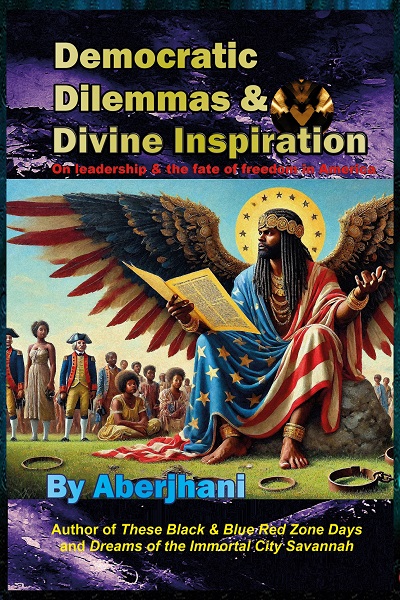
Democratic Dilemmas and Divine Inspiration (A Kindle Short) by Aberjhani

Democratic Dilemmas and Divine Inspiration examines the significance or relevance of the idea that the U.S. Constitution was, as many believe, divinely inspired. How much did that belief matter to founders of the nation and how much does it matter no  
Member BookAds

RAM: Random Articles and Manuscripts by Jay Dubya

RAM: Random Articles and Manuscripts, a non-fiction collection of 38 stories and essays, is author Jay Dubya's 32nd book.  
Member BookAds