The notion that Black History Month is futile refuted with substantial historical legacies & anecdotes from a racially diverse community.
“Injustice anywhere is a threat to justice everywhere. We are caught in an inescapable network of mutuality, tied in a single garment of destiny. Whatever affects one directly, affects all indirectly.”
Dr. Martin Luther King Jr.
In an article by Mema Ayi and Demetrius Patterson from the Chicago Defender, they wrote that "actor Morgan Freeman created a small firestorm…when he told Mike Wallace of 60 Minutes that he finds Black History Month (BHM) ridiculous." Freeman goes on to say that "Americans perpetrate racism by relegating Black history to just one month when Black history is American history." I agree with Dr. Martin Luther King Jr. that as Americans we are tied together “…in an inescapable network of mutuality…Whatever affects one [of us]…affects [all of us] as Americans in this country.
As you can clearly see, a month dedicated to Black history continues to stir controversy. The point of the matter is we can't continue to ignore the fact that—although we have made progress towards racial unity—we still have ways to go towards racial, harmony, understanding and tolerance if not acceptance.
Scholars and historians such as Conrad Worrill, chairman of the National Black United Front repulses the commercialization of the celebration, stated Ayi and Patterson. However, they go on to say that "but [Worrill] agree that Black Americans still need February and every day to reflect on the accomplishments of Black Americans who contributed countless inventions and innovations into society."
It was in 1926 when Carter G. Woodson created Negro History Week. Now all these years later has evolved into Black History Month. But why do we still need—even in the twenty-first century—a month set aside to recognize Black history in this country? Perhaps you can look within your hearts for that answer. Negro History Week morphed into Black History Month in 1976, when African Americans developed a renewed interest in their ancestral history primarily as a result of Alex Haley's revolutionary miniseries "Roots."
Radio personality Cliff Kelley offers an explanation as to why we need Black History Month. Loosely translated, he said that we need it because capricious historians conveniently leave out certain parts of history that does not corroborate their version of history, which I think consist mostly of dead White men. Blacks are virtually removed from it to substantiate the White historical agenda. Plenty of Black youths do not know their history. Most of them think that their history begins and ends with slavery, wrote Patterson and Ayi.
State Representative David Miller (D- Calumet City) asserted that Freeman was right in saying that Black history should be a year round thing. "We've shaped America," he said. And that Black History Month should serve as a reminder of our legacy. The recently deceased Howard Zinn wrote in his book A People's History of the United States, "There is not a country in world history in which racism has been more important than the United States." He poses the question "Is it possible for Blacks and Whites to live together without hatred?" And when it comes to the evolution of racism he had this to say, "…slavery developed into a regular institution of the normal labor relations of Blacks and Whites in the New World. With it developed that special racial feeling—whether hatred or contempt or pity or patronization—that accompanied the inferior position of Blacks in America… that combination of inferior status and derogatory thought we call racism." He goes on to say that "The point is the elements of this web are historical, not 'natural.' This does not mean that they are easily disentangled or dismantled. It only means that there is a possibility for something else, under historical conditions not yet realized."
In an article in The Phoenix titled "Is There Hope in Hollywood? Three controversial films tackle race in The Age of Obama," Peter Keough extrapolates the medium of films are making an effort to bridge the race gap by portraying Blacks as heads of state—in movies like Transformers 2, 2012 and Invictus—although the contexts in which a Black man becomes President is often marred by catastrophe in which case the White leader is killed. Or Blacks are still being portrayed in glaring stereotypical roles as in Precious, with racist clichés like when Precious steals and eats an entire box of fried chicken. The undercurrent of racism is evident even from well-meaning Whites like Joe Biden, when he opposed Obama for President. Biden declared that "[Obama] is the first mainstream African-American who is articulate, and bright and clean and a nice looking guy" Similarly, another fellow democrat and senate majority leader Harry Reid in his book Game Change, said of Obama that America is ready for a Black President, particularly because he is "light skinned and speak with no Negro dialect." This leads me to extrapolate that despite all that Blacks have contributed to the making of America, our contributions seemingly become extraneous compared to our prima facie colorful appearance. And I am compelled to recall what Dr. King Jr. so eloquently stated that Black people should be judged "by the contents of their character" and not their skin color.
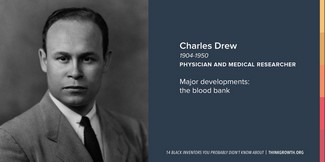
Many modern conveniences are directly related to or derivative of the inventions of Black inventors: blood banks facilitating life-saving transfusions, the bicycle, the electric trolley, the dustpan, comb, brush, clothes dryer, walkers, lawn mower, IBM computers, gas masks, traffic signals, the pen, peanut butter…the list goes on and on…Dr. Patricia Bath, in 1985, invented specialized tools and systematic procedures for the treatment and removal of cataracts. And, on a less serious note, George Crum who invented the potato ship and Kenneth Dunkley who invented 3-D viewing glasses and holographs, Lisa Gelobter who invented web animation-online videos, And thanks to the Academy Award nominated film, Hidden Figures, we’re now all conversant with the amazing contributions of the black mathematical geniuses Katherine Johnson, Dorothy Vaughan, and Mary Jackson whose work helped make Neil Armstrong the first man on the moon!
All of these achievements have become part of our daily lives here in America and elsewhere as a result of African-American contributions to the economic and scientific stronghold known as America and sadly, we still need Black History Month to remind us!
I sought out some thoughts and comments from local community leaders and young activists on the issue of why we still need Black History Month. I was inundated with a wealth of responses!
Dr. Carolyn L. Turk, an African-American woman and Deputy Superintendent of Cambridge Public Schools stated that "We have moved from celebrating Negro History Week to celebrating Black History Month…these celebrations are…needed and should continue, but I am also a strong advocate for the contributions of African Americans to be recognized…throughout the year, across content areas and to be inclusive of local community history. Knowledge of our past helps connect us to our present and provides hope …for the future…if we are to continue to build on the [legacies of those who came before us].
Bob Doolittle, a white youth pastor living in Cambridge said: "Black History Month can and should take Martin Luther King day and make it thirty days of celebrating how the right kind of force leaves a legacy of increasing enjoyment of one another by those who are different."
Shani Fletcher, a bi-racial woman (African- American and Caucasian) of Teen Voices Magazine offered her thoughts… "Black History Month is an opportunity for everyone to celebrate the African-American experience and the role of Black people in the history of the United States… Quite literally, Black people built this country, and our communities' contributions are a major part of its culture."
Marla Marcum, a white doctoral candidate at the Boston University School of Theology had this to say: "I can give you a concrete example of why Black History Month is vitally important: … This extremely bright young woman—a freshman at MIT—who graduated from one of the best high schools in Massachusetts upon finding out about Coretta Scott King's death asked 'Was she Martin Luther King's sister?' Are we content that this young woman (and so many others) has been taught something about Dr. King, yet she understands so little of his context that she learned nothing at all of his life? Of course our education system should be integrating Black history into the broader curricula, but when it had not happened even in the best public school systems, I think we need to recognize the critical importance of continued attention to Black History Month."
The fundamental nature of Black History Month based on these spectrum perspectives is to celebrate variety and inclusiveness of all people, build on the prophetic and heroic legacies of our ancestors who fought for our freedoms today, recognize that Black History Month is essentially American history despite racial diversity, acknowledge an honor the contributions of African-Americans to this country, advocate for change in our public school systems to include more Black history in their curricula. Dr. Martin Luther King Jr. once said: "Our lives begin to end the day we become silent about things that matter" and that "Injustice anywhere is a threat to justice everywhere." Black history is not separate from American history. As Americans, we are all one blended entity. We need to bridge the interpersonal and inter-racial gap in a highly mechanized society so… "TAKE OFF YOUR HEAD PHONES AND CARE!!!"
The memory of history is often picky. BHM serves as a reminder of its often-colorless state of existence.
So, do we still need Black History Month? The answer is a resounding "Yes!" As long as Blacks are portrayed as stereotypes in the movies, as long as Black contributions to the bastion that is America are marginalized or altogether ignored, as long as Black leaders like former President Barrack Obama are seen as "acceptable" by Whites simply because he is light-skinned and speak without Negro dialect, Black History Month will continue to be necessary and indispensable.
Jacques Fleury's books Sparks in the Dark: A Lighter Shade of Blue, A Poetic Memoir about life in Haiti & America was featured in the Boston Globe. It's Always Sunrise Somewhere and Other Stories is a collection of short fictional stories spanning the pervasive human condition. Their topics range from politics to romantics, from sex to sexuality, from religion to oppression. His CD "A Lighter Shade of Blue" as a lyrics writer with neo-folk group Sweet Wednesday" is available on ITunes. See www.authorjacques.com.
|







The new Museum of African History in Washington DC, gives African-Americans a monument to African-American experience and accomplishment that they can visit along with the other monuments in the city like the Martin Luther King Memorial.
Ron