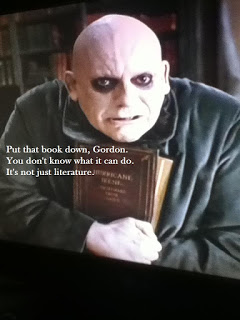
There is more to be gained from literature than just the ability to say you've read it.
I’ve never been a big fan of most “literary” fiction. I didn’t like “The Life of Pi,” or “The English Patient.” I tried to read “Possession” and got bogged down. I hated “Paddy Clarke, Ha Ha Ha” although I loved “The Snapper.” “The Storied Life of A.J. Fikry” was disappointing. “The Art of Racing in the Rain” was excellent but so sad I could hardly stand it.
I remember a veteran AP Literature teacher at our high school saying that a student once asked her why all the books they read in her class were so sad. “Those are the best ones!” she answered. (Thank you, Lillis King, for your many years of insisting that students must work harder to understand.)
She was so right. For teaching us about our fellow humans, literary fiction is better than popular fiction. Popular fiction is popular because it is easier for us to read, according to researchers at the New School in New York City. Emanuele Castano, professor of psychology at The New School, said, "You open a book of what we call popular fiction and you know from the get-go who is going to be the good guy and the bad guy." It simplifies people and life, which is exactly what we need sometimes when the world gets too chaotic, right?
But for developing empathy, those stories which have more depth, the ones that require more care, that force us to expand ourselves -- those are the stories that make us grow, according to Castano’s study. “Although literary fiction tends to be more realistic than popular fiction, the characters disrupt reader expectations, undermining prejudices and stereotypes. They support and teach us values about social behavior, such as the importance of understanding those who are different from ourselves,” reports Julianne Chiaet.
When I see social media explode over the death of a lion, while remaining relatively unmoved by the death of Sam DuBose, I cringe. I know it’s much easier to be sad for a lion. There isn’t a whole bunch of uncomfortable historical baggage involved. But we must face the uncomfortable. Roxanne Gay wrote in The New York Times: “...if we don’t have difficult conversations, we will be able to reconcile neither this country’s racist past nor its racist present.
Gay continued, “...When others share their reality, don’t immediately dismiss them because their reality is dissimilar to yours, or because their reality makes you uncomfortable and forces you to see things you prefer to ignore.”
This is what literary fiction can do. It can force us to see things we prefer to ignore. The new Common Core English Language Art standards emphasize nonfiction over fiction and the teaching of “concepts and skills” rather than historical background.
I will continue to teach uncomfortable, literary fiction in my classes. It’s uncomfortable for me, and it’s uncomfortable for my students.
But it’s not just literature.
|




About the lion, I have to differ. Without looking him up, I don't know who Sam DuBose was. But I will say that the lion, and I haven't looked the name up either, was a symbol for the fact that, at the current rate, all lions in the wild will be destroyed in 20 years. In spite of our continually killing of ourselves in mass quantities, the human population from genius to ignorant, has grown to over 7 billion people. The literary story of our time is how to preserve our ecosystem that supports us with this glut of humanity that is greedily dirtying and eating our own nest.
That's why nonfiction like A Silent Spring is important reading, as well as fictional stories of our relationship with our environment. James Patterson's Zoo does a terrible disservice to our relationship with animals.
Ron