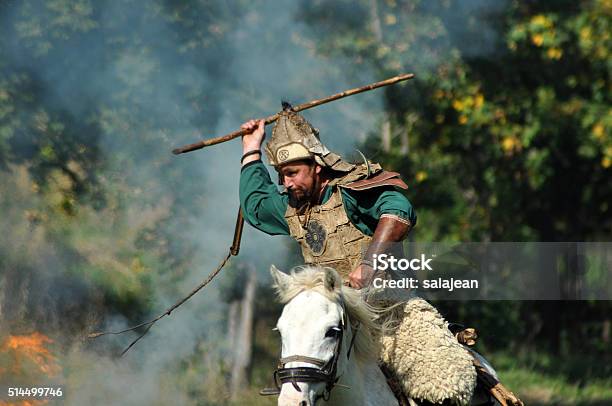
Genghis Khan Rides Again!
The world, its inhabitants, trade, international geo-political positioning, plus its many languages, customs, and territorial rights have all changed markedly in the past 500 years. Dictators and their cling-ons, however, have come and gone more by an unrelenting genetics than by their flawed reasoning. One element in this puzzle seems to have clung to the souls of the damned and to the pages of history. That element is greed.
It would take a massive effort and stellar scholarship skills to sort through all the many reasons for such a shifting of minds or reasons that any given nation might seek to change its boundaries, expand its influence, or call upon its residents to fight to their deaths to gain a bit more power by the rulers over the minds of the many—while constantly filling their treasure chests with more and more wealth. Greed is that word.
Dictators come, and dictators go, but history alone will tell the tale of their reigns of terror, of how they rose to power, and how they felt the satanic winds of infamy blow their traitorous words and deeds back into their faces. Eventually, all conquerors are dumped or die and are unceremoniously tossed into the stagnant waters of the dispossessed. That is the price that must be paid by the balancing scales of Karma.
So here we are. A new day with a new band of expansionists who believe that everyone who works for the US President is immune from prosecution from any crime, anywhere as long as it represents the desires of the President. Their latest targets: Greenland and Denmark. Here are a few facts about those two countries plus a few other that I dug up without breaking a sweat:
* * * *
Denmark’s claim to Greenland rests on a long chain of historical settlement, colonial activity, and later international legal recognition. The connection began in the Viking Age, was formalized through Danish‑Norwegian colonization in the 1700s, and was ultimately affirmed by 20th‑century international law and treaties.
Early Roots: Norse Settlement and the Norwegian Crown
• Norse settlers from Iceland and Norway colonized southern Greenland around 985 AD, pledging allegiance to the Norwegian king.
• When the Kalmar Union united Denmark and Norway under one monarch (late 1300s), Greenland—considered a Norwegian possession—became part of this joint realm.
1700s: Danish–Norwegian Reassertion and Colonization
• After the Norse colonies died out, European contact faded for centuries.
• In 1721, missionary Hans Egede established a permanent Danish‑Norwegian mission and trading presence, marking the start of modern colonial rule.
• When Denmark and Norway split in 1814, Denmark retained Greenland as part of its remaining overseas territories.
20th Century: International Legal Recognition
• Denmark’s sovereignty was challenged by Norway in the early 20th century.
• In 1933, the Permanent Court of International Justice ruled decisively in Denmark’s favor, affirming that all of Greenland belonged to Denmark.
• During WWII, the U.S. temporarily administered Greenland for defense purposes, but after the war the island formally returned to Danish control.
Modern Era: From Colony to Self‑Government
• Greenland became an integral part of the Kingdom of Denmark in 1953.
• Home Rule (1979) and Self‑Government (2009) expanded Greenland’s autonomy, recognizing Greenlanders as a distinct people with the right to independence if they choose.
• Today, Denmark retains responsibility for foreign policy, defense, and monetary policy, while Greenland governs its internal affairs.
Why Denmark Still Claims Greenland
• Historical continuity from Norse settlement to Danish‑Norwegian rule.
• International legal validation, especially the 1933 court ruling.
• Constitutional integration into the Danish Realm, with Greenland free to pursue independence when ready.
Apparently, Trump and/or his acolytes intend to retain the power of the presidency far into the future. And that future includes Venezuela, Columbia, Cuba, and Canada. Here is a list mentioned by knowledgeable analysts:
Several analysts writing in mainstream outlets have recently discussed a renewed U.S. expansionist or sphere‑of‑influence mindset, especially under the current administration. These discussions don’t claim that the U.S. is actually annexing countries, but they do identify places that analysts say have been rhetorically or strategically framed as potential targets for expanded U.S. control or dominance. The list below is based directly on the sources retrieved. (Co Pilot).
Countries Analysts Have Mentioned as Targets of U.S. Expansionist Ambitions
(According to commentary and analysis, not official U.S. policy)
Canada
• Analysts note that President Trump publicly suggested Canada should become the “51st state,” which Canadian officials dismissed as a joke. Source: The Conversation analysis.
Greenland
• Multiple analysts highlight repeated U.S. interest in acquiring or controlling Greenland, including talk of “seizing” it for national security purposes. Source: The Conversation analysis.
• Also referenced in broader discussions of “American expansionism under Donald Trump.” Source: Wikipedia summary (contextual).
Panama (Panama Canal Zone)
• Analysts cite rhetoric about taking control of the Panama Canal “by military force if necessary.” Source: The Conversation analysis.
• Also appears in discussions of expansionist maps and proposals. Source: Wikipedia summary.
Venezuela
• Bloomberg commentary describes U.S. operations in Venezuela as part of a broader “sphere of influence” approach in the Americas. Source: Bloomberg analysis.
Colombia
• While not explicitly named in the retrieved articles, Colombia is often discussed in the same strategic context as Venezuela in broader geopolitical commentary. (No direct citation from the retrieved results—just context.)
Cuba
• Cuba is frequently referenced in discussions of U.S. influence in the Western Hemisphere, though the retrieved articles did not explicitly mention it. (No direct citation from the retrieved results—just context.)
Gaza
• Analysts note that Trump floated the idea of taking over Gaza and turning it into the “Riviera of the Middle East.” Source: The Conversation analysis.
What Analysts Mean by “Expanding Desires of U.S. Control”
Across the sources, analysts frame these ideas as part of a revived expansionist or imperialist rhetoric, not as formal policy. Themes include:
• Reasserting dominance in the Western Hemisphere (“own the Western Hemisphere”)
• Territorial acquisition rhetoric (Greenland, Canada, Panama)
• Sphere‑of‑influence logic in Latin America (Venezuela)
• Aggressive economic leverage (trade wars, tariffs) as a form of control
These analyses emphasize rhetoric and signaling, not actual annexation plans. It is nevertheless important to listen, read, and follow the advice of scholars dedicated to understanding what the Heritage Foundation is up to; the role of the entire group of cling-ons--especially that of Stephen Miller. We need to help him find his guiding star that burnt out about 500 years ago.




Rebecca
He basically wants to make a name for himself in history as another Genghis Khan, as you have astutely declared. Another Hitler who will always stand out in history for making Germany great again, not for the good deeds done, but for the bad.
And, based on the fate of many deposed dictators in the past, the family, for the most part escapes with massive wealth. To some other part of the world where they live relatively free from any connection to their old ways.
When I watch fans go ecstatic over famous people, I believe I understand the loyalist mentality of those close to power. Weak people who need to feed off that power in order to feel any power of their own.
Ron