GPS: How Science GetsThings Done
(Take notes, Elon Musk, and learn a lot—it's free!)
GPS (Global Positioning System) has very little to do with real estate, but a lot to do with location, location, location. It is the gold standard for identifying where you are, the distance to where you are going, the best way to get there, and your expected time of arrival. It is so accurate, you could set your watch by it, and—in theory—come back in 300 thousand years and it would still have the correct time (within 1 second) and your location waiting for you. It is based on sending accurate pulses from space to ground level, and using that ultra stable data to keep virtually everyone on planet Earth on course to his or her destination. In my opinion, it is the most significant application of science since humans have been walking upright.
The roots of GPS trace back to the Cold War era when the need for precise navigation for military operations became a critical priority. The idea of using satellites to determine one’s location was revolutionary and eventually culminated in the extensive network we benefit from today. Here’s an update (Fed. Aviation Admin.):
Timeline of Key Milestones:
1960. Conceptual Foundation: Satellite navigation concepts emerged as scientists and engineers began exploring ways to use space technology for precise positioning.
1973. Early Experiments: The launch of the first experimental satellites helped test the viability of determining positions from space.
1983. Civilians Enter the Picture: After a high-profile incident involving a downed aircraft, the U.S. government made GPS signals available for civilian use, opening up a world of possibilities.
1995. Full Operational Capability: The system was declared fully operational, marking its widespread adoption by both military and civilian sectors.
2000. Modernization: Advancements in satellite technology and signal processing, along with the emergence of complementary systems (GLONASS, Galileo, BeiDou), have spurred ongoing improvements in accuracy and functionality.
This timeline encapsulates the journey of a technology that began with strategic military interests and transformed into a multi-billion-dollar industry serving diverse purposes.
On a personal level, I was priviledged to have had a role in its origins. Before GPS, a very small group of US Air Force metrologists (metrology is the science of measurement) had a hand in transporting the “atomic clock” to many locations around the world. The instruments at issue contained ultra-accurate oscillators that tapped into the stability of Cesium 133, an element still in use as a time reference. They were not bombs, conventional or otherwise. We were experts in time measurements, and in keeping the frequencies of all our time standards on the ground synchronized to parts within 0.1 quadrillionths of a second.
One hundred or 10 million users of timing devices need to be synchronized in order for their data to be useful regardless of their widely different applications including the speeds their vehicles are moving or where. Think about that statement, and you should be thankful that the US has 68 percent of all GPS units in operation worldwide. We are way ahead of China, the nation in second place.
For more abstract thinkers, GPS also epitomizes the good that we can do. That statement is important on many levels. It wasn’t that long ago that drivers of all ages used road maps when driving distances of more than a few hundred miles. Today, the odds are you cannot find a road map anywhere to help you. But you can purchase a portable GPS unit for less than $100. It not only will get you to your destination, it will also get you back on course if you miss a cut-off. It will even find a restaurant for you, scenic routes, or alert you to an overhead camera at a coming intersectrion, there to help take your money for speeding or running a red light. Now that’s progress. It also records your mph more accurately than does a police vehicle using that old-fashioned technique known as radar.
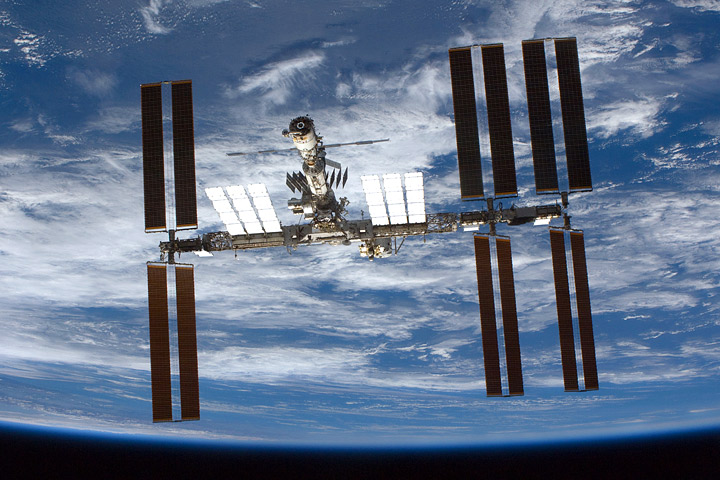
According to the Federal Aviation Admin. (FAA) there are 31 geo-synchronous satellites in orbit about 11,000 miles above ground level. They match the Earth’s speed, thus appear to be stationary above a given point on the ground. I’m also aware that serveral metrologists at one of my old assignments upgraded the data collection via fly-bys, thus saving lots of time in making the rounds of the old “flying clock” team. They also put the clocks aboard two jets,and each circumnavigated the Earth but in opposite directions. In comparing the times of the two units, the difference was precisely as the world’s most famous scientist (Albert Einstein) had predicted. Time was also a favorite subject of Stephen Hawking.
It is poetry-in-motion to think of Einstein and Hawking “out there, somewhere” comparing notes, making new calculations, and helping the rest of us make better use of our time and better accuracy in tracking it. But that is a typical textbook boring statement. Just click on the link below, and listen to Dana Winner sing “One Moment in Time.” If you do not find that her rendition lifts you up to a new level, call me and I will refund double the money you paid to read this essay. In Tesla stock.
One Moment in Time




The world caught up with me and I've had a devil of time getting back to fine articles like this one. As usual, you are very clear, concise and accurate in describing the very rapid and useful development of GPS from the time you worked with it until the military finished it and made it available for all of us. I'm sure there are young people who think it was always there. There are no longer studying science.
For about 30 years and an outdated United States Book of maps showing the interstate highways, I drove the country, usually averaging about 50 mph and using the distance showing on the maps determined within about 15 minutes when I would arrive at some distant location after driving all day 300 or 400 miles. It was uncanny how accurate I was.
Even in my high-tech vans, I could not operate a mobile phone but often found the location on a computer map before driving there with an accurate time shown. But sometimes I was dropped at the wrong address until it is now probably quite perfect and I can't get my partner to use it… because as she says, "I'm scared…" she would be a lot less scared if she used GPS and not get lost trying to go where she's going.
Ron