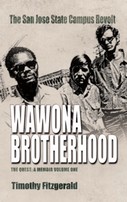
At his book signing in San Jose for his memoir "The Wawona Brotherhood: The San Jose State Campus Revolt," sixties activist and author Timothy Fitzgerald plans to discuss the fortieth anniversary of the United States'' invasion of Cambodia and the Kent State killings.
At his book signing in San Jose for his memoir "The Wawona Brotherhood: The San Jose State Campus Revolt," sixties activist and author Timothy Fitzgerald plans to discuss the fortieth anniversary of the United States' invasion of Cambodia and the Kent State killings.
On April 29, 1970, President Nixon announced the invasion of Cambodia. Thus, he widened the war effort in South East Asia. At San Jose State University in California, this happened to coincide with a national conference of the New Mobilization. This thrust San Jose State into playing a key role of protesting the war in Cambodia the following weekend.
The impressions taken throughout May 1970 into the summer of 1970 are reported in Fitzgerald's memoir. From April 23, 1970 to May 10, 1970, Mr. Fitzgerald, who was an acting senior student body official at San Jose State, was involuntarily confined to a mental health facility under suspicious circumstances. During this time, four student anti-war protestors were killed at Kent State on May 4, 1970.
After Fitzgerald was released, he urged the movement on campus to assign UC Berkeley the responsibility for organizing further demonstrations. San Jose State received brutal backlash from plainclothes police when the students attempted a five hundred person off-campus protest and march. Nonetheless, as a result of playing this leadership role, the campus was visited by key leaders of the national anti-war movement who urged students to organize and resist the draft.
"Looking back over the span of forty years, it is evident that the protests of the invasion of Cambodia and the killings at Kent State made a significant impression on national student anti-war movement. About 60 percent of campuses across the nation protested the killings," said author and activist Timothy Fitzgerald. "This moved many students who were undecided about the war to join hand-in-hand with veteran anti-war leaders. As is evidenced by their presence on San Jose State campus immediately after the Kent State massacre."
Despite the fact that in the mid-1960s, Fitzgerald had been a member of San Jose State campus ROTC, he vehemently opposed the Vietnam war. When Timothy Fitzgerald took a break from San Jose State in 1967, he was drafted that summer at age of 21. Due to a hearing disability, Fitzgerald failed the physical for the draft. As a result, he was not drafted. He soon became involved the student anti-war protests on San Jose State campus in 1968.
For over three decades, Mr. Fitzgerald has been an activist in San Jose. He is the former Vice Chairman of the Disability Advisory Commission in San Jose; and he was a Green Party state leader for over a decade. Fitzgerald is considered an authority on the Vietnam era in the standard San Jose State history class for that period.
At the age of 64, Mr. Fitzgerald is now completing his third master's degree at San Jose State University. He is on track to be awarded this degree in fall 2010.
Book Signing for Author Timothy Fitzgerald
Date: Saturday, May 15, 2010
Time: 1:00 p.m.
Place: Barnes and Noble
3600 Stevens Creek Blvd
San Jose, CA 95117
Book: "The Wawona Brotherhood: The San Jose State Campus Revolt"
For more information about author and community activist Timothy Fitzgerald, visit his Web site Click here. For interviews, e-mail Click here or call 408.726-9940.
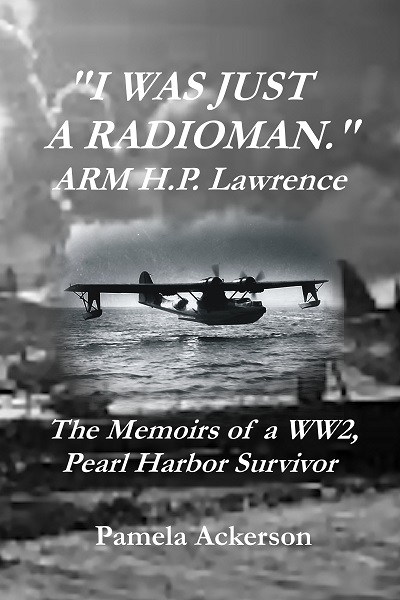
This is not a drill. The attack on Pearl. They were the ghost planes of the night, deadly, illusive, sharp-clawed Black Cats. The Memoirs of ARM H.P. Lawrence, a Pearl Harbor survivor, Black Cat, and decorated war veteran.
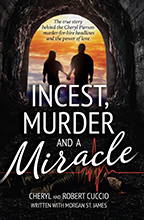
The true story of Cheryl Pierson Cuccio who made headlines in 1986 and her husband Rob Cuccio. Cheryl was abused sexually and physically and Rob died for 43 minutes on Cheryl's 43rd birthday.


 Share
Share Save
Save