Sarah James puts my motives for writing 'Speculations & Changes' under scrutiny.
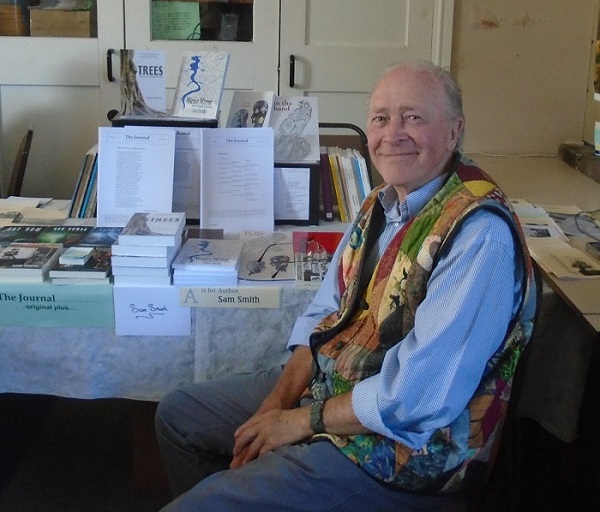
In my twenty-first interview for In the Booklight, I talk to Sam Smith about his poetry collection Speculations & Changes (Knives Forks And Spoons Press)…
“Not a soldier of Picasso
I know art is more a progress
than a war”
(From ‘Not a Soldier’)
The first section of your collection is a series of ‘Speculations on Contemporary Art’ focusing on various aspects of modern artistic works and practice. Is there a sense in which this might be considered an ars poetica (art of poetry)? Or perhaps, even, an anti-ars poetica – given both the tone and the varied innovative use of form in this four-part series of poems?
Picasso believed that art should subvert. That once art becomes accepted it becomes the ‘new academicism.’ As has, if ironical proof were needed, Picasso. As further proof we only have to look at the present Turner shortlist – so tame, so of its type, that all it is capable of provoking is contempt. Poetry self-evidently is an art form, is not self-journalism, and it should provoke, not offer reassurance, is more than the self-therapy of “…we’ve all been there.” Poetry is not a club to be joined.
And not just poetry. Genuine new writing, if attempting to be seen as art, should disconcert, should upset, and should leave the reader changed in some way. If only with a slightly different perspective. If a poem is what we expect from a poem then that poem has failed. Michael Hamburger gave me a lot of help and encouragement when first I decided to take the writing of poetry seriously. One thing we could never agree on was my assertion that every poem should contain some dissonance, something to upset the reader’s preconceptions, make them pay attention.
I feel I’m stating the obvious here. But in any art craft is not enough. We have to move beyond accepted forms, to challenge the old, the accepted. It is how art progresses. The world is new every day and art has to change with it. The general public however is never comfortable with the new, prefers the familiar. Genuine art cannot therefore pander to the general public. In music, in the visual arts, in sculpture, and in poetry we have to defy expectations. We cannot please our teachers. We have to, as individuals, expect not to be popular.
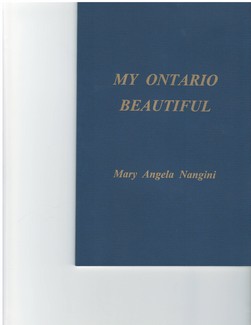
Mary Angela Nangini's poems celebrate the richness of life and love. From the city to cottage-country and the roads in between, Nangini explores the changing seasons of her varied region. (This book will soon be reprinted in hard cover.)
“The woman or man who is a poet, or fiction writer, or playwright, or all of these, is engaged constantly in a jazz ballet of vocabularies, passions, genders, histories, perspectives, death, love, and life. The music of revelation announces itself to




 Share
Share Save
Save