January 4, 2026
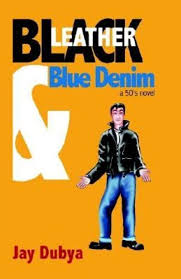
Google AI Analysis of Jay Dubya '50s greaser gang novel, Black Leather and Blue Denim
Book Details
Genre: Action/adventure and thriller fiction.
Plot: The story, narrated by a character identified as J.W., focuses on conflicts between rival greaser gangs, specifically the Diablos and the Kamikazes, and the misadventures of J.W. and his friends.
Themes: The novel explores themes of violence, teen romance, peer pressure, and mid-century suburban life. It is considered adult-oriented fiction and is the first book in a trilogy, followed by The Great Teen Fruit War, A 1960' Novel and Frat' Brats, A '60s Novel.
Reviews and Opinions
Reviewers on AuthorsDen praise the book for its ability to transport readers back to the 1950s, regardless of whether they lived through the era.
The Midwest Book Review highlights the author's success in blending action, conflict, and realistic characters, and notes the book has earned top 5-star ratings from sources like ASTORYWEAVER.com.
One review describes the novel as "witty and full of amazing puns" while also making readers "think about life and about how some events or people can influence you for years to come".
Black Leather and Blue Denim, A '50s Novel by Jay Dubya
The two girls and their Mafia families blame J.W. and Carnie for pushing them over the bulkhead into the river. The event causes friction between the Dogwood Hollow boys and the Kenwood Kamikazies, who are supported by local Mafia dons.
Black Leather and Blue Denim, A '50s Novel - AuthorsDen
A sequel to Black Leather and Blue Denim has been written by Jay Dubya. The book is titled The Great Teen Fruit War, A 1960 Novel.
Tell me more about the plot of Black Leather and Blue Denim
Starts in the spring of 1954 in
Levittown, Pennsylvania,
Black Leather and Blue Denim
follows 12-year-old J.W. (the narrator) after his family moves into the Dogwood Hollow section of the Pennsylvania suburb.
The plot primarily revolves around the following elements:
Inciting Incident
In April 1954, local Bucks County students are invited to the Delaware River to wave flags at the Caracas, a ship carrying the first iron ore to the new Fairless Hills Steel Mill. During the event, four people—including Sicilian girls named Angie Palermo and Bubbles Messina—accidentally fall from the excited crowd into the river. The girls and their Mafia-linked families incorrectly blame J.W. and his friend Carnie for pushing them, sparking long-term conflict.
Gangs and Rivalries
The story details the escalating violence and pranks between rival greaser gangs, the Diablos and the Kamikazies:
The Protagonists: J.W. befriends Carnie, the neurotic son of a carnival barker, and Tinker, a vindictive, destructive, and mechanically-inclined teen. Quinn is the leader of the Dogwood Hollow gang.
The Conflict: The boys are frequently harassed by older greasers from the Kenwood section of town.
Gangs Featured: The novel explores the culture of groups like the Diablos, the Kamikazes, the Renegades, along with the "jocks" and "eggheads" of the era.
Themes and Style
Coming-of-Age: The narrative follows the rival gangs as their harmless pranks grow into more dangerous adventures involving destruction and humiliation.
Adult Themes: While centered on teenagers, the book is considered adult literature due to its use of profanity (by the criminal Kamikazies) and exploration of touchy subjects like racism and sex.
Social Commentary: The novel examines a 1950s culture where dominant males ruled, and peer pressure often dictated behavior, forcing characters to remain loyal to their respective gangs, even as situations spiraled out of control.
This novel is the first installment of a trilogy that continues with The Great Teen Fruit War, A 1960 Novel and Frat Brats, A '60s Novel.
Black Leather and Blue Denim, A '50s Novel
* Reviewed by Penelope "bookaddict" (Germany). "This book is absolutely great. It realistically takes you back to the `50s and makes the reader feel like he or she is living in that fascinating era."
Tell me more about the rivalries between the Diablos and Kamikazes
In Black Leather and Blue Denim, the Diablos and the Kamikazes are two rival greaser gangs engaged in an escalating, intense turf and power struggle in 1950s suburban Philadelphia. The rivalry is driven by social differences, territory, and a cycle of retaliation that grows from pranks to life-threatening violence.
Character of the Gangs
The Diablos: Led by a tough-but-introverted character named Quinn, the Diablos are portrayed as an organized group that initially aims to protect its members from the Kamikazes. Their story arc includes dealing with internal strife when their leader befriends a Black mechanic named Marcus Spellman, whom Quinn innocently invites to join the gang, challenging the racial prejudices of the time.
The Kamikazes: Described as a "band of ruthless thugs," the Kamikazes take pride in terrorizing perceived outsiders like "eggheads" (nerds), jocks, and even other greasers. They are explicitly characterized as a "racist redneck" gang, making their escalating conflict with the Diablos, particularly after Marcus joins the Diablos, a clash of ideologies as well as territory.
Nature of the Conflict
The rivalry escalates throughout the novel, moving from minor incidents to serious danger:
Initial Pranks: The conflict begins with relatively harmless actions and social tensions.
Escalation: The pranks and harassment quickly turn into dangerous, life-threatening situations.
The Blame Game: A key event that fuels the ongoing tension is a misunderstanding where J.W. and his pal Carnie are blamed for causing four people falling into the Delaware River (including Mafia family cousins Angie Palerrmo and Bubbles Messina).
Racial Tensions: The introduction of a Black out-of-town character from Yardley into the Diablos significantly heightens the animosity with the overtly racist Kamikazes, adding a layer of social commentary on 1950s blatant racism to the action.
Seeking New Venues: The conflicts become so frequent and noticeable that both gangs eventually agree to seek new locations for their drag races and scheduled "rumbles" to avoid drawing too much attention from the local Levittown police.
The core of the rivalry is a continuous cycle of humiliation, destruction, and violence, forcing gang members to be loyal to their separate groups, regardless of the dangerous consequences.
What triggers the initial conflict between the Diablos and Kamikazes?
The initial conflict between the
Diablos and Kamikazes is triggered by a combination of pre-existing social tension and specific inciting incidents beginning in 1954:
Ideological and Social Clashes: The primary tension stems from the gangs' different natures. The Kamikazes are portrayed as "ruthless thugs" and "racist rednecks" who take pride in terrorizing others. The Diablos are originally organized to protect their members from these barbaric villains.
The Caracas Incident (April 1954): While J.W. and his friends (Carnie and Tinker) are not yet official gang members, their actions ignite much of the book's violence. During an event at the Delaware River to welcome the ship Caracas, four people accidentally fall into the river. Two of the girls, Angie Palermo and Bubbles Messina, and their Mafia-linked families, falsely blame J.W. and Carnie for pushing them over the bulkhead. This misunderstanding draws the attention of the older greasers from different sections of town. The other two river victims are nuns, both embarrassed teachers of J.W. and Carnie.
Racial Integration: Conflict reaches a boiling point when Quinn, the leader of the Diablos, befriends and recruits a Black mechanic named Marcus Spellman. This decision causes internal strife within the Diablos and provides the "racist Kamikazes" with a direct external provocation to escalate their relentless attacks.
Escalating Pranks: The rivalry officially moves from social tension to active warfare through a series of "harmless pranks" that rapidly spiral into dangerous, life-threatening situations and Levittown turf wars.
What kind of 'racist redneck' actions are depicted?
In Black Leather and Blue Denim, the "racist redneck" behavior of the Kamikazes is depicted through their exclusionary, hedonistic worldview coupled with violent responses to social change in 1950s suburbia.
The specific racist actions and tensions depicted include:
Terrorizing Marginalized Groups: The Kamikazes are characterized as a band of "ruthless thugs" who take pride in terrorizing anyone they perceive as different or weak, specifically targeting "eggheads" (nerds) and jocks, in addition to rival greasers. The Kamikazes have the support of Angie Palermo and Bubbles Messina's crime Mafia fathers, Salvatore Palermo and Dante Messina. Angie's delinquent brother, Bruno "Popeye" Messina, is another enemy of the threatened Diablos. As additional conflict, Bruno Messina is one of the savage leaders of the Kenwood Kamikazes.
Opposition to Racial Integration: The primary racist conflict is triggered when Quinn, leader of the Diablos, befriends Marcus Spellman, a highly-skilled Black mechanic. Quinn's decision to invite Marcus to join the Diablos is met with extreme external aggression from the Kenwood Kamikazes, who use Marcus's race as a justification to escalate their turf war into more dangerous, life-threatening violence. Tinker, who also fixes car engines and is jealous of Spellman, has major racial prejudices. Tinker soon challenges Quinn's leadershop of the Dogwood Diablos.
Enforcing 1950s Prejudices: The "coming-of-age" novel uses the Kamikazes to expose the "racism, sexism, and male chauvinism" of the tumultuous '50s decade. The Kenwood gang's actions are portrayed as a defense of a status quo where dominant white males ruled, and racial boundaries were strictly and often violently enforced.
Escalated Violence: The Kamikazes’ reaction to the Diablos' inclusivity turns what began as "harmless pranks" into serious physical confrontations, portraying the gang's extensive racism as a driving force behind the novel’s tragic and violent shifts, especially when Tinker states to J.W. and Carnie that he wants to join the Kamikazes. To complicate matters, J.W. has a crush on Angie Palermo, and Carnie has a crush on Bubbles Messina.
John Wiessner
Google: Jay Dubya, books
Google: jaydubyabooks.com (Author Domain Page)
|



 Share
Share Save
Save