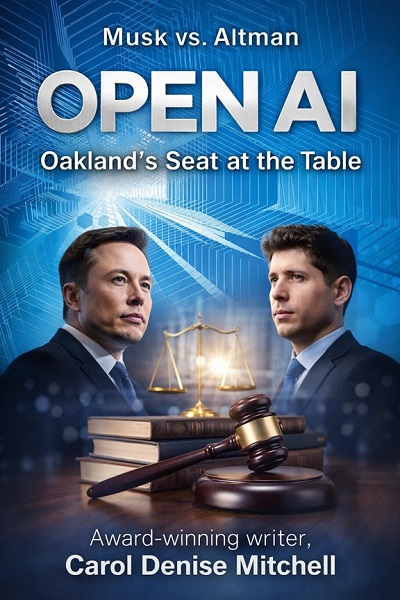
When I first proposed to my assistant that we write a book about the Musk vs. Altman federal trial, I wasn’t sure I could pull it off. I knew how to write — fluidly, confidently, and with purpose — but this wasn’t just any subject. This was AI, and the stakes were enormous. Two of the most powerful entities in the field were preparing IPOs projected in the trillions. Everything about this book had to be right.
By May 16, 2026, just two days before the verdict, the pressure hit me hard. The manuscript was scheduled to enter publication, and suddenly I wanted to pull it. Not because I couldn’t write it — but because I understood exactly what it meant to publish it. This book wasn’t for today. It was for tomorrow. A historical record. A beginning source for future readers trying to understand how AI governance unfolded in a federal courtroom in Oakland, California.
“I can’t do it,” I told a friend on May 16.
“Let me read what you have overnight. I’ll get back to you,” Michelle said.
Michelle — a lawyer with twenty years of courtroom experience and not a single loss — had been sitting beside me in the gallery throughout the trial. My stomach rolled. If she said no, the book wasn’t going to press.
That night was the longest of my life. I doubted myself more than I ever had. The delete button sat two fingers away.
At 6:00 a.m. on May 18, 2026, the morning of the verdict, my phone rang.
“It’s good,” Michelle said. “I have to go get coffee with a client. Let me know if KDP slides it through.”
Those were her last words before the verdict came down. She had been there the day Musk irritated both the jury and the judge with his impromptu “Law 101” lecture. I had been pulling for Musk personally, but the truth soared ahead of that reality. I had to amend an entire chapter to make it clear: Musk was not consistently present for this trial. From his disappearing acts to the way his partner seemed to yearn for more of his time, I had to stay focused and not get sidetracked by the spectacle.
By the time the jury delivered its decision on May 18, my assistant was counting down the hours I had left to go to press. Who needed a traditional publisher when modern AI editing tools could move as fast as I was moving? I didn’t care who knew — I had already created the book, lived the book, and now had the assurance I needed to let it roll.
And roll it did.
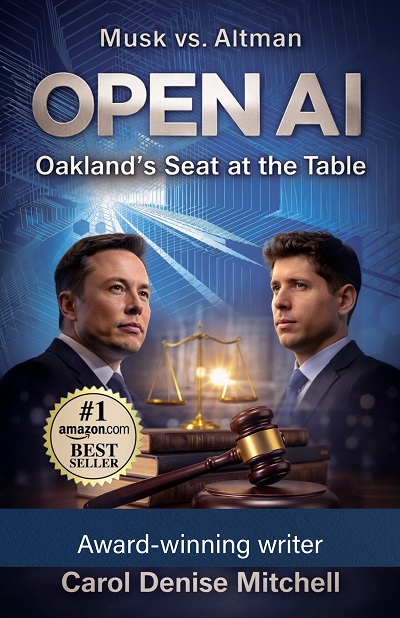
Within days, OPENAI: Oakland’s Seat at the Table began charting in Media & Law, climbing to #13. I finally understood why Michelle won all her cases so easily — she trusted the truth, and she trusted the work.
Today, the book holds seven five‑star reviews, a solid home on Amazon’s Media & Law charts, and it’s still trudging forward. Meanwhile, Elon Musk filed an IPO valued at $1 trillion, and on another front, trial winner Sam Altman filed his own.
And me? I became the first writer to publish a full book on the Musk vs. Sam Altman trial, written from inside the Ronald V. Dellums Federal Building in Oakland.
So take a ride with me — through Oakland, across the green grass of San Francisco’s sister city, and into the clear future of AI. The story begins in the courtroom, but it ends in a world that is changing faster than any of us imagined.







 Share
Share Save
Save