|
Poetic Opinions.
Good and Bad, Right and Wrong - Four small words which are heard time and again in reference to poetry and creative writing. These four words and the whole concept of 'appreciating' poetry remains an unfathomable mystery to me!
In spite of the fact that there is a very small minority who will argue that 2 + 2 does not necessarily equal four, I and the vast majority of the world population know that 4 is the 'Right' answer. Anything less or more than 4 is 'Wrong'!
Putting aside the minority who actually say they enjoy pain, I and the majority of the world will argue that repeatedly banging one's head against a wall does not feel 'Good'. The medical world will also concur it is a 'Bad' habit to adopt for the sake of one's health!
Doing my best to avoid deep philosophical discussions, applying the terms good and bad, right and wrong, in the above circumstances, are 'Objective' statements. Or put more simply they are accepted as facts!
My dilemma begins when I start to try and put the terms good and bad against poetry and writing, and then justify it 'objectively'. For those who have studied poetry and writing 'academically' and for those who teach poetry 'academically', there is not too much of a difficulty. At least there is not if set rules and criteria are determined and universally applied. Rather like baking a cake where certain ingredients must be used, and given the right scientific 'analytical equipment' to prove said ingredients were incorporated in a finished product, the same methodology is used by many in 'academic circles'.
My experience, however, is that there is not even any great consistency in the academic world.
Now some argue that "a 'good' poem and 'good' poet is one that stands the test of time." That's all fine and dandy if, say in 200 hundred years time, those making that statement are around to confirm their 'judgements' made today of a poem / poet. There are several flaws in that 'measurement' though. Lets assume a poem written today and judged today as 'bad' is around in 200 years. It goes without saying that the critics were unable make an accurate assessment of poetry (digging the critics up and telling them so will be of cold comfort to the poet who was branded a 'bad poet'), doesn't it?
My favourite citing of Shakespeare's unfavourable critics, when he was alive, raises another question. The academic critics in his time, considered knowledgeable - if they were right at the time, but are wrong now... hmmm..... good can become bad and bad become good based on the passage of time!
The real truth is that 'appreciation' of poetry and creative writing is subjective. What may be deemed good by one group of esteemed 'critics', as likely will be deemed 'bad' by another. Furthermore, opinions and 'criterion', judging poetry and creative writing, will vary from country to country, culture to culture, and even 'class to class' of any society.
So where does this leave a writer, aspiring to be 'good' at writing? Equally, one can replace the word with 'successful', but much of the same dilemma arises.
I personally consider the concept of success as having two types of 'measurement' - 'Internal success', as in setting a personal goal to achieve, and on reaching that goal, being successful, or achieving 'External success', as in recognised or deemed successful by the criteria of others. Of course, the two may correlate, but then again may not.
For those of the 'academic ilk' it tends to be fairly clear-cut, striving for and achieving institutionally recognised qualifications and recognition by those who are deemed 'peers'. - The peer generally measured by having 'bigger and better qualifications'. But of course, we come full circle to the 'Shakespeare syndrome' where his supposed 'peers' took delight in heaping him with derision. The same phenomenon holds equally true outside of the 'academic circle', and in the poetry world it is often judged by what 'publications' one gets their work printed in - or the quantity of work one gets into print.
The wisest words I have been offered are those by a writer who certainly has achieved success (as in externally recognised) in the form of awards in a number of writing fields that I or few others will achieve. The advice being, "Compete against nobody but yourself". When pushed by me to give some explanation as to what she personally considered had been successful in her writing career, the answer came as somewhat of a surprise. It was not having achieved a movie writing award, held by only a handful, including Steven Spielberg and George Lucas. It was not having personally performed poetry for a former President and First Lady of the USA and also Sir Vincent Price and Sir William Collins. So what 'accolade or award' had she judged as her pinnacle of success? The answer was, "That my writing has made some connection with the lives of others - people of all walks of life - age, education and culture."
What was the most interesting aspect of this, however, was that she had not set out with this being a personal goal to achieve the various awards and accomplishments she had gained, but rather that she had set out to write the best she could 'for herself' and had what it took to 'connect' - to communicate with others.
This left me thinking about the whole aspect of writing and what is particularly important to me. When one strips away all the intellectual debating and schools of thought, I believe that writing is nothing more than another means of communication and expression. There are certain circles who argue in favour and admiration of what has been jargonised as 'difficult' writing - that it requires intellectual study, and that only others of the same level can understand and appreciate it (hence 'difficult'). I, however, remain both bemused and somewhat suspicious that one should strive to make one's communication, be it the spoken or written word, so 'difficult' that few people can comprehend what the author is trying to convey!
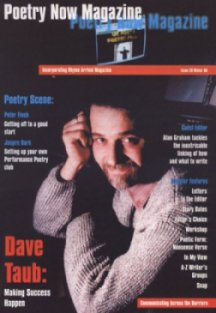
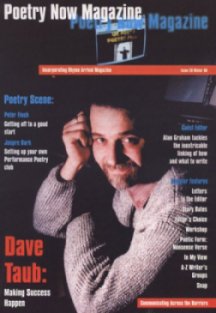
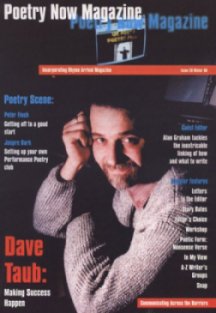
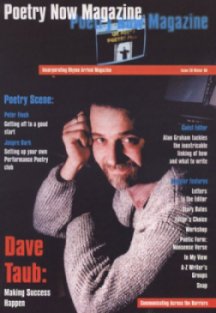
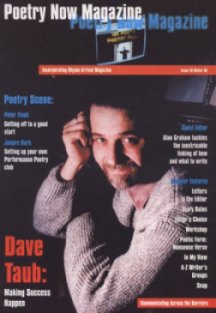
For those who are obsessed with labels and terminology, I have been repeatedly dubbed a 'populist writer' both with my poetry and many of my articles, not surprisingly as I remain the overseas columnist for one of the UK's largest hard-copy poetry-dedicated magazines - Poetry Now. Admittedly, only in its tenth year of publication, it can be argued that it has hardly stood the test of time! But I also remain bemused that being a populist writer and writing for a 'populist publication' has attracted derision and scorn - an elitist contempt if you will - from some quarters. In spite of this, I still would point to a 'tenet' which appeared in one of my earlier columns:
Now added to the two geographical 'worlds' - England and America - within each there are what some see as two 'poetic worlds'. Namely the 'official academic' poetry world and then the world of 'non-academic' poetry. It is easy to become entrenched in the world which each of us most strongly identify with, and then dismiss the other. Sadly, many of those in one often go beyond dismissal and develop strong scornful and disdainful attitudes toward the other.
The seemingly never-ending accusations and exchanges between the more bigoted of each world continue with "Unless you have been 'properly' University educated, you can't be deemed a poet - worthy of the craft", and "Academic education does not make a poet - it simply produces sterile verbiage!" As if that were not sufficient, there are also the two 'factions' of Free-verse poetry and Rhyming poetry. I never much liked politics and 'factions' preferring, instead, to find common ground and respect for conflicting opinions. And in spite of me personally not originating from the 'University educated poetry world', my love of all things poetical, combined with an insatiable curiosity, leads me to explore both 'worlds' and all the 'factions' within. I also hold to the saying 'Don't throw out the baby with the bath-water', for there are babies in both tubs!
For new and aspiring writers, I would say that Poetry (and the same holds true for writing in general) demonstrates many niches, circles, and schools of thought. None have a definitive universal 'truth' or 'answer' as to what poetry and writing is or should be, although I am still of the belief it is a form of communication and expression like any other art. Whether you believe that your expression and communication should reach a narrower or wider audience, I leave you with the best advice I have yet to be given - "Compete against nobody but yourself".
Copyright January 2000, remains with David Taub
David Taub is a member of
The British organisation 'National Union of Journalists' (NUJ);
The Florida Writers' Association;
Columnist for the UK magazine 'Poetry Now';
Freelance writer for various UK and USA magazines;
Co-author of Language of Souls (listed on amazon.com)
Website: www.ukpoet.cjb.net
|


 Share
Share Print
Print Save
Save Follow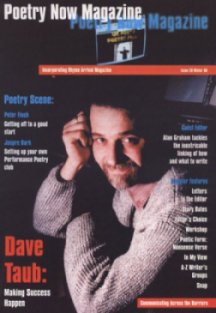



Take Care, JC
May every success fall into your lap. JC xoxoxoxo
Nice to see you back.
Abet on the wrong page as usual,but better to be read by poets,than to be read by none.
You have posed some interesting questions,
and have given interesting points of view.
Just over six months ago my grandchildren,
asked me to define a poem to them,an easy question I thought till I realised I had never read any poems.
I found I could not answer the question.
Hence my belated arrival here.
Wherein I found that my preconceived views on the subject did not appear to exist in a recognisable format.
Having struggled with what I thought was poetry,I was then informed nobody really uses that style any more,the poetry world has moved on to free verse.
Fair enough teach me the rules of free verse.
Ah! slight problem there is no rules.
No problem,this is real old hat to me,real Shaw type stuff, "Battle o' the Inch"
thirty warriors each side,stand and slaughter each other till only one remains,
And the King awards the prize to the winner.
But who recorded all this glorious history;
The very master of free verse themselves for thousands of years.
none other than the prestigous "Seannachaidh"
Free verse is an ancient art form in its own right.
Your good friend,if not yet a poet.
( I have never written free verse yet,but I do intend to try some day)
Morchuis