Short Story
Reviewed by Ronald Hull
October 13, 2026
It's good to see you writing a novel again.
This was a rather gripping piece, considering the loss of a genuinely cultivated love over time. But it happens, and that makes it worth writing about and reading.
I never thought of happiness as such a subject for discussion. But I always liked the Socratic method of teaching. I found that I could tutor far better than I could ever teach a group of students from varying backgrounds and needs.
Although never stated, this kind of therapy seems only available to the wealthy. When so many more need it. Unless the Seismic Minds Anonymous was a volunteer organization with people who had the time to help others. I'm sure the novel clarifies what SMA is.
Ron
Once more, you have a way of dealing with heavy stuff and using much metaphor and simile to create explanations for every thought expressed.
I've never had any real conflict between my pragmatic mind and my conscience. Perhaps, I accepted failure too easily down one path too quickly, and moved on to the next possibility too soon. If lived again, I certainly probably would've taken different routes in my life thanI have. But, I have accepted them, good or bad, for what they were and are. Character building.
Ron
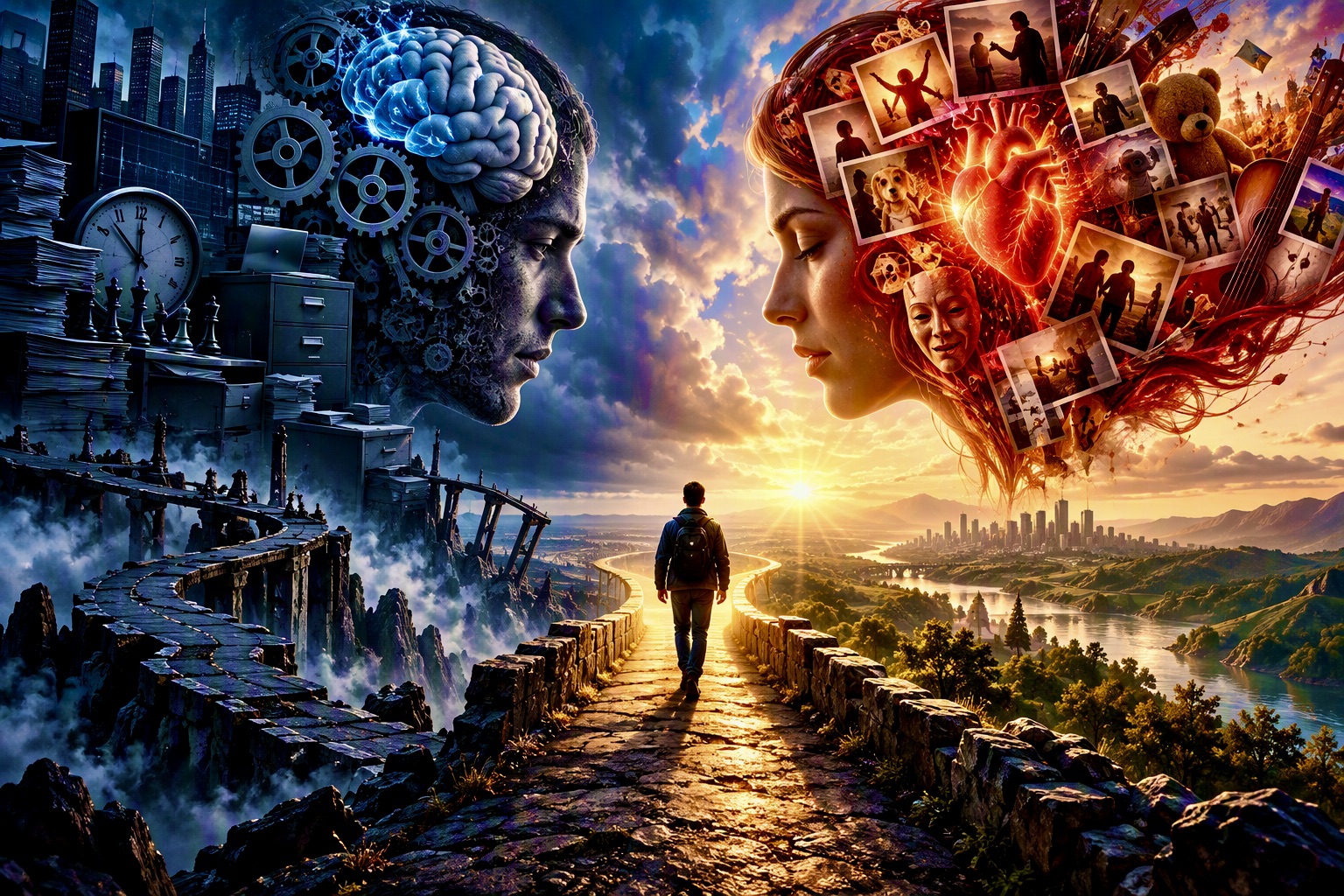
What struck me about this poem was its exploration of the apparent conflict between reason and feeling, and its gradual realisation that neither needs to defeat the other.
It brought to mind Iain McGilchrist’s work on the cerebral hemispheres, particularly, after the long, ,ing, overly long read of The Master and His Emissary, and his argument that we engage with the world through different, complementary modes of attention. One seeks to analyse, categorise and explain; the other remains receptive to context, relationships and the greater whole. Both are necessary, but trouble arises when either mistakes its partial perspective for the whole truth.
The poem captures this beautifully. The mind reaches for its charts, evidence and explanations, while the heart clings to memories, possibilities and unfinished stories. Each has its own version of events, yet neither alone can reveal the full meaning of a life.
The turning point comes with the question, “What if neither has been wrong?” From there, the conflict gives way to recognition, and the bridge becomes a powerful metaphor for integration: not the triumph of reason over emotion, or emotion over reason, b
Poetry
Reviewed by Richard Cederberg
October 11, 2026
Speaking from my own experiences: it can be a real challenge, trying to establish resonance and harmonious interaction between feeling and thinking. I've learned that when such struggle occurs it helps (me personally) to pray, meditate, get out of myself, and write to explore how one might integrate both forces, where letting the hearts vision guide you, and letting the minds clarity refine your path, allows the fire of each to become one. It does nothing but good, when one comes to the realization that the mind and heart are not opposing forces, but are complimentary aspects of a single, integrated self. A thoughtful, and clearly written exposition on the topic. Well done, Poet. Peace. r
Does it come as a surprise to you, Odin, that I wrote a poem entitled Mind and Heart early this morning while having my coffee out on the balcony overlooking Miami City and the surroundings bays, written before I saw your poem posted today entitled Mind/Heart Conflicts. I hope to post it sometime in the near future. Taken together, I think we have probably covered all the bases that needed to be touched in exploring these two human faculties of perception recognizing their shared purpose in helping us humans in dealing with the world and ourselves in it. You touch symbolically and eloquently on the fact that these two faculties are less in opposition and more expressive of a necessary dialogue in coming to terms in/with the world. As you suggest at the end, its experience itself that informs the mind and heart, that every closed door can become a bridge under our feet in coming to terms with who we are meant to be. This is the journey we a re meant to take.
Short Story
Reviewed by John Herlihy
October 10, 2026
A devastating piece of prove laid out with measured precision. Grief reveal itself through small gestures—the tapping palms, the hesitant apologies, the way memory arrives not as drama but as truth finally allowed to speak. Clarence’s journey feels like a pilgrimage where the search for meaning tries to gain traction. In the end, happiness carries truth forward somehow. A powerful story that should resonate with its readers as it did with me.
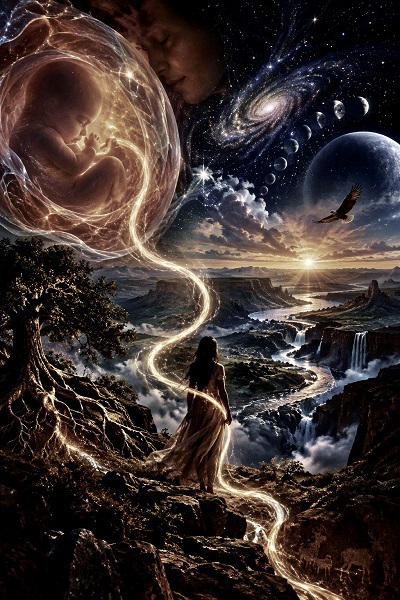
The umbilical cord and the miracle of birth is amazing considering the very long history of millions of years progress through mutation after mutation finally resulting in humans like you and I.
But to be taken from a mother and given to another, making sure that records were kept away from those adopted so they would never know who their real parents were, can be traumatic for someone, especially when they reach puberty and become able to have children themselves.
I hope you have used DNA to find out who your real parents were. I believe it can relieve a lot of thoughts that may have bothered for an entire lifetime.
Ron
The umbilical cord begins this journey in a moonlit lagoon before memory even had a beginning and ends in a widening roads of constellations. The comparative images that you evoke on this journey abound, the hush before language // every promise a fern unfolding // trust as a pearl hidden in a shell // to outgrow the next to become a horizon than a harbor // the secret map as a lantern beneath the sea. The imaginings of this poem shines forth its own lantern light.
I’m so glad you’ve written this tribute to those achievers of high intellectual standing and wisdom that we all need to survive in a very complex world with new challenges thrown at us almost daily.
For our government and the people supporting it to ignore or even degrade these champions of the arts and sciences, is a mortal blow to civilization. Most people are not interested in history. But time after time in past civilizations, when the arts and sciences were replaced by more mundane matters like wealthy overindulgence and glory at war and conquering others, decline soon followed.
I'm not an intellectual or particularly wise. I never fully understood those who stayed in one narrow sector of life and learned everything possible about it until they were the foremost expert in that small niche that they often created. But I will defend to my death their right to pursue those fields of study because all of us need them more and more as civilization advances, worldwide.
Ron
I've only been to Manhattan three times. But because of movies and television, much of the world knows Manhattan quite intimately, even though they may have never been there.
This piece is a verbal painting of all that is Manhattan and more. One can almost sense the feeling of actually being there listening to the pigeons coo and smell the aroma coming from restaurants and sidewalk eateries. The dissonance of sirens and horns honking often in the background.
My latest view of Manhattan was following a family of raccoons living in Central Park and how they are quite adept at crossing busy streets without getting killed. Avoiding the talons of red tailed hawks.
Ron
Poetry
Reviewed by Morgan Merriweather
October 5, 2026
One of my favorites of yours . This hooked me, who move through libraries like gardeners through spring orchards,
pruning confusion and watering possibility..
Some wonderful poetic descriptions of what so many are unable to leave behind. And the load gets greater every year as society becomes more complicated.
We keep checking back to see if things have changed since we last looked a few minutes ago.
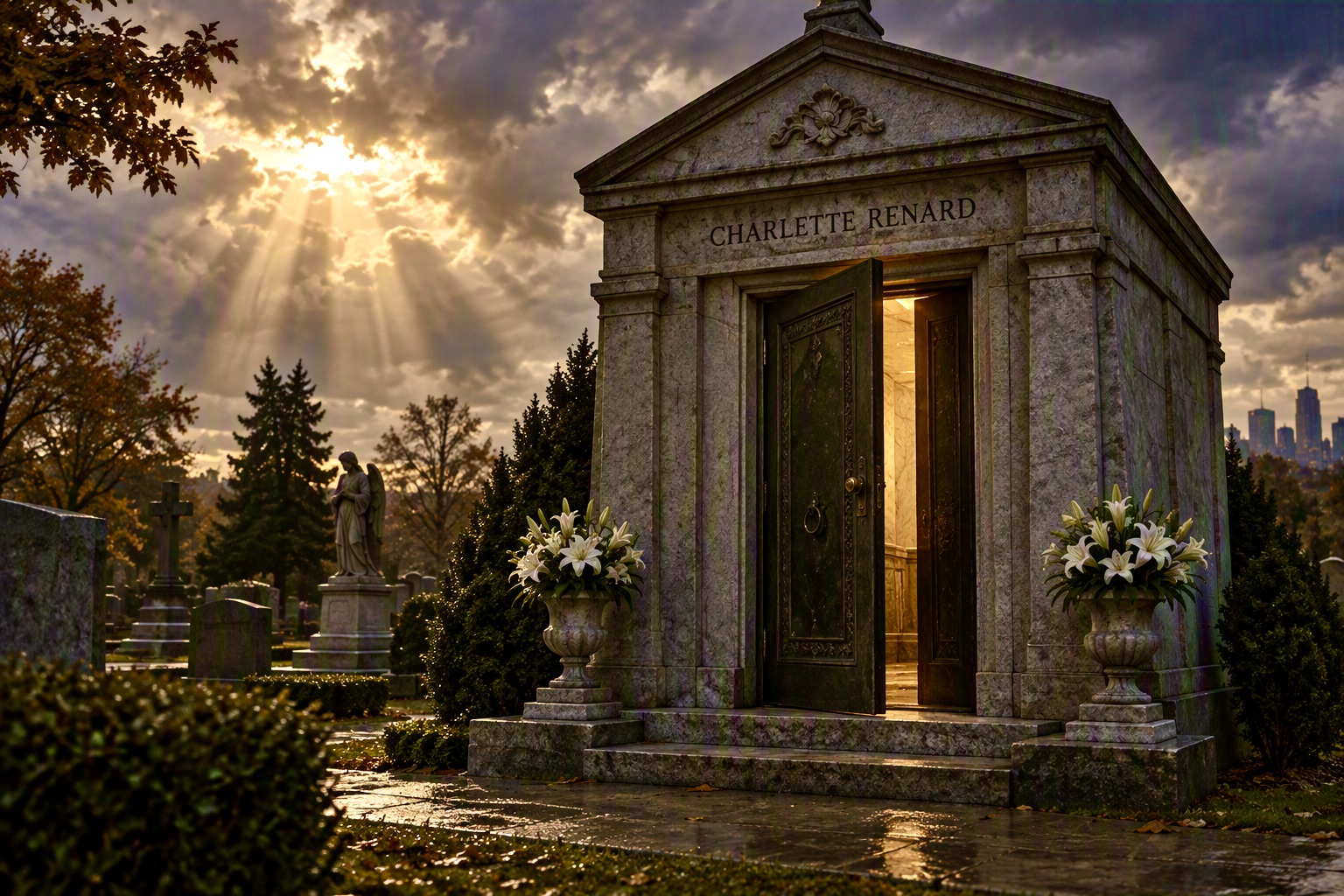
With your usual, Yet, you came up with a metaphor that I sensed might be showing the tree to be the cross that Jesus carried up the hill with all of mankind's burdens represented by it.
Ron
You unload a topic that is seldom considered of thought about in today's crass, money and power driven world, the plight of the intellectual, the reasoning one, the critical thinkers, not simply an ai-minded machine that follows critical straight lines, but a human individual illuminated by his/her own humanity, namely, the reasoning mind, the illuminated intellect, and the emotive heart, all representing a kind of borderland of spirit between the visible and invisible worlds. I wrote about this in my long forgotten book Borderlands of the Spirit. I especially love the symbolic imagery you employ in this poem to visualize the thinker and what they might achieve.
A concept dear to my heart. I always travelled light, both literally and eventually figuratively. I seemed to know early on that the weight we accumulate simply by living—memories, mistakes, hopes, and the quiet freight of experience can often feel heavy. You give that burden a kind of dignity, as though each piece of luggage is a chapter we must carry forward. The poem reminds the reader that even the heaviest lives still travel, still seek destination they always dreamed about and deserve.
I went to Columbia for my Master's in Creative Writing, and Manhattan served as my base during my expatriate years. I know it well and sometimes miss it, dissonance and all. Your Manhattan’s Dissonant Suite feels like a city translated into pure sound—an urban symphony whose movements rise and fall with the day’s pulse. You let the noise resolve into a shoreline hush, as though Manhattan itself exhales after its unique performance. The contrast between dissonance and pianissimo silence is nicely rendered ."Each wave a quiet cadence // Each retreat a whispered rest. What is left but indeed silence, for the city, for the reader.
Poetry
Reviewed by Morgan Merriweather
October 2, 2026
There they learn not every burden is meant for pilgrimage,
not every sorrow deserves permanent residency.
What once seemed a feather tucked inside a pocket
has become a wet wool blanket carried through years of rain.
Favorite lines
Your piece clearly shows how loyalty can turn into a way of enhancing the evil of a single individual, simply by going along, day by day, with the status quo…not thinking about one is doing.
Or, in the last stanzas, the thoughtless word or act with serious or long-term consequences, if not realized and revealed, recalling the missteps of my youth, can turn into insidious, internally held evil.
Ron
Poetry
Reviewed by John Herlihy
September 27, 2026
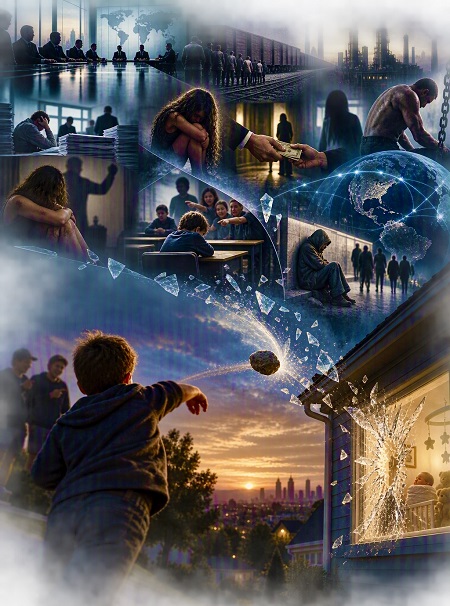
This poem reads as a slow, powerful unveiling of evil, arriving not with fangs and a growl, but with paperwork, routines and the accumulation of random, unexamined choices we all make in life. From the vast machinery of genocide to the possibility of a single careless act unfolds as moral blindness in both nations and neighborhoods. The boy with the rock, one small gesture that turns into consequences he never imagined. Thought‑provoking, Odin and deeply felt by this reader.
Poetry
Reviewed by Richard Cederberg
September 26, 2026
It's been proffered that the human heart holds both the sun and the storm, and evil is the storms whisper. As you seem to posit: the essence of evil is not a single, fixed entity, but a complex interplay of human choice, moral context, and relational existence. Evil is a corrosive force, a parasite that feeds on goodness, a force that erodes moral integrity, and when you feed it, it becomes an insidious self-perpetuating force that corrupts, spreads like a virus, and undermines Truth and goodness. Effective imagery and thought-provoking. Thanks. r
Poetry
Reviewed by John Herlihy
September 23, 2026
Some marvellous verses in this one, too many to enumerate, but they are there for the reading, bring silence, snow, moonlight to new heights. Silence, snow, moonlight, these things never felt so vocal under less experienced hands, a welcome reminder after all the increasing noise that we experience in our daily lives, both physical and mental. As you wrote silence is not emptiness but presence, an experience that say more than its silence. Indeed, the words, the verses, the symbols settle like snowfall into the reader's mind. Marvellous.