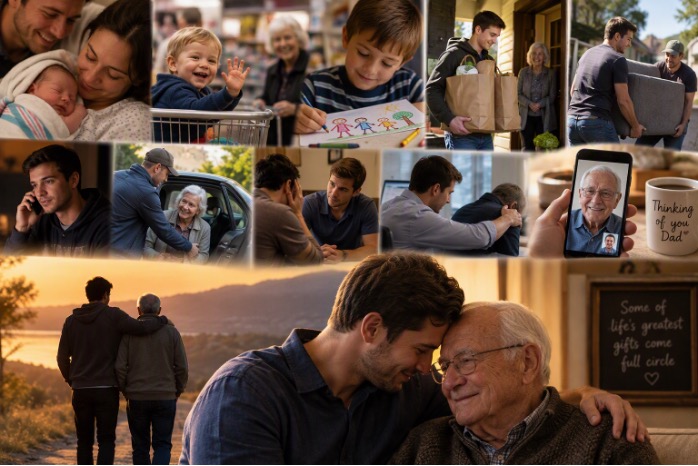
This poem is a moving tribute to the quiet forms of generosity that often go unnoticed until we look back across the years. Yes, you trace a son's kindness from infancy to adulthood, showing how generosity is less a series of grand acts than a consistent way of being in the world. The details of phone calls, remembered conversations, and simply "remaining close" give the poem an authenticity that most readers will relate to. The closing reflection, where a father recognizes the gift of receiving his son's love in return, is very touching, an experience also that many can relate to. A tender and heartfelt piece that reminds us that the greatest expressions of love are often the most ordinary.
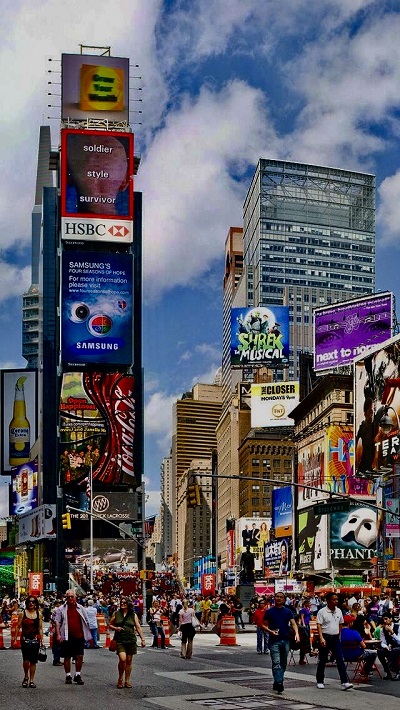
Odin, this poem captures the overwhelming sensory assault of modern advertising with striking imagery and an unsettling sense of emotional emptiness beneath the spectacle. The recurring "Me Me Me" motif effectively highlights the culture of self-absorption and manufactured desire, while the references to Hopper's Nighthawks add a powerful layer of loneliness and alienation heighten the point. I particularly liked how the dazzling excess of malls, music, lights and consumer rituals contrasts with the persistent hunger for genuine human connection. A thought-provoking reflection on consumer culture and the psychological costs of persuasion.
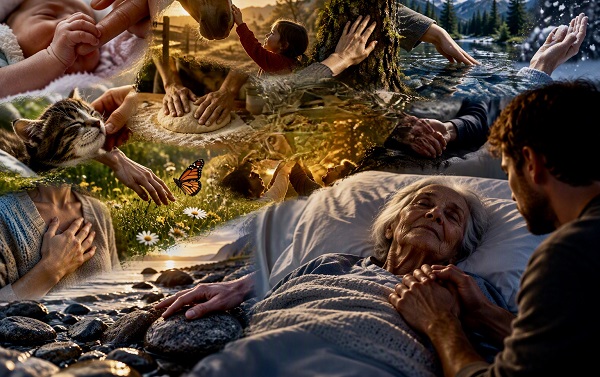
A wonderful lifelong review of our hands and how they help us understand by the way they feel things through fingers and palm. So poignant at the end.
For 3/4 of my life my hands have been partially paralyzed, with altered feeling and grip. Still your words like how bark feels are so real to me from my own experience.
But the greatest is the touch of another. Perhaps you could write about that. When I'm hugged, any pain I'm feeling seems to be transported into the person hugging me for some reason. But I believe, they feel the same.
Ron
A tender, resonant poem on how our hands remember what our hearts sometimes forget. The closing scene says it all, an adult son holding the hand that once lovingly held his. The closing line breath-taking, the mother's final breath fueling "a small white sail rounding a horizon neither can continue to hold. Simply beautiful.
This isn't what I thought the title suggested. But a loving memory of nostalgic times where when we were kids traveling the highway on a new adventure, those road signs, especially the Burma-Shave ones, were greatly appreciated and look forward to.
The destination suggested Las Vegas back in that day when it was just still a small town with some cheap thrills. Oh, how it has changed.
Ron
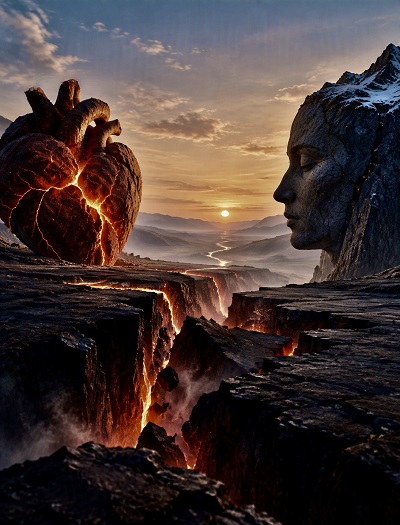
Your mind took a giant leap in this far reaching analogy comparing the heart in mind to the peoples that created their earth we know today.
Certainly, the heart pumps red blood fire up to the brain in a manner and more to volcanoes spewing lava and ash. And the mind is as resilient as of life as it undergoes tremendous tectonic changes but it took billions of years for the Earth to prepare for the arrival of us, it's last and most parasitic of arrivals.
Ron
A tender, beautifully paced poem down memory lane. What begins as playful nostalgia for roadside signs deepens into a moving tribute to a father’s quiet lessons. Placing the note in his hand is understated and deeply moving.
A gentle, clear-eyed reflection on how the weight of old struggles lightens once our perspective on them shifts. The poem’s refrain of “used to be”, kind of mesmerizing as they make their point. Beautiful indeed.
A vivid, compressed metaphor of inner upheaval, turning emotional fracture into geology, letting tremor, rupture, and renewal unfold in clean, elemental strokes. Acceptance and renewal become the mind's heart-felt strength.
A refreshing change of view. And a real nice take on an oft, perhaps overused, expression.
I loved it. The other half is coming, like it or not.
When I cooled my heels, things started to get better every year.
Ron
Ninety years is no small achievement, given the many ways that we can kill ourselves before that noble age.
As in my case, I believe that a combination of our genes and our lifestyle is what allows us to remain active and lively until some catastrophic illness of which there are many, finally slows us down or catches us suddenly, like a stroke or heart attack…an accident because we ventured too far at our age weekend ability…didn't stop driving.
I have a few more years to go to reach that noble level. But the way things are going, it seems to appear that I might live far beyond I ever thought I would when at 20 I faced the possibility of a very short life like so many of my paralyzed friends.
Ron
Poetry
Reviewed by Richard Cederberg
October 24, 2026
The title declares the central truth of this insight - the past cannot be undone. IMO, the poem is both a lament and an affirmation of the writers life, which invites the reader to consider how their own pasts linger in the present, not as ghosts, but as part of a living texture of whom they've become. An insight that is easy to relate to. Enjoyed. Peace. r
Your poem feels like a celebration of years as well as a map of endurance. Age becomes a widening river delta—ever-branching, ever-inviting—a beautiful journey of expansion rather than a lessening somehow as we often think of it. Hardship is not as erosion but a kind of hammer shaping resilience and endurance. A long, fruitful life is a great achievement, something that I aspire to.
The experience of tears becoming sand, such an awesome image, succinct and profound. All that we live, whether thru tears, smiles, or frowns, pass through the hourglass as sands of time. A fine portrait of what remains once our passions have burned themselves out.
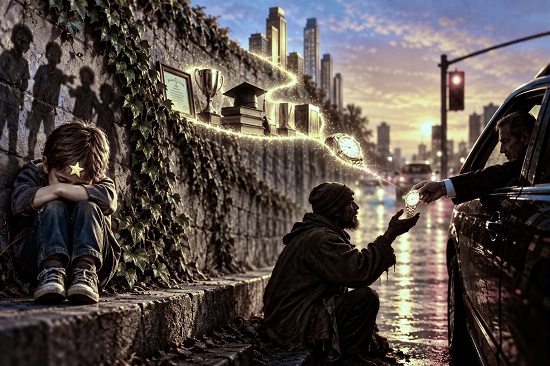
This little poetic essay brought back countless memories. Especially, the gold star that I had forgotten ever existed until you reminder. Giving the gold watch to someone who could pawn it was a really beautiful gesture at the end.
In our skinned knee gravel playground the worst accolade would be to be called a "brain" as though it was something outside of a body that operated well in school but not on the playground. Where rough and tumble, dare or be dared, ruled. Mothers sewed odd patches and new buttons where multiple buttons had been pulled out.
In the adult world it was always the one upmanship, jealousy and back biting from competitive enemies and colleagues, alike.
No gold watch, but I got all of the retirement paraphernalia after 30 years. But the group retirement was canceled because no one accepted the invitation except me. Our president was that terrible…nobody liked him. For good reason. My greatest reward for leaving was leaving, so that I could write my heart out, here, with you.
Ron
The scenes your describe at the beginning and throughout the poem sound and feel familiar, we all perhaps have gone through similar experiences, but the gesture described at the end, that is yours alone, beyond all of life's achievements, indeed far beyond any of that lies simple empathy for another, a powerful gesture that stands out and stops time as its own achievement, a gold star that will never fall away.
I was immediately thinking of Henry David Thoreau's. On Walden Pond. Even back then, you found that "Most men lead lives of quiet desperation."
For we writers to be able to clear our minds to write well, we have to find a place, if only in our minds, where we are isolated away from the chaos of the ordinary living to simply create.
Ron
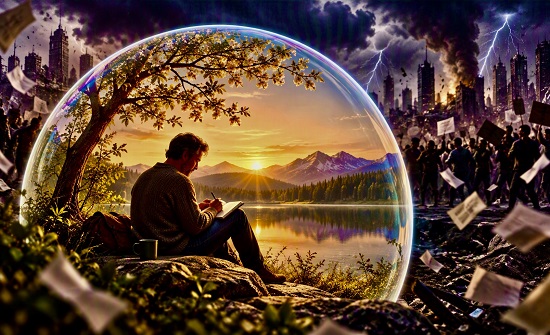
Love your image. AI is getting very good at creating images for me. A lot better than searching the Internet and finding nothing that suits the topic.
Your imagined reality begins with "a white moth of light— a refuge where chaos can ripple the surface but never breach into the depths. The world may be filled with darkness and confusion, but "the mind rises as pulsating, sparklet-filled sky, each quiet thought a star teaching darkness how to wait." Patience seems to be the key to the kind of sanctuary that we wish to find ourselves in, an imagined reality that becomes the true, the only reality worth pursuing, a sanctuary. where "patience stands rooted as an ancient cedar while the world howls around it. Some intriguing thought here.
What a refreshing take on the significance of pebbles at the seashore. The way they can record the geological history of the Earth through billions of years.
I, too, marvel at the varied colors of rounded pebbles and the veins that sometime appear on them. But I found them mostly in creeks where mighty glaciers were two miles high just 10,000 years ago. With a friend, found a big piece of glass that turned out to be a 700 carat fire opal.
Ron