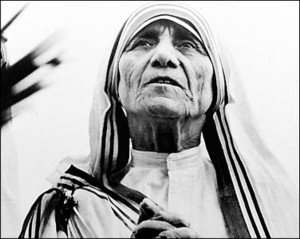
Now a decade after Mother Teresa died she remains an icon of kindness, love in action, compassion, sacrifice, service, frugality, a transformer of hearts and minds and a moral example that transcends culture, class and religion.
In 1952 Mother Teresa began picking up the dying in the streets of Calcutta, India. By the early 80s she and over 3,000 members of her order the Missionaries of Charity were working in 52 countries including Europe, the Americas, the Middle East and Africa and had provided love and comfort to over 42,000 abandoned people in the streets. Paradoxically over half the people recovered.
As the Missionaries of Charity flourished and gained attention from the Catholic Church and the world at large she was considered one of the world’s most admired women and in 1979 she was awarded the Nobel Peace Prize.
Now a decade after she died in 1997 at the age 87 she remains an icon of kindness, love in action, compassion, sacrifice, service, frugality, a transformer of hearts and minds and a moral example that transcends culture, class and religion.
Her fame did not affect the way she lived. She went barefoot whenever possible and slept on the floor of an open dormitory with the other sisters. She ate lightly, used cold water, owned only two white cotton saris and washed her own laundry and dishes. Visitors were struck by her simplicity and frugality. She explained, “No money that is given to the poor should be wasted on our electricity. We use only what we absolutely need."
She lived Jesus’ teaching, “Whatever you do to the least of my brethren, you do to me.” She saw the poor and the sick as “Christ in distressing disguise.”
Mother Teresa said, “at the end of life we will not be judged by how many diplomas we have received, how much money we have made, how many great things we have done.” She believed we will be judged by Jesus mandate, “I was hungry and you gave me food, I was naked and you clothed me, I was homeless and you took me in.” She said giving should not only mean satisfying basic needs but being “hungry for love, naked of human dignity and respect, and homeless because of rejection.”
Mother Teresa’s goal was not to convert others to Christianity but to allow Hindus to become better Hindus, Christians to become better Christians and Muslims to become better Muslims. She said, “We all belong to the same family, Hindus, Muslims and all peoples are our brothers and sisters. They are the children of God.
The goal of Mother Teresa’s worldwide travel and speaking engagements was not to raise funds but to ask her audience to do “something beautiful for God and serve Jesus in the distressing disguise of the poor.”
The Missionaries of Charity only accepted donations from individuals not corporations. Her vision about money was clear; she asked each person to give until it hurts not just money but to, “Begin at home by saying good things to your child,” to your spouse or “helping someone in need in your community.” As a social critic she replaced indignation with service and said, “Do what you do with a happy heart.”
When asked about the Catholic Church, woman’s roles or economics she said, “I don’t know about that” or she’d bring the question around to her vision, “I never look at the masses as my responsibility. I look at the individual…I can only feed one person at a time…The whole work is only a drop in the ocean. But if I didn’t put the drop in, the ocean would be one drop less. Same thing to you, same thing to your family, same thing to your church…just begin…one, one, one.” She said do small things with great love, ordinary things with extraordinary love. “Love has to be put into action and that action is service.”
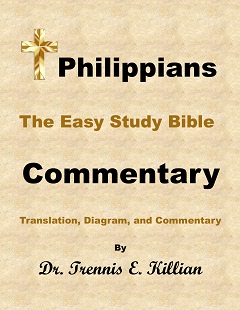
Finally, the commentary that adds even more to the diagramed version of The Easy Study Bible. Follow the diagramed verses of this new clear translation with a verse by verse commentary. Understand even better the New Testament book of Philippians.
<
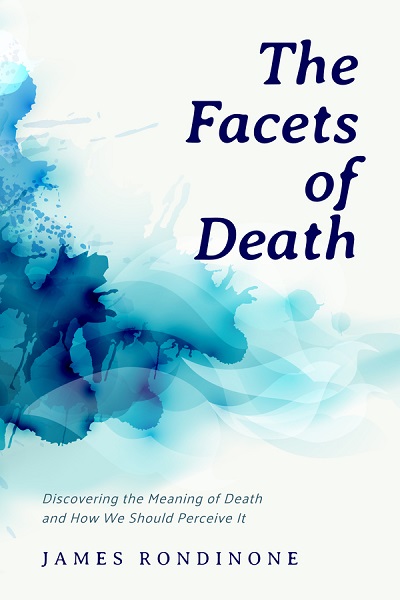
Are you still angry at God for having lost a loved one due to sickness or unexpected circumstances? This book will give you a better understanding of death, God’s role in it, and what decision is before each of us that would allow us to see them agai