Karen Lynn Vidra, The Texas Tornado, click
here to update your pages on AuthorsDen.
Paramedic Stories, Part XXVII, Keeping Your Emotions In Check by Karen Lynn Vidra, The Texas Tornado
Tuesday, December 7, 2004
Rated "PG" by the Author.
A seasoned paramedic writes about some of his more difficult cases he has had to deal with.
As a paramedic/EMT, I have learned that when one is dealing with people whose lives are in danger, you can't panic, and you must remain focused on the task at hand at all times. You can't go all willy-nilly when a person has suffered a life-threatening condition such as a coronary thrombosis, a collapsed lung or severe dyspnea (difficult, labored breathing), or a severe anaphylaxis (overwhelming allergic reaction). You can't panic and throw up your hands when a child is lying on the ground, pulseless and completely without breath and you have to perform CPR or artificial respiration if she isn't breathing, and you definitely can't walk away when a child is seizing uncontrollably with no sign of the seizure breaking anytime soon. You can't pretend that it isn't happening because it IS, and you have to divert all your attention on the unconscious little girl or the seizing little boy and do all you can to help them survive their crises.
If you fail to provide the best of care, you are liable, in case something should unexpectedly go wrong, or you cause the child to die; it can happen any time a person is injured or falls ill. So many variables are at hand, and so many things can go wrong when you least expect it. You best be quick to respond at a moment's notice, and if something changes or the patient worsens, you'd best be ready to help them if they are to have any chance to survive.
It may seem that I am tough and cold-natured when you see me or any of my buddies "in action", but we have learned that we have to act professional at all times, and we have learned to focus on the situation at hand. When somebody is not breathing or somebody is bleeding to death, we can't be joking around or laughing: we have to be serious, deadly serious (if you pardon the pun), and we have to act accordingly in order to try to save the stricken person's life. A lot of times, we can end up in danger too, as well as the patient; being a paramedic/EMT is fraught with danger, be it a fire, a gas leak, a collapsing wall or building, gunfire, carbon monoxide or some other type of poisoning, environmental emergencies, chemical or other burns, communicable diseases or deadly illnesses, threat of terrorism, or getting involved in a MVA (motor vehicle accident) when we are in the process of transporting a victim to the nearest hospital. I have seen too many of my buddies end up injured in accidents or situations that happened when we were on the scene, and I have also seen some of my buddies die right in front of my eyes. Yet, even with all of this, I have learned to keep my emotions in check and deal with the tasks at hand; it's just afterwards, when I am not around, when I finally let my guard down, break down, and cry uncontrollably.
I remember one time when I was in New York. I happened to be there on the day September 11, 2001, happened, I was on vacation with my family, and I saw the whole thing: the first plane hitting the one Trade Tower, then, a few minutes later, the second plane hitting the other tower in a ball of fire, and then seeing people jumping out of windows, and then people running from the scene in a wild attempt to get away with their lives. My paramedic skills suddenly took hold, and I went in to help those people who were inside; it wasn't long before I got out, only, about fifteen minutes later, to see the first tower fall in a column of thick, choking, black smoke.
I have had breathing problems ever since; yet, I continue to do my job as long as my lungs will let me. Some days are worse than others, but I still do my job to the best of my ability, and I am going to try to serve people as long as they need me or any of my co-workers. There have been many a day when I have felt like crying or panicking when I see a small child lying on the ground, looking more dead than alive, or a woman screaming out in pain as we pour water over her still-steaming, burned up body; but I hide my true feelings and do my job as best as I possibly can. I have a responsibility to my patients, and I must let them know that I am there to help them through whatever they are facing and let them know that I am a professional, first and foremost.
My husband has been treated for analypis shock successfully but it has been almost eight years since he was blown out of our burning house. The fumes still bother him today. I praise the emergency personel that are out there anytime we need them.
Suspenseful and close to home, Rain of Deception 2 will leave you in Tears. Much like Part 1, this will shocking sequel will keep you on the edge of your fingertips.
Suspenseful and close to home, Rain of Deception 2 will leave you in Tears. Much like Part 1, this will shocking sequel will keep you on the edge of your fingertips.


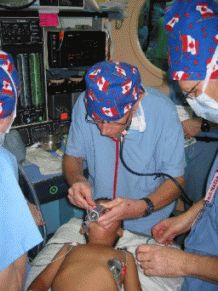 As a paramedic/EMT, I have learned that when one is dealing with people whose lives are in danger, you can't panic, and you must remain focused on the task at hand at all times. You can't go all willy-nilly when a person has suffered a life-threatening condition such as a coronary thrombosis, a collapsed lung or severe dyspnea (difficult, labored breathing), or a severe anaphylaxis (overwhelming allergic reaction). You can't panic and throw up your hands when a child is lying on the ground, pulseless and completely without breath and you have to perform CPR or artificial respiration if she isn't breathing, and you definitely can't walk away when a child is seizing uncontrollably with no sign of the seizure breaking anytime soon. You can't pretend that it isn't happening because it IS, and you have to divert all your attention on the unconscious little girl or the seizing little boy and do all you can to help them survive their crises.