It was one of the prettiest spring days of the year. We were enjoying a rather quiet, uneventful afternoon here at the fire station when the emergency tones sounded.
The call was for a woman down.
We grabbed our gear, headed into our rig, and headed (full lights and sirens) to the victim's house.
We found the husband outside, frantically flagging us down. He ran into the house before we could see what was going on.
The look of fear and panic on the man's face galvanized us into motion. When we got inside, we found a woman in her 30's lying prone on the livingroom floor. The husband said that she'd had a devastating asthma attack. The woman did not appear to be breathing.
We quickly rushed to her side, turned her over onto her back, and it was true : she was not breathing. She was cyanotic (blue), and we couldn't find a pulse.
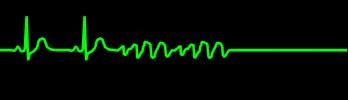
Kendall quickly hooked her up to a portable heart monitor. Flatline. I immediately started breathing into her mouth and nose and started pushing on her chest to try to jumpstart her heart. Kendall, in the meantime, started an IV, hooked her up to portable oxygen, and called the hospital for further instructions on how to treat the victim.
Doctor Iverson (from the ER) told us to start pushing meds into her IV line and continue CPR on her.
The woman's husband had said that she had eaten shrimp and immediately started choking/gasping for air.
Anaphylactic shock.
The woman was exhibiting all the classic signs: difficult (or absent) breathing, swelling of the face and neck, low, low blood pressure, hives all over her face and neck, and showing signs of extreme duress. If she was to have a chance to survive, we had to get her ass to the hospital as quickly as possible.
Dr, Iverson told us to give her Epinephrine to try to open her constricted airway. We did. Nothing. No response, no change in her condition.
It seemed like hours, but only fifteen minutes ticked by. The woman was still down, was still unresponsive after repeated efforts. We threw her lifeless body onto a waiting gurney, sped out the door, and put her into the rear of our rig (I was still doing CPR on her). We continued our rescue efforts in the rear of the ambulance as Goose drove like a bat out of hell to Nashville Memorial, which was the closest hospital to the scene where all this took place.
We got to the hospital ER, where Drs. Iverson and Weaver met us, as did a whole plethora of nurses. They took over, but it was too late: the woman was pronounced dead shortly after arriving.
We had done all we could, but it wasn't enough, apparently. Death won this round. We all cried at the news, but none more so than the woman's husband, whose anguish howls filled the ER...and our dreams.
It was one of the worst codes we'd ever faced as paramedics, yet we knew that we couldn't possibly save everyone we encountered. We could only do our best and hope the next "Code: Blue" would yield better results.
~Written by Patricia Eileen Moss, EMT, on May 1, 2007.