The kidnapping of a Major League ballplayer turns out to have long-range and enduring consequences, not only for the player and his family, but for the world.
In a matter of moments, one bright and sunny autumn day, the charmed world of star ballplayer Justin Moore blew apart, never to be the same.
That afternoon had been crisp and invigorating, custom made for a light off-season workout at the ballpark, a state-of-the-art facility in Washington, DC. Having consumed a hearty lunch with two teammates that noon, Justin treated this workout as mostly an afterthought. He dashed around the bases, propelled by the steady breeze, rays of sun falling golden on his shoulders.
Those two buddies, Murphy Close and Robin Flores, yelled encouragement and rolled their eyes. They knew Justin was reliving a big moment in the Major League season that had ended for their team several weeks before. Justin slid into home plate, jumped to his feet, and signaled himself “safe,” while Murph and Robin applauded sarcastically. For good measure, they shouted “More, more, more,” which was the rallying cry that the fans always used to spur Justin on to even greater feats.
“Yeah, looks like you just rewrote history, dude,” Murph yelled.
“What a difference a few weeks makes,” Robin added. “Especially when there’s no umpire or instant replay to spoil your fun.”
Justin laughed and tossed back his blonde locks, longer now than they had been during the season. He scratched his bearded chin, also scruffier than the rather straight-laced manager, Cap Randle, allowed his players from April to October. “I was safe,” he yelled back. “Screw the umpire and instant replay.”
He approached his friends with a grin and continued, “I’ll never let you guys forget what I did. After all, it was the first inside-the-park home run of my career. A history-making feat for a playoff game, my fellow dudes.”
Murph handed him a plastic bottle of Gatorade, and he took two large gulps. Wiping his mouth, he added, “I knew it as soon as the ball bounced off the wall and away from the center fielder. I was hell-bent for it, guys. It should have counted, and we should have ridden it into the championship series, if not the World Series.”
“Pretty impressive for a decrepit right fielder of thirty-two,” said the relatively youthful shortstop Murph, all of twenty-eight years old.
“Yeah,” added the versatile Robin, who at twenty-seven had mastered all the infield positions. “If you had actually done what you say, maybe you could retire happy.”
Justin laughed again, knowing that retirement was not for him … not before he had a chance to sport that coveted World Series ring on his right hand. He took several breaths of fresh air, which flowed through his system like a tonic. He almost wished he could start a new season tomorrow, despite still feeling the cumulative aches and pains of the past one. Since that couldn’t be, he would bask in the knowledge that his controversial slide into home plate was still the talk of Major League baseball. Everyone knew it could have put the Washington Filibusters ahead in a critical National League divisional series game against the New York Broadways.
The Filibusters had been robbed of their chance at milking the wine-and-dine circuit all through the fall and winter, and Justin himself had been stripped of what could have been an iconic moment for him. That was what Justin and most of his teammates believed, but his apparent ability to shrug it off for public consumption, with the blithe phrase “that’s just baseball,” had impressed his peers and fans everywhere. He neither berated the umpire who had made the close call at the plate, nor criticized the replay officials at headquarters who had cited “not enough evidence” to overturn it.
“The baseball gods are capricious as hell,” he told the national media with a winning smile. “Little things have a way of turning into big things. It’s nobody’s fault. A call like that one could just as easily go our way next season.” His measured words had everyone exclaiming about his hard-won maturity in the face of adversity, and what a fine example he was setting for his younger teammates.
If nothing else, he had all the incentive he needed to tear through the League next season … and he knew there would be a “next season” for years to come, each with the same attainable goal that he had barely missed so far. In spite of the injuries scattered throughout his decade in the big leagues, he had always been strong in the essentials: physical strength and stamina, athletic instincts, optimistic outlook.
He chuckled to think how lucky he had always been, despite the broken home of his childhood. How clever of his mother, once an all-American basketball player at the University of Maryland, to give him the genes of his biological father, a baseball and football star at the same school, while sparing him the worst of the turbulence when that first marriage went sour. He had the work ethic of his stepfather, who had parried minimal skills into a brief Major League playing career and a much longer coaching career, earning the nickname “mighty mouse” for both his small stature and his intensity. The divorce and remarriage of his mom when Justin was seven had somehow worked out for the best. Things had a way of doing that.
Since it was late afternoon, and getting chillier, the three friends left the field to the ground crew that would arrive later, and took their Gatorades to their lockers. They would lift weights for thirty minutes or so, and then call it a day. There was no reason to push an informal workout so early in the off-season. A couple of months from now, around New Year’s, a new season would be looming. After that, the facility would gradually fill up with additional workout partners, and the clubhouse staff who helped with laundry, equipment, and other needs would become fully staffed.
For now, the place was deserted, except for this trio who had permanent homes in the DC area. Only one other current team member, Randy Oakes, lived nearby, and he was a “weirdo” relief pitcher whom they agreed they would rather not encounter today. They got enough of his clubhouse political rants during the season. “Thank God, old Randy isn’t much for off-season work,” Murph said. “I’ll bet he’s either in the woods, hunting down furry animals, or at some shooting range, perfecting his aim.”
“Or maybe organizing a new militia,” Robin added.
The voices and movements of the three friends seemed to echo through the empty facility. After lifting, they moved from the weight room to the clubhouse, stopping at the laundry room to grab some towels. None of them felt the need for a shower. Wiping the sweat off their foreheads, they joked about their collective willingness to knock off early, as if resting on their “should-have-been” laurels.
Justin felt a sense of satisfaction that he would not apologize for. As he opened his locker to replace his sweat clothes with jeans and a T-shirt, he reflected again that he was “pretty damned blessed.” It was great to have a respectable career already in the books, and still feel that the best was yet to come.
Now he was headed home for a relaxing Friday night dinner with his family. That was the greatest blessing of all. April sometimes worried aloud that baseball families weren’t destined to last. The schedule was undeniably tough on home life, and they knew of a few painful breakups among their friends. Most shocking of all had been the recent divorce of the skipper, Randle, and his wife, a model couple for thirty years.
Justin dismissed all such worries, pointing out that he and April had gone through their worst troubles early on and survived them. He had fallen for a famous actress, but he had come to his senses just in time. Now, in spite of the constant temptations thrown into his path, he had vowed never to hurt April again, not if he could help it. She had been his sweetheart since high school, and always would be. The thought that he might have thrown it all away, but hadn’t, sent a pleasant shiver up his spine.
Justin’s mouth watered at the thought of the steaks and baked potatoes that April had promised for tonight’s dinner. And the girls, ten-year-old Andrea and seven-year-old Melissa, would be excited for the upcoming weekend but also full of news about their respective school days. It would be fun to listen to them.
Both Murph and Robin had toddler sons, but that didn’t arouse Justin’s envy. It was just as well to have daughters instead, since they would never feel the need to compete with their old man’s sports legacy. They were “girly girls,” as April described them, who loved to dress up and fool around with makeup and jewelry as if they were teenagers already. That sort of thing was beyond Justin’s comprehension. Still, the girls adored him because, as April said, he was still a big kid himself. That was also the reason he got along so well with younger fans, often spending an hour or more after a game signing autographs. He was never snappish with his young worshipers as he could be with adult fans, who irritated him if he’d had a bad game. And the news media … that was an up-and-down relationship at best.
Who could have a more perfect life than he did? Even if the thought of a son occasionally crossed Justin’s mind, there was still plenty of time. The topic hadn’t been raised, except in passing. April, who did volunteer work for a youth foundation, sometimes spoke wistfully about foster children who needed loving homes. She conceded that life was too hectic right now to take on something like that. The day-to-day baseball schedule, and the ceaseless travel that went with it, dominated eight months of the year. They’d purchased a spacious home in the northern Virginia suburbs three years ago, after Justin had signed his first long-term contract. They had financial security at last, although there was scant opportunity to sit back and enjoy it. That would come later, when it was truly time to “rest on his laurels.”
“Yeah, pretty damned blessed,” he confirmed aloud. His buddies glanced at him quizzically, but then nodded. Robin, the religious one, gave him a slight shake of the head. He disapproved of anything that even bordered on swearing, which made him something of a target among his rowdier teammates.
The three friends had almost finished dressing when they heard a strange noise outside the clubhouse. The sound seemed to reverberate from afar, making them all jump. Someone must have entered the long tunnel leading from the dugout to the clubhouse. Footsteps could be heard, muted at first and then growing louder.
“Maybe old Randy decided to show up after all,” Murph said. He raised his voice and called, “That you, Citizen Oakes?”
No one answered. Justin could tell the pounding was coming from more than one pair of feet. It was a heavy and measured sound, as if an army were approaching. Sweat popped out on his brow as he glanced at his friends. They looked back at him in growing alarm. There had to be a logical explanation … but what was it?
“This is bad,” Justin said. His mind flashed back to an incident that had happened seven years before. Manny Chavez, then the Busters right fielder, had been snatched from the ballpark after the team’s championship series loss to the Florida Keys. He had been on his way from the clubhouse to the owner’s suite that evening to meet his then-fiancée, sportswriter Jessica Austen, when he had been trapped in an elevator by a female operative from his native Cuba. The mysterious woman, after plugging him with a syringe, had somehow managed to transport him back to his native country. Poor Manny had awoken in a Cuban prison, a captive of his ex-wife, Guadalupe.
Funny how no one talked much about that kidnapping anymore, as shocking as it had been at the time. After complicated negotiations, Manny had come home safe and sound, married Jessica, and gone on with his life. In the aftermath, the Filibusters had instituted new ballpark security measures. There were now cameras in every nook and cranny to pick up any suspicious activities. Other ballparks had followed suit. The League brass had assured the players’ union that such a breach could never happen again.
Or could it? What if somebody had turned off the cameras, since the regular season was over? Justin and his teammates had come here in full confidence that this facility would always be their safe place, even in the slow period from late October to New Year’s when their usual helpers were gone. Had they made a fatal blunder?
“Announce yourself,” Murph yelled, evidently trying for humor but sounding shaky. Robin began praying aloud in Spanish, something he often did during tense moments on the field.
Justin didn’t feel inclined either to joke or to pray. He felt his insides turning to water. He glanced at a trash can in the corner, thinking he might have to throw up, but there was no time to move.
The clubhouse door burst open as if someone had kicked it in, although it hadn’t been locked. Three intruders burst in, dressed in plain dark clothing, wearing masks, and carrying assault rifles. They pointed their weapons at the three friends. Justin reflected absurdly that if he had only cultivated Randy Oakes a little more, maybe Randy would have taught him what he knew about that style of weapon. As if that would help him now.
There was nothing to do but to raise his hands. Murph and Robin did likewise. “Is this a stick-up?” Justin asked, jerking his head toward his open locker. “You can have all our stuff, if that’s what you want.” His wallet, watch, and cell phone were in plain sight. He hoped this crew was just a bunch of greedy bastards who had sniffed out an opportunity to rob some rich ballplayers. But Justin’s gut told him otherwise.
“Shut up and do exactly what I say.” The man in the center spoke in a harsh, mechanical tone, with a southern inflection. He was evidently in charge of what looked like a well-planned operation. He moved farther into the clubhouse. “Step away from your lockers.”
Pointing his weapon first at Murph and then at Robin, he ordered, “You two. Get down on the floor.” As they obeyed, he swung his rifle to point at Justin. “You. Moore. Turn around and stay where you are. All three of you, put your hands behind your backs.”
A second member of the crew took off a backpack and slipped his rifle into a leather holster. He produced several rolls of duct tape and two gags from the bag, and then moved toward the players. The third gunman remained on guard at the door.
“Tie them up good,” the crew leader ordered. Within moments, Justin’s two friends were bound and gagged on the floor, while he remained standing. The man with the backpack moved behind him to tape his wrists together, and then proceeded to clean out his locker. All of Justin’s possessions went into the bag, including his personal mementos and his family photos. Ignoring the other two lockers, the man retreated toward the door.
“Now, listen up. This is what’s gonna happen,” the leader said, poking Justin in the back with his weapon. “You, Moore, are going on a little trip with us. Your friends will stay here, under armed guard, until we’re far away from here.” He nodded at the third gunman, who moved into the clubhouse to take up his post as guard over the two prostrate men.
“Start moving toward the door, nice and easy. No sudden moves.”
As Justin followed instructions, he managed to glance back at his friends. They looked up at him with terror in their eyes. “Help me,” he mouthed futilely.
You seem to write in several genres. But after I looked at your bio, I see that baseball is one of your major interests. I loved playing baseball, even pitched a no-hitter to poor batters in junior high, but found watching others play slow and boring. And I and eyesight problems, needing glasses, so that I couldn't hit properly. I have enjoyed some baseball movies like The Natural and "If you build it, they will come." And some baseball stars like Ted Williams (for his fishing) and Henry Aaron for his longevity in a hostile environment. My dad was a big baseball fan, watching one game on TV while listening to another on the radio.
You seem to signal your plot with having things turn out for the best and a weirdo waiting in the wings named Randy, combined with a deserted stadium. I found it hard to believe that three baseball players in the locker room would get anxious hearing a single set of footsteps coming down the ramp. Conjuring up a kidnapping seven years before? Do baseball players think this way… Ghosts? Threats? I spent nights after wrestling in the gym and swimming pool all alone. Never felt threatened. If I heard footsteps it was just another student or coach. But then, major league baseball players can have crazy, stupid fans with other plans.
You are no longer signaling at the end of chapter with three intruders and a clear kidnapping. Setting the stage for the rest of the book. Already it looks like they needed an insider, like Randy to make the grab without being detected before or during the operation. What their motive is, is still unclear. Why kidnap a middle-of-the-road ballplayer?
Imogene, a country-bred girl, longs to make a life for herself in New York City. She joins forces with her former college roommate to start a movie production company in the big city.








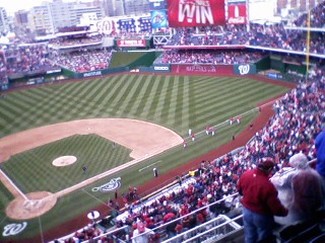 In a matter of moments, one bright and sunny autumn day, the charmed world of star ballplayer Justin Moore blew apart, never to be the same.