A Sticky Conversation
“The note was on a sticky—yeah, a sticky,” Barnett muttered, killing what was left of his rye. He lifted two fingers.
The bartender nodded; the tap‑to‑pay reader chimed, and the guy’s forearms—softball bats in a shirt—tilted the bottle.
Barney slid him a five and turned back to Aaron. “A sticky.”
Aaron tasted his beer, dabbed his mouth, and folded his napkin into a perfect square like he was filing a receipt. “A sticky? For that kind of message you upgrade the stationery.”
“What?” Barnett said.
“The note. Could’ve put it on decent paper—something with weight.”
Barnett slapped the square onto the bar—neon yellow, dog‑eared. “You think I care about paper stock? Forget it.” He threw the shot back and raised a finger again.
The bartender showed up with the Jack, met Barnett’s eyes, poured slow. “Last one, friend,” he said, accent heavy as rebar. “You don’t look so good.”
Barnett smiled. “You should see me when I’m actually drunk.”
Aaron leaned in. “Barney… it’s none of my business, but—”
“What do you mean ‘none of your business’? I made it your business. You’re my best friend. You know everything, don’t you?” He flicked the sticky with a knuckle. “Whoever wrote this could be anywhere.”
“But…” Aaron cleared his throat, took another sip, squared the napkin again. “It just says he or she knows—”
“Just?”
“Well, it could be a prank, and—”
Barnett took Aaron’s beer. “You’re not finishing that,” he said, and drained it. He waved to the bartender. “For my friend. Another one of these yellow things.”
Aaron glanced up and down the bar—nobody but a couple of blue LEDs and the TV on mute—and whispered, “Maybe it’s one of your exes. You’ve left a few of them freezing on the platform.”
Barnett loosened his tie and curled his finger for Aaron to lean closer. In a mock whisper, “Why are we whispering? It’s you, me, and Igor pushing drinks.”
The bartender slid another beer toward Aaron. Aaron paid with crumpled singles, then leaned back in, still whispering. “You don’t shout this kind of thing. It’s psychological. Private stuff wants low volume.”
Barnett snatched the sticky, stuffed it into his pocket, nodded at Aaron’s glass. “Drink up, Monsignor. Time to move.”
Outside, the air had that clean, early‑autumn bite—the kind you feel in your teeth. They climbed into the black Porsche. Barnett stared through the windshield, seat belt clicked, hands resting, not driving.
Aaron strapped in too, like a soldier who’d learned the drill. After a beat: “You mad at me?”
“No.”
Another beat.
“You gonna start the car?”
“Why?” Barnett said, still watching nothing.
“Why what?”
“Why should I start it?”
Aaron looked at the belt running neat across his chest, then at the windshield. “Because usually we buckle, you start it, we go somewhere.”
“And?”
“And then we drive,” Aaron said softly, like he was stepping around glass.
Barnett breathed out, fogging a small comma on the glass. “What if someone thinks it isn’t mine?”
“It?”
“Yeah. It.”
“I don’t know what ‘it’ is, Barney.”
“It is not your business.”
“But you said—”
“I said I made it your business. As needed. This part isn’t needed.” He stared ahead. “There are things guys don’t talk about.”
Aaron nodded like he understood; didn’t. “Copy that,” he said with a thin snicker.
“What’s that supposed to mean?” Barnett turned the key. The engine woke with a hush, all refinement and threat.
“Nothing. I get it. Private is private.”
Barnett eased out of the lot and pointed the nose toward the Brooklyn Bridge, Manhattan simmering ahead like a browser tab you forgot to close.
At the underground garage, Barnett dropped the window and gave the pedal a polite rev—more purr than roar. The attendant in parking‑lot green leaned into the boxy light.
Barnett squinted at the badge. “Charles. You weren’t here when I left.”
“No, sir. Got the graveyard run this week.”
“That other guy… haven’t seen him.”
“He’s new. Something wrong, Mr. Levin?”
“Charles, does this garage get patrols?”
“Yes, sir. Couple of guys do laps. Every hour or so,” he said, grinning. “They do their own vroom‑vroom in the golf cart now—more like a whisper on an e‑scooter.”
“And they log those patrols?”
“Every hour. Billy’s on a loop now.” The attendant leaned out. “You look upset, Mr. Levin. Anything we did?”
Barnett waved him off and smiled, rolled forward. They spiraled down two levels to his double‑space slot. He angled the Porsche into both like a king taking a corner. Aaron noticed.
“Geez, two spaces?”
Barnett shut it down. “You are my accountant. Two costs more. You must trip over a five‑hundred‑dollar line item once a month.”
“Well, yeah, I—”
“C’mon.”
They climbed out. Aaron glanced back at the diagonal park, smiled, nodded.
“You get it now, eh?” Barnett grinned.
“Door dings belong to other people.”
“Look at you, solving crimes. Makes a man thirsty again.”
Aaron checked his watch. “It’s barely five. Coffee before sunrise sounds wise.”
“Wuss,” Barnett said, smiling as they hit the elevator.
Barnett crossed the polished concrete of his duplex‑penthouse‑photo‑studio—thirty‑five feet of echo—and opened the wall safe. He took out two 8×10 color prints, walked back toward the two‑story glass that framed the Lower Hudson like a live feed. He dropped into a sail‑cloth couch opposite Aaron, nodded at the silver tray with the decanter. “Coffee okay?”
“Excellent flavor.”
“Liar,” Barnett laughed. “It’s fancy hotel sludge—same drop every morning, left in a Tiffany‑look server like I’m royalty.” He thumbed the prints. “You believe in fate, Aaron?”
Aaron shrugged. “Maybe. Not with accounting. Numbers don’t care about fate.”
“Uh‑huh.” Barnett set one photo on the glass table. “See anything weird?”
Aaron leaned in, gave it a quick scan. “Looks like an art student got a mirror coupon. Where is it?”
“My bathroom. I hinged the mirrors around. Reflections of reflections. A hall of mirrors selfie.”
“Not exactly new. People post worse before breakfast.”
“I know.”
“So why am I looking at this instead of spreadsheets?”
“You’re not catching the point. Look there—see the window reflected back?” He tapped a corner. “When the realtor sold me on ‘windowed exhibitionism,’ I thought it was a joke.”
“Okay. So?”
Barnett set down the second photo. “This is a blow‑up of that corner. See the window across the way? The figure? The binoculars?”
“Yeah. So? This is New York. Every other window is a Ring doorbell with legs.”
Barnett sat back, eyes gone far. “The sticky. That’s the person who wrote it.”
Aaron looked from photo to face. “How do you know?”
“Who else?”
“Anyone,” Aaron said. “You don’t even know if the note is about this. It could be about anything.”
“Anything? You think I have a vault of secrets?”
“Not saying that,” Aaron said, hands up. “I’m saying: how do you know?”
“When I found the binoculars… I was just messing around. Playing with perspectives, photographer brain. I saw it and ran over there.”
“Across the street?” Aaron blinked.
“Yeah. No person. No binoculars. Bare unit. Not rented. Super said it hadn’t been shown in weeks. So why was someone posting up in an empty room, aiming at me?”
Aaron leaned closer to the print. “Why keep it? Why the vault?”
“Anyone would keep evidence of a creep staring at them. Even you.”
“This was before the sticky?”
“Two days before. After the note—straight into the safe.”
Aaron studied the print. “Still doesn’t prove anything. From that distance—what is it, a hundred feet?—they could be focused on a floor below, the sky, a drone, a bird—”
Barnett’s palm hit the table—a flat, human thud. “Aaron.”
Aaron froze mid‑sip. “I’m sorry. I’m not judging. I’d be rattled too.”
“Put the cup down before it wears my couch.” Barnett moved to the glass and looked out. “I make pictures for a living. I’ve been seeing through a weird lens for thirty years. I made money. Spent money.”
“A lot,” Aaron muttered.
“Made enemies. Made colleagues jealous enough to chew nails. Some say I’m a storm waiting to wreck myself. But someone wants what I have. And they can’t have it.” He turned. “And you: don’t forget you work for me. I pay for this hour of yours. Understood?”
Aaron swallowed. “Just trying to reason it out.”
“Don’t. This isn’t about reason. It’s about finding the binocular‑sticky person. That’s it.”
“Got it,” Aaron said. He checked his watch like it might break eye contact for him. “I should go. Earn my keep.”
Barnett kept his gaze on the wall of windows—the river doing its slow, eternal scroll. “Yes. Get some sleep first. You’ve been burning through nights.” He moved toward the kitchen. “We’ll pick it up in another session.”
“Another session,” Aaron echoed. He stood, hand to the door. “Later.”
Later, the room was dark except for a thin beam washing down like a weak stage light. Barnett lay on the floor, spread‑eagle across a mess of photos and clippings, every picture of him from one era or another, eyes jumping frame to frame like a bad Wi‑Fi buffer. His gaze landed on a headline:
“Manhattan’s former ‘Pulpit Saint for the Poor’ Loses Appeal—Remains Confined at Central New York Psychiatric Center.”
In the hall, two white coats paused at a small glass slot in a metal door. Clipboards. Quiet.
Dr. Masser nodded. “Another bad dream, you think?”
“Second one today,” the orderly had said.
Masser kept writing. “You think he ever walks out?”
“Not if he has anything to do with it,” the other doctor said. “The appeal was the church’s push. He thinks this is where he belongs.”
“Mmm.” Masser’s pen slowed. “Ugly case.”
“Ugly,” the other agreed.
“How’s the therapy going, Aaron?” Masser asked without looking up.
“We both know it’s a longer process than most patients accept,” Aaron said. “And longer than most institutions have patience for.”
Masser capped his pen, glanced down the corridor—fluorescent hum, camera blinks, footsteps that had nowhere to be. “That it is, doctor. That it is.”
They moved on, sneakers whispering. “How’s your four‑iron?” Masser asked, like they were passing a water cooler and not a locked ward.
“About as straight as your five.”
“We both need some R&R.”
“Only in your dreams, doctor.”
Masser chuckled. “Who’s got time for luxuries?”


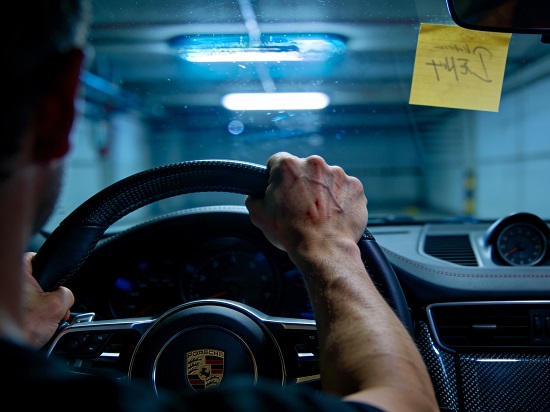 Reactions are of special value to us all. Some of us act on them. Some bury the reaction. Some go over the top. (Image by Odin AI)
The ding strategy was classic. When some yo-yo had parked in the van accessible space, I parked in two spaces so that I could get in and out of my van without having to move it by other people –very dangerous.
I use stickies for something very valuable…but I can't tell you what it is.
Ron