Karen Lynn Vidra, The Texas Tornado, click
here to update your pages on AuthorsDen.
Nurse Stories, Part Twenty One: Pain (By Bill Crutchfield, R.N., Emergency Room) by Karen Lynn Vidra, The Texas Tornado
Wednesday, July 28, 2004
Rated "PG" by the Author.
Life (and pain), as seen through the eyes of an Emergency Room nurse.
My name is William (Bill) Crutchfield, and I work in the Emergency Room. I am a nurse, and I deal with patients each and every day. It is my job to help them during their time of pain, injury, or illness, and it is my job to try to ease whatever discomfort they are experiencing; but no matter what I try to do, sometimes I have to cause pain in order to help the patient.
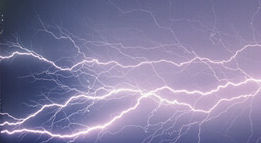
Now, each person's pain threshhold is different. Some can handle a great deal of pain without so much as blinking an eye or moving a muscle or crying out, while, during other times, no matter how gentle I try to be, they are screaming in agony or rolling on the bed, begging for mercy or some relief for their pain. It is as though continuous thunderstorms are raging inside their bodies, and they are repeatedly being hit by lightning again and again, in the same area, with no letup. No matter what we try to do or how many pills we give, the pain never ebbs, and these people are left to live out their lives in pain-filled agony. But the worst sufferers of all seem to be the children.
It's always the children.
Children are innocent, fun-loving little humans, and when they become sick or injured, it somehow seems all wrong, and when we have to deal with them, we have to use all the tricks in the book to try to help them through their crisis. It is not easy when we have to stick little arms with gargantuan needles or draw blood from impossibly tiny veins, or move broken limbs to set them prior to casting, and all the while, you are telling the little person to hold still or that this shouldn't hurt much (LYIN' DOGS; I am not the one on the bed, and besides, how can you possibly imagine what must be going through this little person's mind??). There are big strange adults dressed in white doing horrible, nasty things to you, things that HURT, and they don't know why you are being so mean to them or are purposely causing them PAIN and suffering. They don't understand that sometimes, in order to look at or get samples, or treat the human body, you have to cause pain, especially if you have to take something like blood (or some other bodily fluid, like CNF from the spinal cord or a biopsy) from the body, or have to stick tubes up little noses or into small arms, or remove foreign bodies from ears, eyes, or noses, and sometimes that hurts. All they know that you are hurting them, and it is no wonder that they are scared to death!
Whenever a little person has to undergo a painful procedure, I encourage participation. That is, I allow them to cry out or scream whenever I am sticking them or doing other painful procedures. It may not make me feel any better that I have to do this, but it sure helps them, and after the procedure has been performed, I offer praise and encouragement to my little patients, and I tell them that they were brave and courageous, anything to help take the "sting" out of the pain that they experienced. I also give them a coloring book (usually about emergency room visits) and crayons, and I give them a lollypop (their choice of flavor). I also have them hold a teddybear during the painful procedure, and this works wonders, too. (They also get to keep the bear, another way of rewarding them for good behavior during painful procedures).
It is when I don't hear the kid cry out in pain or move when I worry the most. When a kid comes to our E.R., seemingly lifeless or off in color, and they aren't breathing, this is when I get scared, really scared. I know something is seriously wrong with the kid, and when I don't get any response from them, I always worry because something very bad could be going on inside their little bodies, things that I am not aware of until we find the root cause of the problem and try to rectify it as soon as possible. I can't tell you how many times that kids were brought in, only to find out that they were the victims of abuse or some other heinous crime, and no matter how many times I see it or deal with it, I just can't get used to it.
It is also difficult when kids come in suffering from adult diseases, such as heart trouble, lung problems, or diabetes, or even cancer; or those kids who live with terminal illnesses like muscular dystrophy, cystic fibrosis, or some rare, lethal metabolic disorder that nobody has ever heard of. OR those kids who live with painful conditions like rheumatoid arthritis (the juvenile form). These kids have had to learn to be brave because they know that from time to time, hospital stays or visits are bound to happen, and so they know of pain and what will happen to them when they DO come. Still, it isn't easy when we have to stick them yet again and tell them that they are getting better (or worse), and it doesn't help when a kid deterioates right in front of your eyes, and there is nothing you can really do to help them through.
I work with adults, too, but kids are my specialty; I majored in Pediatric Medicine, and so I am more familiar with kids and their problems than I am with adults. Still, I do help adults when the time calls for it, and sometimes no matter what I do or try to suggest, the adults can't get any relief from their pain, and then that is when I refer them to a pain specialist because that is something that is way out of my league. I am only an Emergency Room nurse; I am not a doctor. Doctors know more than I ever will, and I could get into serious trouble if I attempt to diagnose a patient or treat them incorrectly.
Even with all the hassles and liabilities that I am faced with at my job, my job as Pediatric Emergency Nurse is something that I have enjoyed, and I will continue TO enjoy as long as I am able to perform my duties! When a kid gets better and/or their life has been spared, then I can't tell you of the satisfaction and gratitude in knowing that I made a difference in a young human's life and because of my quick actions and fast thinking, they are still alive today.
~Written by William A. Crutchfield, R.N., Emergency Pediatric Medicine.
A poignant story about letting go of a narcissist in your life. Have you ever been attacked FULL force by a narcissist? It's the closest thing to being stabbed over and over in the back.
Spoken Word
This CD will touch the deepest inner part of your humanness and spirit, you will never be the same after listening to the depths of struggle, the reality of life, the touching voice of truth. It will shock you, move you to tears. It w


 My name is William (Bill) Crutchfield, and I work in the Emergency Room. I am a nurse, and I deal with patients each and every day. It is my job to help them during their time of pain, injury, or illness, and it is my job to try to ease whatever discomfort they are experiencing; but no matter what I try to do, sometimes I have to cause pain in order to help the patient.