Most Nagas live under the surface of the earth, and preferentially in the water. These beings have their own perceptions and vary in their spiritual accomplishments as do humans, but generally have particular wisdom and special powers. They are equally guardians of material and spiritual treasures. Nagas are sometimes associated with the mystic Bird-of-Heaven, Garuda. The word Naga is also related to the Indian number 7. Nagas are often mentioned in the context of demigods and earth energies.
Most times, Nagas suffer from human carelessness, ignorance and cruelty. If attacked, the weaker Nagas die. But the strong ones strike back – mostly in indiscriminate ways. A Naga in hot anger is a terrible foe. Don’t ever mess with a Naga!
Is this science fiction? Is it some kind of goofy mystery writing, or a mere curiosity item? No, it’s more than that! The Naga theme occurs in almost every culture, from the Arctic to the tropics. It belongs to human nature and psyche like our pair of shoes belong to us. Read, and make your own conclusions.
· Vedic India (after 2000 B.C)
This culture is particularly rich in Naga stories. In the Vedic Indian context, Nagas are a race of serpent beings. They can manifest with half-man, half serpent bodies, assume the shape of a dragon, or very beautiful ladies. A precious gem is embe dded on their heads, giving them supernatural powers.
The Mahabharata is full of Naga stories. In one of such, the priest Arjuana takes a ritual bath in the Ganges River and is abducted by Ulupi, the lady of snakes, into a splendid underworld. After many (Bollywood-like) twists and turns Arjuna, having promised celibacy, gives in to the charming snake-lady Ulupi, and dates her out of compassion:
… “thus addressed by the virgin daughter of the snake lord… he did for her all she desired. The fiery hero Arjuna spent the night in the palace of the Naga king, and when the sun rose he too rose from Kauravya’s abode.”
In the Vedic tradition, there are seven underworlds or subterranean heavens that are inhabited by Nagas. These places are described as beautiful beyond imagination. There are palaces, flower gardens and places of sensual pleasures, wealth and affluence.
The land of Udyana, now Pakistan and Kashmir, was famous for its water dragons and Nagas- not surprising for a land with many large lakes during the Pleistocene. One story is about the Naga Apalala:
…”it was by his subtle but powerful charms that the Naga Apalala was ableto keep the wicked dragons in check. He prevented them from scourging the countryside with violent rainstorms. The land prospered and grain grew thickly. In gratitude each family offered him a bit of grain as tribute. After some time several of the inhabitants of the place began to abandon the yearly offering. The Naga became angry and prayed that he might become a poisonous dragon so that he could drench the countryside in rain and wind. So, at the end of his life, he became the dragon of that country. To this day it is said that local princes can control the elements if they can influence the local dragons.”
· Buddhist India (after 700 B.C) and Tibet
Nagas are highly respected in Buddhist traditions, and are in most cases portrayed as friends or protectors of Buddha’s doctrine. Nagas are believed to be very wealthy, owing their present form and powers to previous existences of mainly unethical generosity.
Nagas are said to have kept and protected the Buddhist Doctrine. There is a story where a giant cobra ‘opens’ above the meditating Buddha, to protect him from a violent rainstorm. Lord Buddha himself entrusted some of his most secrete doctrines to the Nagas – some 900 years later revealed to the great spiritual master Nagarjuna, who is always shown with a corolla of seven queen cobras.
In a story relating to one of his previous lives, the 16th Karmapa Lama of Tibet goes on a perilous mission to find the precious jewel – a jewel that can relieve the entire world from poverty. After a long and strenuous voyage on the Indian Ocean he obtains the precious jewel from the Naga Queen, dwelling in her palace under the ocean. She yields her precious jewel, but requests the never-ending protection of the coming Buddhas.
We see here a relationship of mutual respect and fraternity between Nagas, enlightened Buddhist protector energies, and Buddhist practitioners.
In Tantric Buddhism, several enlightened protector deities have absorbed and transformed Naga energies and skills: The black lady-protector Mahakali is wielding a cobra snake lasso on one of her arms. Avalokiteshvara, the four-armed Bodhisattva of love, holds the precious jewel of liberation between his inner pair of palms – the jewel obtained from the Nagas.
· Burma, Indonesia, Malaysia, China
Nagas are a common theme in the cultures of this area. In Burma, the number 7 is connected with the Serpent Spirit or Dragon Spirit. Malay sailors used the word Naga to relate to dragons with several heads.
In ancient China, the word Naga characterizes Dragons, in association with the Emperor and is known as the “Son-of-Heaven.”
Naga rites play an important role in cremation ceremonies on the Island of Bali.
· Ancient Egypt and the Classic World
Snakes are described as holders of wisdom, healing, perpetual youth, magical power, and trustworthiness.
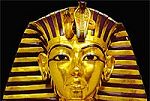
Ancient Egyptians believed snakes to be linked with divine worlds, and snake rituals were performed at least from the Old Empire to the Late Period. The crown of the Pharao of Egypt figured the Uraeus, a cobra snake, at the center of the kings/queens forehead. It allowed the pharao to ‘see’- a term of understanding and comprehending beyond common levels of logic and intuition.
· Europe
The Slavic and Germanic folklores often mention snakes as guardians of hidden treasures very similar to the Vedic Tradition. There are also many tales about hybrid virgins - half woman, half snake.
Perhaps the most interesting are the tales about Melusine. I have copied here a script from Wikipedia.org: Melusine (or Melusina) is a figure of European legends and folklore, a feminine spirit of fresh waters in sacred springs and rivers.She is usually depicted as a woman who is a serpent or fish (much like a mermaid) from the waist down. She is also sometimes illustrated with wings, two tails or both.
Melusine is sometimes used as a heraldic figure, typically in German and Scandinavian Coats of arms, where she supports one scaly tail in each arm. She may appear crowned. The Coat of Arms of Warsaw features a siren (identified in Polish as a syrenka) very much like a depiction of Melusine, brandishing a sword and shield.
She is the water-spirit from the Vistula who identified the proper site for the city to Boreslaus of Masovia in the late 13th century. Ferenc Frangepán, Archbishop of Kalocsa in Hungary, included in his will of 1543 a series of seven tapestries representing the story of "The Beautiful Melusina."
The Archbishop's tapestries will have shown the most famous literary version of Melusine tales, that of Jean d'Arras, compiled about 1382 - 1394 and worked into a collection of "spinning yarns" told by ladies at their spinning. The tale was translated into the English language c. 1500, and often printed in both the 15th century and the 16th century. (There is also a prose version called the Chronique de la princesse.)Raymond walks in on his wife, Melusine, in her bath and discovers she has the lower body of a serpent. Illustration from the Jean d'Arras work, Le livre de Mélusine (The Book of Melusine), 1478.
Raymond walks in on his wife, Melusine, in her bath and discovers she has the lower body of a serpent. Illustration from the Jean d'Arras work, Le livre de Mélusine (The Book of Melusine), 1478.It tells how Elynas, the King of Albany (a poetical euphemism for Scotland) went hunting one day and came across a beautiful lady in the forest. She was Pressyne, mother of Melusine.
He persuaded her to marry him but she agreed, only on the promise — for there is often a hard and fatal condition attached to any pairing of fay and mortal — that he must not enter her chamber when she birthed or bathed her children. She gave birth to triplets. When he violated this taboo, Pressyne left the kingdom, together with her three daughters, and traveled to the lost Isle of Avalon.
The three girls — Melusine, Melior, and Palatyne — grew up in Avalon. On their fifteenth birthday, Melusine, the eldest, asked why they had been taken to Avalon. Upon hearing of their father's broken promise, Melusine sought revenge. She and her sisters captured Elynas and locked him, with his riches, in a mountain. Pressyne became enraged when she learned what the girls had done, and punished them for their disrespect to their father. Melusine was condemned to take the form of a serpent from the waist down every Saturday.
Raymond of Poitou came across Melusine in a forest in France, and proposed marriage. Just as her mother had done, she laid a condition, that he must never enter her chamber on a Saturday. He broke the promise and saw her in the form of a part-woman part-serpent. She forgave him. Only when, during a disagreement with her, he called her a "serpent" in front of his court, did she assume the form of a dragon, provide him with two magic rings and fly off, never to return.
Melusine myths are especially connected with the northern, most Celtic areas of Gaul and the Low Countries. Sir Walter Scott told a Melusine tale in Minstrelsy of the Scottish Border (1802 -1803) confident that "the reader will find the fairy of Normandy, or Bretagne, adorned with all the splendour of Eastern description. The fairy Melusina, also, who married Guy de Lusignan, Count of Poictou, under condition that he should never attempt to intrude upon her privacy, was of this latter class. She bore the count many children, and erected for him a magnificent castle by her magical art. Their harmony was uninterrupted until the prying husband broke the conditions of their union, by concealing himself to behold his wife make use of her enchanted bath.
Hardly had Melusina discovered the indiscreet intruder, than, transforming herself into a dragon, she departed with a loud yell of lamentation, and was never again visible to mortal eyes ; although, even in the days of Brantome, she was supposed to be the protectress of her descendants, and was heard wailing as she sailed upon the blast round the turrets of the castle of Lusignan the night before it was demolished.
"When Count Siegfried of the Ardennes bought the feudal rights to Luxembourg in 963, his name became connected with the local version of Melusine. In 1997 Luxembourg issued a postage stamp commemorating this Melusina, with essentially the same magic gifts as the ancestress of the Lusignans. This Melusina magically made the castle of Bock appear the morning after their wedding. On her terms of marriage, she too required one day of absolute privacy each week.
Alas, Sigefroid, as the Luxembourgeois call him, "could not resist temptation, and on one of the forbidden days he spied on her in her bath and discovered her to be a mermaid. When he let out a surprised cry, Melusina caught sight of him, and her bath immediately sank into the solid rock, carrying her with it. Melusina surfaces briefly every seven years as a beautiful woman or as a serpent, holding a small golden key in her mouth. Whoever takes the key from her will set her free and may claim her as his bride." Martin Luther knew and believed in the story of another version of Melusine, die Melusina zu Lucelberg (Lucelberg in Silesia), whom he referred to several times as a succubus (Works, Erlangen edition, volume 60, pp 37–42).
Johann Wolfgang von Goethe wrote the tale of Die Neue Melusine in 1807 and published it as part of Wilhelm Meisters Wanderjahre.
The playwright Franz Grillparzer brought Goethe's tale to the stage and Felix Mendelssohn provided a concert overture "The Fair Melusina," his Opus 32.Melusine is one of the pre-Christian water-faeries who were sometimes responsible for changelings.
The "Lady of the Lake", who spirited away the infant Lancelot and raised the child, was such a water nymph. For other European water sprites dangerous to humans, especially men, see Lorelei, Nixie. "Melusina" would seem to be an uneasy name for a girl-child in these areas of Europe, but Ehrengard Melusine von der Schulenburg, Duchess of Kendal and Munster, mistress of George I of Great Britain, was christened Melusine in 1667.
· Australia
Communicating with snake spirits is a living tradition among Australia’s aborigines. An initiated person guides his family to a ‘jila’ - a sacred waterhole. From there, he takes his family and community elders back on a mystical journey to his birthplace, where he will communicate with their ancestors through Kurtal, the Snake Spirit in an ancient ritual. In this ritual, the Naga spirits help to bridge the time gap between generations for the vital and sustained connection to ancestry and customs.
· Africa
In Western Africa, there is the legend of the Rainbow Snake Da, the creator of all rivers. The word for water in Congo Lari dialect is ‘mamba,’ a word also used for a type of snake.
· Americas
Snake gods and goddesses play important roles in the legends of the Hopi Indians, and the cultures of Meso-America. Note the similarity of the Mexican word ‘nagal.’
Nagas are also strong in South-American legends and folklore. As the magazine "Der Spiegel" reported, a Naga is living in world’s third highest waterfall (Gocta, Peru, 770 m high). She is very beautiful, has blond hair, and appears often in company of a giant protector snake, that guards the site against unwanted visitors. As in other Naga stories, the Gocta queen is not only beautiful, but also rich – she manages a hoard of gold.
· Mono-theistic religions (Middle East)
The Bible portrays the snake as a predominantly tempting, negative demon character. Yet the Christ says in Saint Matthew: “Be ye therefore wise as serpents, and harmless as doves.”
· My Personal Viewpoint
What can we take away from these stories? For the least, that legends and mysteries related to snakes form a large part of our global (unconscious?) cultural heritage. It may offer important psychological ramifications with our subconscious collective nature.
I would like to add a personal note. Since the time I’m living in Borneo I met a man, called the King Cobra. I met a little boy, who is called the King-of-Cobra-Kings. I met also one lady, a renowned and feared Queen Cobra. She has an unusual capacity to see during nighttime. She also can send her mind to a given place for a short while, and see what’s going on. She can see and feel other Nagas, and locate their presences in rivers and water holes. She told me the names of princes and queens, who dwell in every spring, waterfall or mountain range of her native Borneo. She warned me from places, where Nagas are looking out for human victims – those fallen out of luck. Today, she is my trusted, intimate consort and protector.
Unnecessary to mention that some of my magic experiences were rather unusual, if not completely removed from our hectic today’s world. But this is a different story…
(c)2004 by Franz L Kessler
Several data and citations were obtained using material from the following web pages:
http://www.reptilianagenda.com
http://www.khandro.net
http://www.abc.net.au/programsales/s1122796.htm
http://en.wikipedia.org
http://sorrel.humboldt.edu