compiled writings re being an identical twin (the youngest in a family with two sets of girl twins)
“Ring the bell that still can ring. Forget your perfect offering. There is a crack...a crack in everything...That’s how the light gets in.” – Leonard Cohen
In the beginning, Dad and Mom made a mistake. As it grew it split in half. As mistake 1A, I hid directly behind my other half. That way, no one could detect me until it was too late, and when we fought over turf, my other half wouldn’t be able to kick me back.
Two months before we were due, the doctor finished pulling one baby from Mom’s drugged body and thought he was done. But clocked at a close 60 seconds later, I followed my sister into the world, debuting on the birth certificate as “Twin B.”
When the doctor awoke Mom with, “Guess what, Millie, you have twin girls again!” she retorted with an exhausted, “Knock it off.”
Mom hated doctors, calling them false gods who give bad advice. [A pediatrician had once told her to hold open my older sister Jenny’s eyes when she tried to nap during the day, to ensure that she would sleep through the night. In true nineteen-fifties style, Mom followed his advice. She’d also believed it when they told her not to pick up her babies when they cried because to do so would spoil them.]
When Mom realized the doctor was not joking, she resolved that having twins twice was a blessing in disguise, a second chance to get it right.
While Mom believed in fate and some intellectual form of God, Dad, the agnostic and traumatized war hero, was infuriated by mistakes and bewildered by surprises. How could he and my mother have produced girl twins twice in seven years?
I’ve read that the mind naturally groups things in fours. As child number five, I must have tipped the scales. If we had been Pueblo twins in times past, Cindy and I would have been left under a tree or thrown into a river. Pueblo people believed, or rather, understood, that twins brought bad luck. But my folks, not having available the options once exercised by the Pueblos, were forced to do the job themselves – subtly and over time.
I figure that only the hospital administration was genuinely happy. We made medical history in Hartford on that twenty-third day of January, 1953.
From such beginnings, my life was henceforth to be stamped with existential doubt and generalized guilt. Thus began my lifelong career of subvering my superiors’ norms and expectations.
~
At G. Fox clothing store in downtown Hartford, Mom tried on clothes while Cindy and I played hide and seek until we were lost. Surrounded by stocking-clad legs and whirling, circular clothing racks, I panicked, until I thought I spotted Cindy amidst the merchandise that was threatening to swallow me. It was a real Kodak Moment: the estranged beloved, reuniting in slow motion ecstasy, right up until the instant my nose slammed against a full-length mirror.
~
I’m six. I’m in the kitchen, bombarding Mom again with details from last night’s dream. Cindy overhears it from the living room and bursts in. She chokes out through tears, “That was MY dream!”
~
Bedtime in the summer cottage at Amston Lake: I say, “Goodnight, Cindy.”
“ Goodnight, Laura.”
“ ‘Night.”
“ G’night.”
“OK, this is the last time – now, GOODNIGHT!”
Silence... The clock ticks... She can’t stand it; her words hang in the air unspoken, begin to condense, and then swell in her mind toward overflow. Finally, shamefully, she whispers, “Goodnight.”
“I mean it, and this is it! Goodnight!”
Tick, tick, tick… Cindy: “Goodnight; now that’s it.”
Then Mom comes in. Suddenly, Cindy is crying because I won’t leave her alone. “It’s not fair,” I protest. “What’s not fair?” Mother asks. But I don’t say it’s not fair to be a twin. Mom would once again tell me how lucky I am and I don’t want to feel the guilt and confusion.
You drift off, carried away by the echo of that voice. What does it matter who said goodnight last? Yet you know you will cease to exist as a separate entity if your voice is not the last.
People do not understand what they are asking when they wish for a twin, a soul mate. Even I was subject to, hypnotized by, the myth of blissful twinhood. Even I fantasized about having a twin, without the inherent confusion. I wanted that special relationship – the Hollywood version. But we were not Hayley Mills, playing her double role as identical twins in the movie “The Parent Trap.” The only parent trap we dealt with was the one called “home,” from which we tried to escape. And the reality is that ever since I was little, I have struggled to be singular.
I don’t know what’s worse, being alone or being cloned. Oh, it was great to have a person in the nearby twin bed, who’d finish my sentences when I got groggy, or someone who could look at me and giggle in response to my unspoken musings. When I was three or four, I turned to Cindy, asking, “Isn’t it funny, the way we loves each others?”
Of course, there were occasions when we did enjoy a certain stardom, and then we felt privileged, worshipped even. When out in public, we’d draw small crowds of wistful admirers. Once, for example, in the early seventies, while lunching on the deck of a prestigious L.A. restaurant after my Hollywood brother’s wedding, we gave patient explanations to the familiar inquiries of “fans” who looked upon us as if we were some exotic, endangered species. We felt smugly superior, gazing upon a world that we found so absurd, a world where people pressed their noses up against imagined barriers of separation. Weren’t we all kindred? For us, the experience of twinned bondedness required as little explanation as the world required for its experience of separateness.
But despite these moments in the spotlight, cultural demands upon us wreaked havoc with our minds, not to mention our friendships and romantic relationships. We were constantly pressured by societal expectations to remain “one,” while simultaneously trying to develop as individuals.
You find it hard to hide, although you try. You try to make her go away. But she’s haunting you as if the egg never truly split: She’s in your dreams, your moods, your thoughts.
Mom believed that Cindy was supposed to be my best friend. The truth was that I felt closer to my brother, Donnie, but Mom, in her belief that Cindy was supposed to be all I needed, feared that my relationship with Donnie would come between my sister and me. When I was four and he was seven, Mom virtually forbade us to play together, insisting that I bond instead with my twin. Donnie suddenly treated me as if I didn’t exist, and from then on, our connection was broken. Mom believed that twins should share – everything: friends, clothes... but wasn’t it enough we once shared the same embryo? And who in their right mind would want to share a womb?
Cindy absolutely lost it once because I had the nylon socks she wanted and I wouldn’t give them up. When finally I gave her the good socks I had been about to put on, taking the floppy cotton ones she’d rejected, just to shut her up, I said to myself, “So this is what it means to be grown up.” Now I knew who was who, what was me – or, rather, “not Cindy.” I began to consider that we might be two separate beings – I could not understand the extremity of her behavior.
Mom escalated her efforts from trying to teach, to trying to force me to put Cindy, the less resilient, first. When I refused to let Cindy play with our cousin Jane and me, Mom called me “cruel.” When I chose the shirt that Cindy had wanted to wear, and refused to give it up no matter how much Cindy cried out in protest, I was “selfish.” And when we both liked the same boy and I won his affections,
Years later, in high school, I told Cindy about this awesome new boy I’d just met, who was coming over; feeling guilt-free because she, too had found someone just that day. When it turned out to be the same boy, Steve, Mom said I should give him to Cindy, as if a boyfriend was just an extra pair of socks. While sharing clothes was unreasonable enough, giving people away was out of the question. I won Steve’s affections, and for this, Mom dubbed me “sadistic.”
Mom seemed to live by the Jewish wisdom which advised not wanting what you don’t have and wanting what you do have (or, in her version, at least, appearing to want what you have). She always wanted me to share with my sisters and make sacrifices to them, as she had made to hers. But how were you not to eventually hate your sisters for all the little pieces of your heart you had to give up to them at your mother’s behest?
When I argued and debated with her, she would do everything from revoking my social privileges to covering her ears. She once cried out, “You want what you want what you want!” and I wondered what else a person could possibly want.
Later in life, she would flatter me about what a fantastic lawyer I would make. And after I got my Master’s degree, she simply said, “I can’t argue with you. You’re smarter than me.” It was a clever tactic to shut me up.
~
In junior high school, Cindy had successfully taken a test that I wasn’t prepared for and offered to take it for me, pretending to be me. I went to her English class and she went to my Algebra class; no one knew the difference.
But it was too much. I wanted someone to know. I was too uncomfortable being indistinguishable from my sister. I wrote a note to someone in which I publicized our prank. The teacher intercepted it. First he looked at it, then at me, and then he tried to hide his amusement. “Get up,” he said, clearly trying to keep a straight face, “we’re going to the principal’s office.”
The teacher handed the principal the note, and, to my disgust, I saw that they were both barely suppressing amused smiles. I was scolded half-heartedly, told never to do this again, and sent back to my own class.
Then Cindy was pulled out of the class she was in and given similar treatment. For the rest of the day, the students were atwitter about our charade. I was the only one who was not amused. I was tired of the pressure I felt to meet people’s expectations that I was interchangeable with my twin. The sense of entertainment only added to my feeling of being “other,” an amusing anomaly, and increased my confusion about just who I was without Cindy.
I decided that I had to free myself from her. Even the supposedly mature adults were enjoying the charade that was ruining my life. I began to determinedly ignore Cindy’s needs, which overlapped and collided with my own. It turned out that Cindy, herself, would help me in my resolve.
In seventh grade, Cindy and I had the same homeroom. “You look terrible today,” Cindy told our homeroom teacher one morning, in earnest concern.
Another morning, she started to giggle after we said the pledge of allegiance. The rest of the class all giggled, too. But when she began laughing unrestrainedly, we became uncomfortable, and the giggling subsided around her. The teacher asked her what was it that she found so funny, and she couldn’t answer. Rather, she laughed even louder, hysterically. Finally the teacher came over with her ruler, but Cindy just elevated the drama to the next level and fell onto the floor. She lay there, writhing with laughter until I feared she might wet her pants. The teacher became alarmed and sent for the principle. His arrival only upped the ante, and Cindy began crying with laughter, clearly unable to stop.
They carried her out. The silence spoke eerily to me of things I could not name, but only feared.
I don’t remember a word being said about the incident at home or in school, although there surely must have been talk at school. I only know that Cindy was no longer in that homeroom after that. No discussion.
I was horrified by this event because, despite all the mischief we had done together, Cindy had finally done something that I would never do. She had gone too far, and this created a distinction between us in my mind. Finally, there were two of us. I began to feel the autonomy I needed in order to survive without feeling guilty. Whatever Mom had managed to instill in me regarding making sacrifices for my twin now went out the window.
~
Sometimes I wonder if I received double testosterone and Cindy got none. This would explain why I got all the boys and sometimes even the girlfriends, and why I survived, while Cindy seemed to fold up into herself as the years passed.
Mom always pleaded with me to give in to Cindy. “You’re the strong one,” she would say. Like Mom, I would sigh at my noble martyr role. But I couldn’t be like my mother; I would never measure up. And even if I did, sooner or later I would blow it, and it would be all the worse because my failure would be expected. What’s more, the sacrifices would come to be taken for normal, and that I could never afford.
I had a dream when I was in high school in Florida that Cindy and I were in a bathroom. The bathroom had two big mirrors facing each other, so that when you stood at the sink between them, you would see images inside of images inside of images. I was standing at the sink with Cindy, looking at the myriad images, when suddenly she began shrinking rapidly. Then her shrinking body was in the sink, and she continued shrinking until she was only a head. Her head was like the head of someone who had been scalped, with her hair being pulled up by the hand that had scalped her. Then it was if her head began to melt, and she was slipping into the drain and down into the pipes. I couldn’t save her. A sickening dread overtook me. Talk about standing by helplessly and watching someone lose her head!
One day I came home to find Cindy lying on the floor at the top of the stairs to our bedrooms, with tears streaming down her cheeks. “I know what I am going to be when I grow up,” she announced despairingly.
“What?”
“A failure.”
“Get up!” I shouted, terrified.
“I can’t help it!” she wailed.
“GET UP!”
“NO! I’m going to be a failure,” she sobbed.
I kicked her.
There are no words to describe the despair, dread, and terror-fueled anger that I felt. I would not accompany her where she was. I had followed her to the edge of a cliff, but I would not jump with her. Horrified, I redoubled my efforts to distance myself from the one in this world I had loved the most.
One night in our Junior year she had awoken the household screaming in terror, “I forgot how to breathe! I forgot how to breathe!” She had become psychotic overnight. My parents pulled her out of Hall High and sent her to some kind of private girls school in Hartford that year. In the summer of our junior year Cindy somehow launched a babysitting job on Cape Cod. That summer she arrived at the community about month after me.
I avoided her in terror of being confused for my psychotic sister. Not only was she psychotic, but so was Jenny, whom my mom and uncle Jack had taken there as an alternative to the hospital. For the next 15 years I avoided both of them. Cindy had and lost custody of a child in 1979, at around the same time I had my second child. I remember going to the hospital and begging her to come to her senses and warning her that they would take the child away if she didn’t and her not believing me. I also recall that Michael had talked about how children were fully developed people and how she took that literally and so spoke to the infant as an adult, yelling at her in the hospital. I remember feeling tormented about possibly adopting the child but feeling it was outside of my realm of possibilities as a person to take this on. I hid my head under my pillow when it came to dealing with or helping my sister. All I cared about was that people know she was the crazy one, not me. The other thing I recall is that by the end of Michael’s “career” as commune leader, Cindy was the one who was off the wall enough to confront him and we seemed to wait for the lunatic, Cindy, to say what everyone else was thinking: i.e. Michael you are drunk. Don’t lecture us when you are drunk. She was the scapegoat and I was the next in line.
I also don’t remember her being at Daddy’s funeral, although she must have been there. Only that Cindy never recovered from seeing his body. Or was it from not seeing it?
She had her fears and if I had entertained them I might have gone down the tubes with her. I felt like the villain. For years after she first went into the hospital in her late 20’s (?) I thought if she would only let me save her I could do it. Sort of like, if she’d let me be her personal manager. I don’ t remember when I gave up on her. Perhaps it was she who was the self I ran from when I became a psychotherapist.
I know that when I visited her in the hospital in her 40’s she told me it was the good memories of she and I that kept her alive. I couldn’t recall much of them and she reminded me of how we’d put on plays in the neighborhood and puppet shows. So much is still a mystery to me. I’m not sure who is the more clairvoyant of us two, since her mind seems to be more aware of our collective past than mine.
Everyone tells me: coming to terms with your twin will bring you peace of mind. But, peace with Cindy is an oxymoron; or a Zen Riddle: it drives you nuts for ages before it sets you free. [My mother now understands that the distance that I keep most of the time from my twin, is necessary to my sanity, due to the thin veil of separation between us.]
Cindy. When and why did your wild and mystical imagination turn on you? When and why did I? Would knowing help us forgive? I knew that to be free of you was a mutiny. And you seemed to understand from the start. But, why? To spare me the pain you alone suffered? Had you sensed how when, that other half of me that is you became sick and in trouble, our being fused became for me as unwanted yet prevalent as the throbbing of an amputated, phantom limb?
~
Cindy, no matter how far away I moved from you after that break, sometime before we were twenty, you managed to follow. Or I did; almost always, unknowingly. That summer of ‘69 when Dad was in the hospital and Mom had locked me out of the house (sending me to relatives whom I’d fled) how we bumped into each other in Woods Hole. And I had been tripping, and had nowhere to stay and no money. Your friend took me in.
After graduation when we went our separate ways, ending up at that commune where we got ensconced for twenty years, you more, me less. And when you couldn’t follow me physically, because I went where the broken hearted go: across the continent to California, your pain still sought me out, dragging me downward, threatening to take me to you down into that sea of terrors, that unconscious reservoir.
After she started to loose it, my guilt turned to denial and thus, unwittingly bound me tighter to her. Ever after I am accosted by sudden changes in the emotional currents that take me over without warning and to which there is a certain texture that lets me know when she is losing it again. At those times, when I phone her home, the news from her partner is always the same: she flipped out again.
In the mid ‘80’s, Cindy was admitted to the psychiatric ward of a local hospital, the latest of a countless string of admissions since she first had become sick in the ‘70’s. My older sister, Jenny, had visited her and told me that Cindy had tried to throw herself out a window. My mother, who had also visited her, told me that Cindy thought she had had a sex change operation upon waking from a heavily drugged sleep. When my mother gently said, “Cindy, that’s your fantasy,” Cindy, corrected, simply replied, “Oh.”
I felt like this was it for Cindy. Sometimes I knew that she wished she could die and get some relief, and I didn’t blame her. Would I then be able to live with myself? I wondered, but I pushed the thought away.
One night, a friend of mine broke her hip and phoned me from the hospital where Cindy was staying, requesting that I bring her some things. I had so effectively blocked Cindy’s situation from my consciousness that it wasn’t until I had gone down the elevator and was leaving the building that it dawned on me that this was where Cindy was hospitalized. I stopped in my tracks, wondering if perhaps I was here for another reason other than the needs of my friend. Mechanically, I turned toward the psychiatric wing of the building.
I pushed the buzzer and heard the click of the heavy glass door, which admitted me to the hospital ward. Walking up to the glassed-in nurse’s station, I asked the two amused and smiling attendants if I could visit my twin. I acted nonchalant and confident, desperately hoping that they would see that I was not like her. They had known Cindy for decades because of her frequent stays, and greeted me with fondness. They pointed directly beside me to a door, which had a hand written sign that read, “Cindy’s room.” I intuited that our mother had probably put it there to make Cindy feel at home.
I knocked and heard an exhausted “Come in.” I nervously entered the room. On the bed sat Cindy, looking washed out and frightened. “Is it O.K if I visit?” I asked.
She seemed mystified at the sight of me, as if words and feelings and images were colliding within her. She paused like someone ordering from a difficult menu and finally replied, “…Yes.”
I sat across from her in a chair and she peeked at me meekly, a frightened, captive animal. “What took you so long?” she asked.
Was she referring to the twenty years I’d avoided her, or just to the time since she’d been admitted here? “I was scared,” I confessed, hoping she’d understand, like she used to do so well.
Cindy nodded – fear was her specialty. She looked at me expectantly, as if I had the key to free her from a mental cage. I looked back blankly. Tears flowed down her ashen cheeks.
“What?” I asked.
“You’re doing good and I’m not!” she moaned.
“Well, that’s honest!”
Her body jerked and she jumped up. “I have to get my meds!”
Abandoned, I surveyed the whitewashed cement block walls, the sagging disheveled twin bed and the childish school desk in the corner where she had been scrawling. On the wall above the desk was an odd painting, in purple splashes.
I was amazed to feel comforted when the twin who had so pained me returned to the room. Cindy sat across from me on the bed, eyes wide and frightened.
“Who did the painting?”
“A friend of mine.”
“It looks like one of those Rorschach tests. Is that what it is?”
“Yes, isn’t it good?” she smiled. I felt jubilant at the sight of that smile – it assured me she’d been alive all along.
Now it was I who was reading the menu options: Should I placate her or be myself? With the real Cindy, we’d never been less than honest.
I shrugged. “Did you get your meds?”
“Yes.” Cindy looked at me searchingly, then lay down. Something invisible and heavy was weighing on her. “Can I ask you something?”
“Sure,” I said.
“Well, I thought the attendants took my head off and put another one on with eyes that went all the way around.... They didn’t, did they?”
I gasped, collected myself and breathed.
“Do you really wonder that?” Inside, I was begging her to deny it.
“Yeah, see, I just thought maybe...” she said in all earnestness, as if she’d asked a sincere, although slightly embarrassing question, like, “Excuse me, but where is the bathroom?”
I recovered my belief and pride in her – her sincerity outshone her outrageousness, as had always been the case, even before she’d gotten sick. Cindy had always been a bit wild – that’s what had made her so much fun when we were younger.
I asked, “If I were you and you were me, and I asked you that question, what would you say to me?”
“I’d say, ‘Of course not!’” She brightened, suddenly eased.
It felt good to be able to connect with her, even if she was here – at least she couldn’t run away. Her demons had completely taken over; they were holding her down and staring her in the face, forcing her to ask others what was real.
Yet I knew from previous experience and from others’ reports that she might dismiss me at any moment. She could panic at any moment. Perhaps her behavior was triggered by the infamous voices in her head, telling her to kill herself
“Hey look, I’m doing good and I’m the other half of the egg, right?” I tried.
“Right,” she conceded.
“Then you must be alright too,” I reasoned.
Cindy looked at me blankly.
“You know, I never stopped caring about you,” I said, groping.
“I know,” she said, as if she could forgive my superior position while she fought her war alone all these years. I was not satisfied.
I could see by her puffy face and clenched jaw that she was fighting a hideous war. She was looking into my eyes with terror.
“You’re afraid,” I, the trained therapist, acknowledged, wanting to name her feelings for her, knowing that to admit to them would take less energy than to continue repressing them.
“Yes, you’d better go. I don’t feel so well. I’m sorry. I’ll talk to you when I get better,” she pleaded.
I felt that that could be another twenty years... or never. I had nothing to say to the other Cindy, the one who didn’t admit to having problems out in the real world. I had urgently wanted to hold her and make her safe, to tell her that I would not allow her to go through this alone anymore. But she was not my child, nor did she have the trust my own child might have had. I felt helpless.
“Why do you think you have to be all right to be with me?” I implored, yearning for the healing connection that we had basked in so long ago.
Cindy, surprised, said, “That’s an interesting idea... ”
“Let me stay a while. I don’t want to go yet. It’s good to see you.”
She looked at me with the eyes of a completely open and desperate person. And yet I liked her better this way than when I had bumped into her in the health food store from time to time. Here, I felt free to speak my heart. Here, I rejoiced in her presence, noting that her blood-red synthetic gown was ripped all the way up the leg to her hip. She smelled and her nails were ragged. It was great to see her.
“I feel like I can’t talk to you when you’re out of here. You get so abrupt and defensive. Do you know what I mean?”
“Yes... “
“Can we make a deal that if I see you and you’re that way after you leave here, that I can say something to remind you, like ‘You’re being that way again?’”
“Yes, you can say anything.”
“I have a confession to make,” I said. “I was reading an article about men who slight women... and it said that it’s not so much that they want women to feel inferior as it is that they need to feel superior. That’s how I’ve been with you.”
I had always been afraid of turning into her. I remembered when we were little and I got lost in a department store, and all I could see around me were people’s legs. Finally, when I thought I spotted Cindy across the room, I started running toward her and she started running toward me. But instead of rejoining her, I ran smack into a full-length mirror.
“I understand why you had to stay away,” she said with real forgiveness. “I have to see if my menu is here,” jumping up again.
I wanted to try not to analyze or fix her any more, but it was difficult not to want to cram in as much as possible.
She came back in a hostile, changed mood, announcing abruptly, “I’m getting sleepy.”
“That’s OK, let me keep you company,” I begged.
Perhaps she was too tired or confused, but whatever it was, I could breathe again when she lay down and dozed, opening her eyes to look at me periodically, like a baby. Her face twisted up in pain. “What is it?”
“My back. “
“Let me rub it.”
I rubbed her hardened muscles. She could have been very physically strong, despite her short height and lithium-induced weight. “Can I talk?” I asked.
“Yes.”
“If you try to avoid the pain, it makes you crazy.”
“I know.”
“You can’t avoid it. Stop fighting it.”
“But it hurts!” she whimpered.
“What hurts?”
“You wouldn’t understand… these… thought-forms.” She sat up and scrunched up her face as if to avoid getting hit.
“Don’t run from it,” I pleaded.
“But it’s so awful,” she moaned.
“They get worse if you run from them,” I said. “Let me help you face it – What is it that’s so frightening?”
“You won’t understand.”
“What will happen if you tell me and I don’t understand?” I probed.
“I’ll be let down,” she exhaled.
“You already are let down; what have you got to lose?” I pressed.
She blurted it out: “Well, I was talking to Jeff [her partner] about expansion and contraction, and then… it was so awful.”
“What was?”
“The sensations!”
“What sensations?”
“Well, Jeff had said ‘your sickness is like this.’ And I said, ‘you mean like moving in and out?’ and he said, ‘Exactly.’ I said, ‘forever?’ That’s when it got so awful!!” Cindy started to cry.
It was then that the image came to me. I suddenly felt completely connected to what she was saying and feeling.
“…Like an amoeba?”
“Yes!”
“That goes on forever?”
“Yes, that’s it!”
“Well, no wonder you got frightened!” I said. “What an image – just being a meaningless blob and never changing, never growing. What agony!”
Cindy’s face lightened. Her eyes implored me.
I was recalling my own childhood terror upon waking in the night, and somehow sensing something amorphous that lay just beneath the surface of my conscious thoughts. It had to do with existing or not existing; a fear of death perhaps, a fear of nothingness, of going around and around and never getting anywhere – a horrible, desperate feeling.
“Cindy, I went through something like that... Do you believe me?”
“Yes.”
“Can I keep talking to you?”
“Please do. This is great.”
“Let me brush your hair,” I offered. She lay back down.
“Your hair is beautiful underneath,” I said. “It’s just all dead and tangled on the surface.”
“I can pin it back,” she said compliantly.
“No, you need to get it cut. It’s not doing anything for you. It’s just old dead stuff.”
Silence.
“You’re beautiful,” I said softly as I brushed.
“Thank you.”
I moved into the rare space where she was permitting me. “Cindy, when I did my ten day meditation retreat, there was one day when I really got in touch with my own sort of craziness. It was a fear that the fear would last forever. Do you know what I mean? Like I’d never find a way out, like I was trapped in a maze. I felt like I was doing time. Do you ever feel like that?”
“Definitely.”
“And that some day you’re going to be done?”
“I don’t know,” she choked out into her pillow.
She wasn’t sure of anything, and this was what I loved so much about her. I thought about how we had gone on different paths, mine always impelling me forward when I’d become unbalanced in my mind, with a promise of a better future, hers apparently threatening to hold her back forever. I had read of concentration camp survivors who were never completely defeated psychologically, because they a sense, even if it was only a glimmer, of a future.
“You’d better go now, “ Cindy said.
“I don’t want to leave you.”
“I’m scared.”
“Am I scaring you?” I asked.
“Yes.”
“I’ll go, then,” I said.
I went out into the hall. The nurses, like everyone who notices how much we look alike, were watching me with a curiosity they couldn’t hide. I walked to the glass booth and opened the window.
“Can we help you?”
I implored through tears I was now releasing, “Why does she think she has to go through this alone?”
“Have you asked her that?” the kind-faced woman asked, raising her eyebrows.
“Sort of,” I answered.
“Why don’t you go back in and ask her again?” she offered.
“She asked me to leave,” I said.
“She changes her mind a lot.” Encouraged, I went back in.
Cindy greeted me with an unexpectedly friendly, “Hi.”
“It passed,” I surmised.
“Yes.”
“It always does,” I said.
“I get frightened.”
“So do I, but that doesn’t mean you have to go it all alone.”
“Thank you.”
“I love you,” I said, and the words, for once, sounded genuine.
“I love you, too… You’d better go.”
I hesitantly walked out.
“I’ll call you!” she cried after me.
And she did, again and again, from her home, from the hospital. But our conversations were never as genuine as what we shared that night in her room. Being cracked open has a purpose, and I suppose that whatever path a person must take to reach a degree of openness will show its value in the end. At least, I like to think so, for if I can just make meaning out of Cindy’s despair, I can find some comfort and get some sleep tonight.
What an ordeal!
My cousins were fraternal twins, boy/girl...boy/girl two years apart. The older set once broke opposite arms on the same day in totally separate incidents (and on playgrounds five miles apart from one another) that got them in the paper. Twins are a true mystery.
Jamie was a healthy, active 12-year old who loved to skate and played hockey as well as any boy. Then one afternoon during a game, she suffered a stroke that changed her world. Her memoir takes the reader through her ordeal and her journey out of the
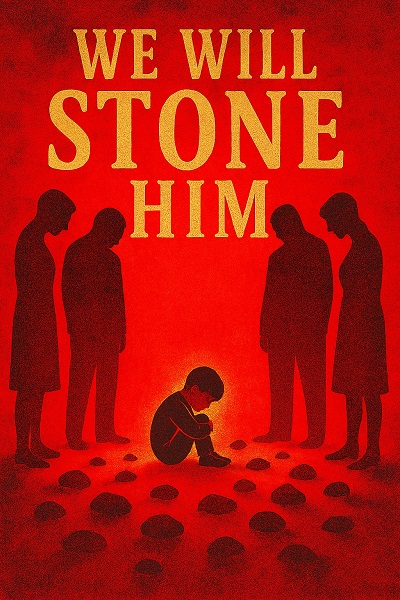
We Will Stone Him is a raw, unfiltered trauma memoir about surviving childhood abuse, emotional manipulation, and the lifelong wounds that follow. This true story marks the beginning of the Rising From The Ashes Trilogy, John Gambacorta and his survi
This is not a drill. The attack on Pearl. They were the ghost planes of the night, deadly, illusive, sharp-clawed Black Cats. The Memoirs of ARM H.P. Lawrence, a Pearl Harbor survivor, Black Cat, and decorated war veteran.