Excerpt from GREETINGS FROM BEHIND THE THICK GLASS WINDOW
It’s a charming place with no less than 115 bridges: the third most “bridged” city in Europe, after Venice and Amsterdam. If it were not for the feeling that the place was raped and couldn’t quite muster the energy to pull its dress back over its shoulder, it would be one of Europe’s most desired spots. You see, up until 1945, after Berlin and Hamburg, “Breslau” (the city has had many names) was the third largest city in Germany with a population of almost a million. Toward the end of World War II, however, the German government implemented a policy of defense known as "Festungen"—meaning: "cities as fortifications," which, if you think about it, is a barbaric idea (it’s like saying: who cares if the Jesuit College is 300 years old, this is war)—and “good old Breslau” became Festung Breslau. Needless to say, the strategy failed, and on January 20th, 1945, most of those people fled under the encroachment of soviet troops. My apologies for this radically abbreviated version of the story, but I’d merely like to add enough brush strokes to the picture to convey the feeling I had walking by a crumbling building which still bore the German language storefront of an electrical supply shop.
One peculiarity the newcomer to Poland will encounter is the term: “Polish reality.” Walking along the river last week, gazing across at the fanciful cityscape of red brick steeples, gabled housetops and turn-of-the-century bridges, I commented on the beauty of this city. “Yes, of course,” Jarek rejoined, “But that’s not Wroclaw. You don’t know Polish reality.” That was the first time I heard it. Once these words became conscious, however, I noticed them creeping into virtually every conversation, usually in the context of a retort to any suggestion that Poland is a nice place. “Great food!” “Yes, of course, but this is not Polish reality.” “Wow, look at all the people sitting in cafes!” “Yes, but this is not Polish reality.” “People are so friendly here, and smiling”—again same answer.
What is Polish reality? Can someone please tell me? As far as I can see, Poles must be dreamers; because they use the word “reality” as if there were no greater anathema—much worse than the bogeyman or the big bad wolf, although comparable to what is known as a “Mad Dog.” This is a little drink, popular in bars and cafes, consisting of a shot of vodka, cassis and a few dashes of Tabasco sauce, also referred to as a: “Now Poland.” I find the second name particularly revealing, as if “Poland” is a state of intoxication. Granted, the colors of this drink are reminiscent of the Polish flag; but why: “Now”? It’s as if after arriving in the country, touring the cities, and meeting locals, you’re finally asked: Now Poland? Not until that moment, apparently, are you really there.
This hypothesis would, at least, explain what I witnessed that first evening at the bar called “Jatki”—namely, a grown man, inebriated to the point of catalepsy, crashing down face first onto a cobblestone street (I swear I heard breaking bones). Perhaps this was what Poles mean by “reality.” In any case, a little voice in me confided: “Tony, you’re not in Germany anymore.” A few moments later, that selfsame voice spoke again, whispering in my ear like a warm breeze. It said: “Now Poland.”
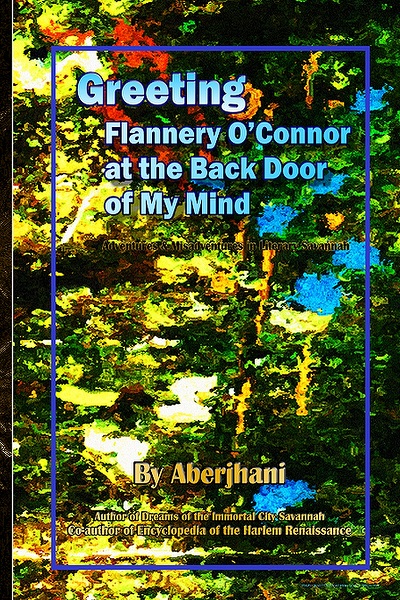
Exploring the impact of literary icon Flannery O'Connor's noted legacy on the cultural realities of modern-day America, the world, and a certain author.
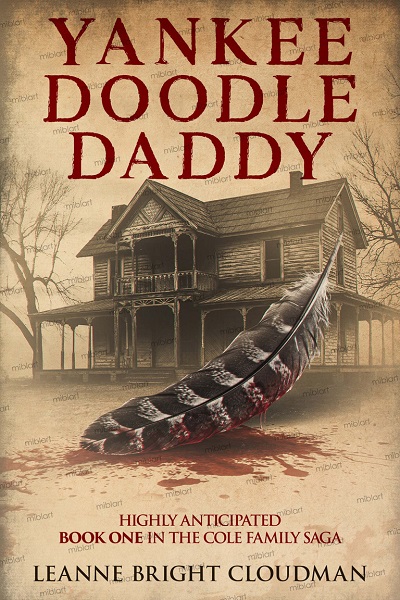
Yankee Doodle Daddy is a historical Appalachian Family Saga. The story follows a mother's reckoning as she struggles to survive and keep her four daughters alive.


 It’s a charming place with no less than 115 bridges: the third most “bridged” city in Europe, after Venice and Amsterdam. If it were not for the feeling that the place was raped and couldn’t quite muster the energy to pull its dress back over its shoulder, it would be one of Europe’s most desired spots. You see, up until 1945, after Berlin and Hamburg, “Breslau” (the city has had many names) was the third largest city in Germany with a population of almost a million. Toward the end of World War II, however, the German government implemented a policy of defense known as "Festungen"—meaning: "cities as fortifications," which, if you think about it, is a barbaric idea (it’s like saying: who cares if the Jesuit College is 300 years old, this is war)—and “good old Breslau” became Festung Breslau. Needless to say, the strategy failed, and on January 20th, 1945, most of those people fled under the encroachment of soviet troops. My apologies for this radically abbreviated version of the story, but I’d merely like to add enough brush strokes to the picture to convey the feeling I had walking by a crumbling building which still bore the German language storefront of an electrical supply shop.