Any morning my siblings and I would wake up to strange children sitting at our breakfast table. Sometimes I would be a little upset about one of them sitting in my favorite seat, but I soon became accustomed to it. Ms. Kay, the county nurse could always depend on mama to take in children until she could find them a more permanent home or an orphanage. In the early fifties it was as difficult as it is today to find an older child a permanent home.
My sister Joy and I sometime would cry when it was time for them to leave, but there were more coming soon.
Sometimes there would be grown men sitting on the back porch steps eating. Once I remember a convict who ate a good meal and had a brown paper bag to carry with him. He begged mama to let him help her on the farm to pay for the meals, but she always declined. I looked out the window and he had'nt gone away. Mama just said lock the doors. We prayed and went on about our indoor chores. I looked out the window about two hours later and the man had left. Boy, was I happy. I did'nt have to chop fire wood for a month. He had chopped enough for the cook stove, the fire place and the heating stove.
My folk called me the big one so I helped daddy with the farm chores a lot. I don't know what I hated worst slopping hogs or Mr. Rogers mathmatics classes at the old school house.
We didn't live too far off the main road, which use to be a dirt road that took you straight to Charlotte. Daddy still traveled on that road along with the cars on his horse and buggy to go in town to the Farmers Market and the bread house for extra staples to mix with the hog mash.
We'd worry about him, especially when the sun went down and he was'nt home yet. Mama gathered us around her and we prayed. We still lived under Jim Crow Law. Even the the cars traveling along the highway seemed to want to run daddy off the road. Times were changing.
Sound so good to hear daddy out in the barn. When he finished he brought goodies in the house from the bread house for us to eat.
One day in the late fifties mama told me your daddy don't see to well, what she was'nt telling me is that he could not read well enough to pass the driving test. They got me my driving papers and daddy drove a '49 Ford coupe from the back of the property that he was always working on. I did'nt like to go back there, I was afraid of an old one-eyed Studebaker always looking at me.Daddy taught me how to drive well enough to pass the test. I felt so grown up.
When people in the community did'nt have enough money for the doctor daddy would take us on the buggy for mama to pray for folks. Now I was driving her around to pray for sick people. "Lou Ann, come go with me and your daddy", "Okay mama". (Was no back talk in my family.) I put two hunks of plats on my head and out the door I ran. We went up on Wilson Road and came back with a '56 Ford Station Wagon with overdrive transmission. On the way home I was hoping no body I knew saw me driving with those hunks of hair on my head.
When we drove up in the yard the county nurse was waiting on mama with two sisters who sure did look sad. Soon that sadness was gone. They learned how to be happy living with us. Someone certainly had abused them. They stayed about two weeks. Ms. Kay found them a nice family who took both of them. Anytime anyone needed mama she made time for them.
She also had a disorder, bad head problems like the woman Harriet Tubman, Called Moses. I read about her in my history books. I felt so special to have a mother like her, always rescuing people from distress. Although, I learned recently that Mama was bi-polar and helping people helped her not to think about herself.
Thank God she taught me how to heal. The best medicine is to love every situation and everybody and know who you are in Christ. My gift is showing people God's gift in them and encouraging them to love God above all living things.
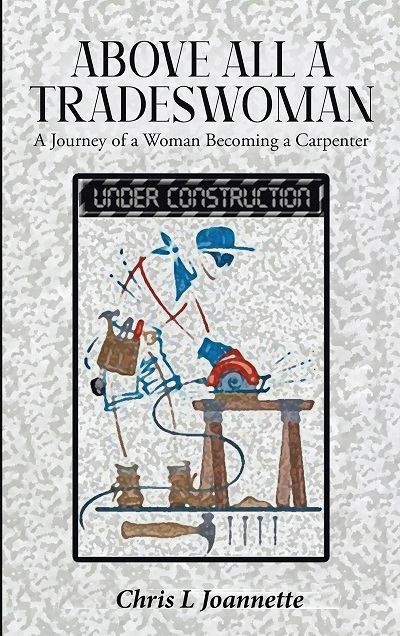
The experience of a young adult trying to figure out what they want to do for employment or education can be overwhelming. My book will give them insight to what it means to be a carpenter. And the progress unions have made in discrimination.
Get
This book has been eight years in the making. It is mostly a jumble of thoughts written down in old spiral notebooks and hidden in the bottom drawer underneath various manuals for software packages and hardware long since turned obsolete.