_______________________________
“I was nineteen when you were born,” father said, "barely an adult, myself. But we made the best of it. We got by. I worked nights. I went on to earn my master’s degree and by then your sister was born. I was a graduate teaching assistant. Most times, we didn’t have enough money to pay the rent and feed four mouths.
“At one point, we moved to the projects and received food stamps. I didn’t like living on public assistance, but we had no choice. But you do. Don’t make the wrong choice now. Don’t make a choice you’ll regret for the rest of your life.”
“Don’t misunderstand us,” my mother. “You were a Godsend. We love you dearly. We can’t envision our lives without you.”
“But the timing was off,” father said. “I gave up a lot back then.”
But that was eighteen years ago. I looked around at the twenty-four-hundred square foot tract house we lived in. It wasn’t the projects. We weren’t on public welfare. It wasn’t about them now. It was about me.
“I promise I won’t make the same mistake, Dad,” I said, wanting a chance to prove it. “If you’re worried I’ll end up like you, I won’t. I’m not like you.”
“You’re more like your father than you will ever know,” mother said.
“Wait until the school year is over. Take time to think it over,” father said.
But a year was a glacial ice age. “I can’t wait. I’d rather drop out than live like this.”
“Living like this?” My father looked around. He pounded his fist on the granite countertop. “There’s nothing wrong with this home!”
He raised his voice. “If you drop out of school, you might as well pack your bags and—“ But his sentence trailed off into silence. And what? Leave? Isn’t that what I wanted? To live somewhere else?
“This conversation is over,” he said. “Why don’t you go to your room and—study?” He stormed into the other room. It was the same ending for every argument.
I went to my room, lay on the bed and stared at the cottage cheese ceiling and memento covered walls.
The walls were framed vignettes of my teenage life. There were photos from the senior prom next to the posters of Farah Fawcett and Cheryl Tiegs. I had tacked up the ticket stubs from every event I attended: nightclubs, rock concerts, movies and sporting events. My debating medals were prominently displayed alongside pictures of me in a leisure suit, below the second-place ribbons in impromptu speaking and humorous interpretation.
In addition, there was a guitar chord chart, which showed every chord variation–including barre chords–which I had not yet mastered. It hung next to my favorite photos of John Denver, Jim Croce and the Eagles.
More revealing, I had hundreds of black-and-white photographs pinned to a cork board wall that ran from ceiling to floor and took up one side of the room. They were of my high school friends: Eddie, Robbie & Jeanette in stupid poses, jocular grins, bleary-eyed stoned expressions and moments of faux triumph. There were pictures of us washing cars to raise money; singing in the school choir; cheering at the Friday night football games and horseplaying at a summer pool party. Because I was the photographer who took the pictures, I was not in them. Yet, I could look at each picture and remember exactly where I was and what had happened. I was proud of them.
But I was prouder of the special photographs I kept hidden. They were my artistic collection of nude and seminude women. Actually, there was only one woman, my best friend—Jeanette.
_______________________________
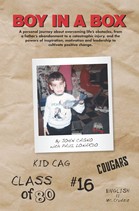
This episode is based on a true story.
Although seventy-five percent of this memoir is factual, liberties were taken with the other twenty-five percent for plot purposes. That is where scenes were recreated from memory when they were not clearly defined in the journals written by the author from 1976 to 1980.
Individual characters are composites of several people and do not represent any one person, and the names have been changed to protect innocent people that may be guilty of indiscretions in their youth.