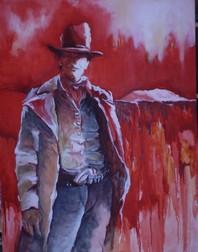
Grace Pennington married Will Dancing. They moved west to start a new life. Years later during a time of great peril Grace stood alone facing fearful odds.
Grace Pennington loved Will Dancing: Her parents did not approve. Grace was the only child of the New England Springfield Penningtons. From an early age her father taught her to ride and shoot. He said she had the natural ability of a born marksman.
‘Our line began,’ he was fond of saying, ‘with Rafe Pennington who arrived on these shores determined to build a new life.’ He was, according to her father, the very best of men: And through Rafe claimed kinship with the English Northampton Penningtons, who under Charles II were raised from the common ranks and ennobled for unspecified service to the crown. They never looked back, going on to prosper both numerically and financially. When asked why Rafe abandoned the life of a landed gentleman of means to strike out into the unknown, never to return to the green and pleasant land of England, he would simply reply somewhat pompously, ‘a keen sense of adventure I expect,’ and there the matter would rest. The truth however was quite different.
His father, the Earl of Northampton, owned vast estates, towns and villages, his personal wealth a byword amongst the nobility.
As the eldest son and therefore first in line, sooner or later Rafe would inherit the title, lands and wealth of his esteemed father. Until then he received a generous allowance that enabled him to maintain a privileged position as was his due alongside the very cream of London society. Rafe however was a notorious womaniser and an inveterate gambler; both habits absorbed his allowance and more besides. He began to borrow money and continued to do so against the day of his inheritance, signing personal IOU’s with increasing recklessness. The more he owed the more he borrowed and the lenders more than happy to accept his personally signed promissory notes in lieu of immediate payment and so it continued. His father raged and threatened to disinherit him to no effect. And then one day a matter of a new coat brought the world of Rafe Pennington crashing down.
Neville Pritchard and Son, Tailors of Quality est. 1735 were superlative clothiers of distinction who embraced the patronage of Rafe Pennington with undisguised joy until it slowly but surely became clear, as one year moved into the next, the lamentable fact that Rafe Pennington never paid his bills and had absolutely no intention of doing so other than to sign the inevitable promissory note, by which time Pritchard and Son hovered on the brink of financial ruin. Business was down and oh dear if only Pennington paid a little of what he owed they would then manage somehow until business picked up. The next time he entered their premises would be to try on his new coat cut in the very latest fashion and colour, puce. Father and son determined to confront him and demand payment for the coat, said payment would then be used to reduce their own mounting debts, of which more than two thirds were attached to the Pennington account. However, confronting Landed Gentry was fraught with danger, even more so where Pennington, son and heir to an Earldom was concerned.
The law did not deal kindly with commoners who spoke out of turn to their betters. On Pennington’s word alone Pritchard and son could be hung from the gallows pole or transported for life to some far flung colony where they would quite literally be worked to death, starved or beaten into their graves, whichever came first.
Pritchard and Son teetered on the brink of financial ruin and faced the very real prospect of being cast into Newgate Debtor’s Prison for failing to meet their financial obligations, where they would rot until they gasped their last. Thus it came about that Pritchard Snr determined to inform Pennington of his dire situation and that he, Pennington, was the primary cause. Unfortunately he made the mistake of displaying Pennington’s new coat on a truncated tailor’s dummy out on the shop floor for all to see. It was after all an item of beauty, an almost flawless creation of design and colour down to the meanest invisible thread. A grand, eloquent statement to the art of personal, made to measure clothing, and in London Town Pritchard and son acknowledged no peer.
It began badly and proceeded to get worse.
Rafe Pennington entered the premises of Pritchard and son and stood in silence admiring his new coat. He turned saying, ‘I’ll have my man pick it up later today.’ Quaking in his boots, Pritchard Snr took a deep breath and words gushed out in a torrent, tumbling one after the other like a river in spate as he appraised Pennington of his circumstance and dire need of a little something towards payment of his (Pennington’s) escalating debt, ‘it is no longer a Gentleman’s account,’ he concluded, ‘but debt plain and simple, and you sir are now required to pay that debt in full, or an agreeable part thereof.’ Sweat beaded his brow. His hands visibly shook at his own temerity.
Rafe stared at him in astonishment, laughed and said, ‘Pon my soul, do you even know what you are saying you silly man, you will of course accept my note as usual and there’s an end to it. Tradesmen,’ he scoffed, shaking his head, ‘who do they think they are. Now,’ he said in a firm, no nonsense voice, ‘I do believe I will change my mind and take the coat with me. Parcel it up if you please Mr Pritchard.’
The tailor refused to do so.
Pennington was outraged. ‘Tradesmen,’ he spat out contemptuously, ‘serve and expect payment when their betters are good and ready to settle their accounts, until then,’ he said waspishly, ‘they wait and do what they are damn well told to do. Now,’ he glared, ‘hand over the coat, accept my note and no more of this damnable nonsense or you will rue the day, I can assure you of that.’
Pritchard Snr stood firm, a vision of the hell of Newgate Prison firming his wavering resolve, whereupon the heir to an Earldom in a fit of pique, raised his silver capped walking cane and struck out at the offending object thwarting his desire, striking his head with enough force to split his scalp and drop him to his knees. Pritchard Jnr gasped in horror and rushed at Pennington who used his cane with the precision of a trained swordsman, driving the tip of the cane into the unfortunate young man’s stomach and then striking him about the head and shoulders until, dazed and bloody, he crumpled to the floor.
Pennington took the coat, turned on his heel and marched out without a backward glance; satisfied that he had delivered a good sharp lesson the money grubbers would not forget when next he deigned to grace their establishment with his exalted patronage.
Rafe Pennington was a rake, a scoundrel and an insufferable boor, he considered himself to be above the law by right of birth and no one said he was not; indeed his rank, wealth and privilege confirmed it. During a time when an eight year old child was hung from the gallows pole until it was dead for the crime of stealing a loaf of bread, a girl child hung from the gibbet for stealing a lace bonnet, a boy of ten transported for life to the Americas for the crime of swearing at his betters.
Facing ruin Pritchard Snr took courage in hand and in a final, desperate bid to stave off ruin and the very real threat of a slow and lingering death in the charnel house of Newgate Prison he called upon the personage of Sir William Blakely, an infrequent customer but a customer none the less, in the hope of obtaining, if not legal recourse, then at the very least, a modicum of sound advice.
Sir William was at that time a magistrate of note, a well respected man with connections both directly and indirectly to the highest in the land, and if there was one thing Sir William detested it was indolent young bloods of rank and wealth who went about their idle, hedonistic lives sowing ruin amongst the tailors, boot makers, jewellers and what have you in London Town; commoners, men of trade who otherwise could not protect their lives and business’s from the depredations of the youthful gentry and if there was one individual of rank he detested above all others it was the son of the Earl of Northampton, the rascally Rafe Pennington who owed money to every gaming club in London and more than just a few currently fashionable whore houses.
As he listened to Pritchard Snr’s tale of tangled woe, Sir William positively beamed his pleasure.
The Gentleman’s Club known as Whites was situated in White Horse Lane, a short stroll from the town house of Lord Coventry and the Marquis of Hastings. Though frequented by the sons of the titled and wealthy, the club owned a somewhat tarnished reputation. Dubious games of chance, loose women and wine smuggled in from abroad being about par for the course. Simply put, Rafe Pennington considered Whites to be a convivial paradise set in the grime and ordure of an otherwise lacklustre city and of course his never ending stream of promissory notes were accepted without question, with a certain alacrity one might almost say. One day the owner of Whites would demand payment on each and every note, the Earl, honour bound to make good the debts of his son. A man of breeding and wealth could get away with murder, the physical and sexual abuse of unfortunates and worse; but he must never on his life fail to meet his debts. He would be better off killing himself, better to be known as a coward than a man who failed to keep his word, failed to pay his debts and failed to meet his obligations.
Soon, his father the Earl, would begin to bleed, his fabulous fortune diminish over a matter of a twenty guinea coat. Society loved the resulting scandal, Rafe’s tarnished reputation whilst at the same time ostracising the man, and rightly so, it was vociferously agreed by the idle, the wealthy and not so wealthy gentry.
Sir William Blakely did not labour under the illusion that Rafe Pennington could be brought to trial for the theft of a twenty guinea coat. Such was never going to happen. Should a commoner steal a coat he or she would of course dangle from the gallows pole. The law however did not apply to the gentry. Sir William did however intend to discomfort Pennington and perhaps thereby draw his attention to the immediate settlement of his debts.
Percy Cranbert, of the Hampshire Cranberts picked up rumour, gossip and news the way a dog picks up fleas and with much the same regularity. What he didn’t know wasn’t worth knowing, and whatever scandal was brewing he always managed to stir the pot. Cranbert was short and thin and despite the best effort of his clothier he somehow always conveyed the impression of a half starved ferret. Cranbert was a walking disaster of whom his family despaired but he was indispensable to Whites. He knew what ships were in port, the value of the cargo, who was to dance at the end of a rope, where you could sell an unwanted bauble for golden guineas, who had the pox, what his peers were worth down to the last penny. What shares were likely to fall or rise, who owed what to whom, who could pay, who could not, the haunts of highwaymen, what odds were likely to be offered on a horse race, pugilism a fencing match the list was endless. As for Rafe Pennington, Cranbert knew all his secrets. How he obtained such detailed information no one knew or cared, just so long as he could supply information when asked to do so, ergo Cranbert was everyone’s friend whilst yet remaining oddly friendless and somewhat distant from Whites’ regular crowd of rambunctious young gentlemen. Whites never closed; it did however, one day during the long, hot summer of 1802, burn to the ground. Rumour had it that Hydes of Blackfriars Court, a rival establishment was responsible, of course nothing could be proved though it was bandied around for a while that the notorious highwayman Captain Silk instigated the conflagration for the princely sum of one thousand guineas. Silk was never apprehended eventually retiring so it was said to a life of ease financed by his ill gotten gains.
Pennington sat alone in a secluded corner of the club’s dining room. Candlelight blazed flooding the space in soft, amber light. He sat at a table crowded with roast beef, breaded ham and dishes of various boiled vegetables in season. In between mouthfuls of meat and vegetables he gulped down copious quantities of claret. A white linen napkin tucked beneath his chin protected his new puce coat from the odd dribbles of succulent juices that escaped from his mouth as he chewed, reflectively thinking that it would serve him very well if the aging Earl, his father shuffled off this mortal coil in the next year or two.
About then Cranbert appeared, sitting down opposite Pennington uninvited. That he had news to impart was obvious. The man is almost bursting with it, Pennington thought, why me I’m not one of his cronies. A sudden feeling of unease stirred his sluggish blood. He scowled at Cranbert, ‘what do you want you little weasel, can’t you see I’m dining.’
A sly smile curved Cranbert’s mouth, malice flared in his eyes, ‘I dare say you don’t care for me Pennington,’ he leaned forward, his head jutting across the table, ‘well that’s as maybe, but as a fellow member of Whites I thought it only fair to warn you.’
Pennington stared at him food forgotten, a shiver of alarm worming through him. He said mildly in a grasping attempt at nonchalance, ‘Warn me! About what may I ask?’
Cranbert grinned, ‘prepare yourself Pennington,’ declaring waspishly, ‘for the sake of the coat you are wearing a warrant has been issued for your arrest.’
Pennington, face ashen spluttered, ‘arrest, coat, what the devil are you talking about? Are you in your cups, is that it? Damn you Cranbert explain yourself,’ he gulped nervously.
Cranbert lowered his voice and said conspiratorially, ‘Sir William Blakely has you in his sights Pennington, damned if he don’t. My word on it Pennington, you are a marked man.’
Rafe blanched, ‘the man’s a traitor to his class, god rot him,’ he paused then said in a puzzled tone, ‘why me Cranbert?’
‘Well me dear fellow it transpires that you stole a coat, a gentleman’s puce coat, the one you’re wearing.’
‘Stole,’ huffed Pennington, ‘what the devil do you mean stole, I never stole anything in my life, gave the man my note, its as good as guineas in the hand,’ he huffed
‘Ah,’ said Cranbert with a sigh, ‘now there’s the rub me dear fellow, because according to the chappy who laid the complaint, you knocked him down with your cane grabbed the coat and stormed out of the fellow’s shop without leaving your note, not even a brass farthing I believe he said. Of course Sir William pounced; his dislike of leisurely young gentlemen is legendary. He means to take you to trial or have you thrown in Debtor’s Prison. He intends,’ he said, ‘to make an example of you.’
Pennington stared at Cranbert, hollow eyed, ‘arrest,’ he mumbled, ‘he can’t arrest me I’m the Earl of Northampton’s son,’ he stammered on the verge of panic.
‘Of course he can’t,’ Cranbert cried jovially, ‘he knows that, he’s just trying to throw a scare into you, and from the looks of it,’ Cranbert’s eyes narrowed, ‘he’s succeeding rather well. Now, have some more wine Pennington there’s a good chap and compose yourself, please do or you’ll have me think you’re craven and you wouldn’t want that to get out now would you, bad debts, a thief and craven to boot,’ Cranbert sneered, ‘a chap like you son of an Earl and all that, me dear fellow. The Earl would disinherit you, disown you in fact; and your friends,’ he waved his arm around in a vague, dismissive gesture, ‘would simply ignore your very existence, you’d have to leave the country Pennington, no other course open to you. Dashed hard I know me dear fellow but there you are. A gentleman does not steal a coat or fail to honour his debts.’
Pennington crumbled, moisture gathered in his eyes. Cranbert said, ‘the warrant won’t be made public for seven days, if in that time you discharge your debt in full to this tailor fellow I have it on the very best authority that the warrant will simply disappear. Your life restored reputation intact; only,’ Cranbert added, ‘you must pay the tailor chappy every penny you owe down to the last farthing. Now, me dear fellow,’ Cranbert said rising from his chair, ‘I really must go, people to see and all that. Pay your debt Pennington, there’s a good fellow,’ he said by way of goodbye, ‘and all will be well, Sir William will ignore you my oath on it,’ he added mildly.
And that’s about where, for Rafe Pennington, it all went wrong. Instead of going cap in hand to the Earl for the needful sum, he panicked and thereby changed the course of his life forever.
His heart thumped rapidly, his stomach sour and tight. He swallowed nervously, his hands cold and moist. He stared before him with unseeing eyes, candlelight pooling shadows in the taut whiteness of his face. A too long held breath rattled in his throat. A blade of ice ripped through his chest. Reason absconded in a seething humour dragging his soul down to his bootstraps. What sense remained in his head shattered like glass. Panic, the looking glass of fear will do that, tumbling reason and sanity in an avalanche of error, toppling nations, reducing brightness to dust. That was when he conceived his plan, and as luck would have it, he somehow went on to execute it flawlessly. Of course it was a plan conceived in fear and panic, ergo it was a mistake, but on such twists of fate life turns and turns again.
Rafe stirred, gulped wine refilled his glass and drank again. Rising slowly to his feet he walked out of Whites never to return. Out on the street he turned left heading for Rotten Row. Bright moonlight carved through the gloom lending a pale, washed out look to the drab, empty streets and brooding buildings silently decaying in the spectral light.
Mordecai Jacobi known simply as Mord dealt in stolen goods. Sometimes he organised thieves to target specific houses or business premises. He described exactly what they were to steal and in what room or rooms they would find it. He was also a money lender, his rate of interest varied on the amount borrowed. It was always outrageously high. When those amongst the lower class were slow in making good their loan plus interest or stated openly that they were unable to pay, Mord sent in the Collectors, a band of thugs who strapped the luckless victims to bloody ribbons using short, broad belts of metal studded leather, hence the saying ‘strapped for cash’. Such was the fear engendered by Mord’s collectors that only the foolish or outright desperate failed to make good on their loan. His name was not unknown to the members of Whites, who, from time to time sold the odd bauble or two when short of the readies. Be it a diamond stick pin, enamelled snuff box or a silver buckle Mord bought everything offered and paid in golden guineas. His place of business was located in Rotten Row, a dark and evil part of London Town where every vice imaginable was available for a price, death by violence and the bloody flux a daily occurrence along with the suicide of the poor unfortunates addicted to blue ruin (an illegal distillation of raw gin, watery blue in colour, it addled the brain and induced morbid depression).
When Mordecai Jacobi accumulated enough stolen gold and silver he melted down the precious metals and cast them into ingots about the size and thickness of a standard pack of gaming cards. He packed the ingots in small iron bound chests. Each chest weighted about thirty pounds. The chests were shipped overseas where Mord’s extended family used the precious ingots to finance loans to a new breed of gentry and astute entrepreneurs. When eventually Mord disappeared, enough stolen gold, silver and precious stones had made there way across the water to finance a bank in the heart of New York. In time descendants of the Jacobi family would own and administer one of the top three banks in New York. That it was founded on stolen gold and silver and precious stones by then conveniently forgotten.
Pennington in a blind panic, fear of arrest and the resulting shame and dishonour uppermost in his mind made a reckless decision that turned into a plan that he proceeded to flawlessly execute to a dignified, one might almost say; bafflingly acceptable conclusion.
Pennington blundered into Mord’s place of business demanding safe passage to France and a loan of twenty five thousand pounds. Mord agreed in return for Milord’s signed promissory note. Once he had it safely tucked away he suggested Milord shipped out to the Americas. ‘France,’ he said, ‘just wont do,’ adding, ‘Milord’s line of credit to the amount of twenty five thousand pounds is only good in the Americas. Springfield to be exact,’ he said with a thin smile and promptly hit Pennington over the head with a lead weighted club. Stuffing the letter of credit in Rafe’s coat pocket he called for two of his Collectors to carry the young gentleman down to the docks and see him secured aboard the Blackbird until the ship sailed with the morning tide. He could easily have killed Pennington and disposed of the body with no one the wiser but Mord was canny, he wanted Rafe alive and well but far removed from England when he presented the promissory note to the Earl, which would of course state that Rafe owed him forty thousand pounds. It would be his last crime, the highlight of a long and profitable career after which he would simply walk away from Rotten Row as though out for a stroll and disappear. The good Captain of the Blackbird, a staunch family member, would see to that.
At that time the Jacobi family had amassed wealth beyond dreams of avarice. As for Pennington, making the best of a bad situation he arrived in America, Springfield to be exact and once he found his feet he prospered.
It took the appointed agents of the Earl more than twelve months to track down and pay out each and every promissory note his errant son, for years, had so cavalierly scattered in his wake. When it was done the Earl stood six hundred thousand pounds the poorer. His honour intact, he considered it cheap at the price, for all Rafe had almost beggared him. His estate did in time recover and though Rafe was his only son he forbad his name to be spoken in his presence for the remainder of his life, and on his death bed declared the Springfield Penningtons to be tainted blood, thereby severing for all time any idea of blood related ties through or by any future descendants of his son’s line.
Surprsingly Rafe did not suffer from seasickness and to his utter astonishment found himself actually enjoying the voyage. Bracing sea airs, sun and wind worked on his appetite. He ate every meal no matter how plain or unpalatable he thought it to be and thereby added a few pounds to his fashionably slim frame, and looked the better for it.
As the voyage progressed he conceived a new start in a new land was in order and planned accordingly. Little of the foppish wastrel remained and for the first time in his entire life Rafe Pennington knew where he was going and exactly what he was going to do when he got there. Strange as it may seem he threw his old life away and embraced the future without regret.
Springfield New England founded 1636
The Jacobi family changed their name, the way they dressed and spoke and went on to found a small but prosperous Merchant Bank on a solid bedrock of stolen gold and silver and precious stones. In due course the bank would manage the affairs of Rafe Pennington acquiring vast tracts of land, farms and properties at knock down prices. They would also facilitate his desire to breed horses of quality. Within ten years the Springfield Penningtons were one of the wealthiest families in New England. (Rafe married the daughter of one of Springfield’s leading families) he never looked back; he was after all the son of an Earl. Springfield remained ignorant of his flight and circumstance, and what Rafe knew concerning the founders of the very bank that managed his affairs he took with him to the grave. More than one hundred and fifty years later Grace was born and Grace loved Will Dancing of whom her family did not approve.
Grace was the eldest of three sisters. Deprived of a son her father taught her to ride, shoot and skin a deer. Of her marksmanship he was once heard to say, Grace has an eye for distance and target, a natural coordination you might say. In fact she was deadly and outshot her father with ease. Wisely, from time to time she deliberately missed the target knowing it would not do for her to continually outshoot her father’s friends and their sons. Her father was inordinately proud of his feisty daughter, he simply disapproved of her love match and blamed himself for what followed, and he was right to do so.
Will Dancing was a fine, upstanding young man. He worked land he owned and bred mules renowned for their endurance, strength and vigour. He was considered to be middle wealthy.
Grace Pennington loved Will Dancing and one day soon they would flee the safety and comfort of their New England life and head west into the vast unknown and thereby give rise to an enduring story of courage in the face of adversity and the willingness to do whatever it takes to protect your own. You could say the story wasn’t all that unusual for the times and you would be right, but I have met Grace Pennington and she is one of a kind. Indeed, it was she who verified her story and that of Rafe before I wrote a word. With the help of a bunch of thieves Rafe founded his line in America and more than a hundred and fifty years later Grace returned its strength.
Grace married Will Dancing. The Springfield Penningtons and friends said she married beneath her station. They remained aloof; refusing to even acknowledge Will was indeed her husband.
Grace, the light of battle in her eyes said “I married Will Dancing for love, not blood, and there’s an end to it,” only nothing changed, and sadly she knew in her heart it never would.
Two years later.
Grace and Will had cause to engage in conversation one fine spring morning with Paul Ericson, a senior board member of Springfield’s Merchant Bank. During the course of the conversation Ericson said, eyes distant as he revealed information not otherwise made public, ‘the bank recently used its not inconsiderable influence to raise funds to establish a Cattleman’s Bank in Abilene, Kansas. The west,’ he said pointedly, ‘is, we are convinced, worthy of investment. The future of this great land may very well be secured out on the Great Plains.’ He smiled slightly, ‘we do but sow seeds to ensure our own continuity into the as yet unknown future. New England is green and pleasant, its acres tamed, the west however, offers acres unlimited for the taking. In fact our agent informs us that White Rock Valley out from Abilene, about a day’s ride I believe, comprising three thousand acres or there about, is on offer at a dollar an acre. I am reliably informed that the valley has water and good grass. The valley would be ideal, one would think, for a modest herd of cattle or perhaps a horse ranch, mules and such which are of course in constant demand. The west is opening up,’ he said, ‘railroads, gold and silver mines, iron, coal and timber and of course cattle. To gain a foothold now might very well return great wealth in the not too distant future.’ Adding, ‘a worthy investment one would think,’ as he bid them good day and moved on.
Will Dancing sold his farm and bought White Rock Valley. He hired men to build a house, barn, corral, stables, bunkhouse and all the trimmings. A year later he brought in breeding stock, mules, mares and a young stallion bred for strength, speed and endurance. Within three years the valley was home to around 200 horses.
It was a beginning. During that time Grace gave birth to a sturdy son and a smiling grey eyed daughter. The number of hands he employed varied from season to season.
Every cent they owned was invested in the valley ranch. Will estimated it would take at least four years before they could expect to earn more than just operating expenses.
The Fourth Year White Rock Valley
From the notes of BW Harding narrated by Trails Willowcut and Speedwalk Jackson White City (Pop 175) Morris County Kansas
Will Dancing was recovering from gunshot wounds when he came to town to see the Doc. Later we took a long, slow walk down Main Street to Ma Baker’s Café. We drank coffee and ate Ma’s dried apple pie. It was one of those slow burning days, feather white clouds drifting like wings. I’d been friend to Will for a while so he just naturally told me about Grace. There’d been rumours of course but it wasn’t until Will said exactly what happened that rumour was laid to rest and the truth came out. Grace was a proud woman, if’n Will Dancing hadn’t spoken up I doubt Grace would have come out with the whole bit-n-piece of what she referred to as the incident.
Will Dancing set up a horse ranch out in the White Rock Country round about the time most all the Indians had been run off the Kansas Plains. About all you could find when Dancing moved in was maybe three or four families of Kickapoo out near Cottonwood Falls or maybe up in the Flint Hills. There was talk of a reservation but as yet it ain’t come to much. We killed off the buffalo first; about twenty million or so would be my guess. One hide dealer alone processed more than five million hides in just over a year would you believe. The whole damn state stank of rotting flesh. The Indians were stunned, they just couldn’t believe the wholesale slaughter of millions of buffalo just to take the hides and leave the carcasses to rot.
Once the plains were free and clear of buffalo and Indians, cattlemen moved in and so did the rustlers and outlaws and damn they were an affliction worse’n any wild Indian, and at one time or another Kansas had been home to more’n its share of Arapaho, Kiowa, Cheyenne, Sioux, Pawnee, Osages, Delaware, Shawnee even the damn Comanche were here for a spell along with the Kickapoo and they were just about the fightin’est Indians a body just don’t want to meet. The Kickapoo were more traditional than most tribes, more conservative you might say. They weren’t interested in what the white man had to offer they just wanted to be left alone to live in the traditional way of their ancestors, but of course that was never going to happen. Settlers and cattlemen wanted their land, all of it, and by God and Jesus they were gonna get it one way or another. What I’m saying is the Kickapoo fought and it didn’t take too long for folks to realise they could damn near outfight the Comanche and the Sioux and that’s saying something I can tell you BW, but of course they didn’t have the numbers. Not that such slowed ‘em any. Damn they’d take on four times there own number and never turn a hair, so it was just as well for the white folk that they didn’t have the numbers, they beat us every time. Eventually the cavalry was sent in and that was something to see. I swear to God BW you never seen the like. Twelve maybe fourteen hundred Cavalry armed with carbines, belt guns and sabres chasing maybe thirty Kickapoo and never even coming close. I expect the Kickapoo damn near fell off their ponies they was laughing that hard.
Anyway, like I said, with the buffalo and the Indians gone, cattlemen and outlaws moved in.
There was talk for a while that Bodean Chantry was running with the Smoky Hill Gang but I didn’t place much credence in that. Bodean Chantry was an outlaw alright but he operated alone and never had no truck with those who killed their victims. He’d rob you blind would Bodean, but he would never pull a gun on womenfolk or children. Besides, last I heard Harpo Kane shot him down near the Mexican border and then lugged him into El Paso to get patched up, after which Bodean rode on to Arizona. Another story claimed Panther Burns was up around Ash Grove in the Smoky Hill Country and raiding down around Salina, Cheyenne Bottoms and on through to Fort Larned but that was a load of hogwash I can tell you. Trent Black killed Panther Burns in a shoot out in Uvalde. But you know how it is every bogy man comes alive when outlaws, rustlers and worse prey on their own kind worse’n marauding Indians. What I do know is Clay Teebone led the gang that raided the Dancing Ranch. He was big and he was mean. Man like that would steal your stock and then set fire to your barns and ranch house just for the hell of it. Ten riders or thereabouts rode with Teebone and they were a murderous bunch I can tell you. They’d hit when you were least expecting it and kill anyone who got in their way. Best you could hope for was that they didn’t torch your place. Teebone was canny too he never moved in on a well armed settlement or ranch that was known to hire hard riders; you know, ranch hands and cowboys who liked to fight and would more’n likely trail you to hell and back if you stole cattle from the brand they was riding for. Clay Teebone was a wolf; he would take you down anyway he could without giving it a second thought. He was a killer; an angry, hostile man with an evil disposition.
Will Dancing and his two hands were about ready to saddle up when the outlaws hit. The riders came out of the rising sun on a dead run: Spears of hot, orange light lending the swirling dust lifting up from thundering hooves a burnt, smoky look: Toward the east, the rim of the sky glowed old gold and crimson. From start to finish the outlaws were ruthlessly efficient. Will Dancing and his two hands didn’t stand a chance.
Four riders broke away from the main group who had already gotten the corral open and the horses out and on the move toward the open plain. All it took was seconds. The four riders opened fire knocking Will’s two hands off their feet, one down and dying, the other coughing blood as he tried to raise his pistol and failed, falling back with a meaty thud as his life drained out through his lungs.
Will Dancing stood cool under fire calmly firing into the charging riders. He took a hit staggered some, straightened with an effort and blew the lead rider clean out of the saddle. He was hit three times before he went down, his last shot taking another rider with him. The remaining two hauled back on their reins savagely turning their mounts, steel tipped spurs raking their sides bloody, and without a backward glance at their fallen companions raced off in pursuit of the rapidly dwindling herd.
Will Dancing fired six shots. From start to finish the raid was over and done inside a minute. In the terrible silence that followed a voice cried out in anguish: The sound of children crying, the smell of dust and gun smoke, of death and blood. The orange sun barely risen from its bed. Riderless horses blowing softly, reins hanging loose: Five men lying motionless in the rising heat: The empty sky brilliant blue above the flat Kansas Plain reaching out towards forever; north, south, east and west. And in all that vast, humbling emptiness nothing stirred; not even a breeze, as though the horse herd and raiders had just upped and disappeared.
Will Dancing survived, but he was in no condition to pursue the raiders. His corral had held three hundred horses broke to the saddle. The horses had been sold to the army. Will and his two riders had been about set to deliver the herd, trailing easy to Cheyenne Bottoms and south to Pawnee Rock, leastways that was the plan before Clay Teebone hit ‘em.
The future of the White Rock Valley Ranch was tied up in the herd. If’n they failed to deliver the three hundred horses to the army down at Fort Larned Will Dancing faced complete ruin. He’d have no choice but to return the army its money, prepaid in good faith. Will Dancing however was in no condition to do a single damn thing. He assumed they were ruined: Grace however did not.
The Dancing children, Jody and Ben, were three and two years old respectively. Grace with the help of Tripp Travis, an aging trail drive cook who had jumped at the chance to settle in at the ranch and had more than his share of experience with gun shot wounds, removed the slugs, stitched the wounds and settled Will as best he could. Will would recover but for now he was weak and feverish. Will had rib burn and was lucky the bullet glanced off the bone otherwise he would be dead. He’d taken a bullet in his right thigh and another to the shoulder. Three hits and he was lucky to be still breathin’. Tripp Travis was a good man and willing but he was way past his prime, bald and fat and no hand with weapons unless it was up close and he was holding a scatter gun. Grace could not in good conscience ask him to do what she knew he could not. If she did she knew he would try, he was that kind of man, but it would be the death of him. No, she reasoned, I am best suited for this: And so she convinced Travis to stay and look after Will and the children, whilst she rode for Abilene and help. That she had no intention of going anywhere near Abilene was, she decided, best kept to herself.
When Grace rode off in pursuit of their stolen herd she rode a grey gelding and trailed a pack horse carrying supplies and weapons. Both horses once belonged to the two dead raiders. Grace was armed with a six shot Colt.38 a bowie knife with a ten inch blade, a Winchester repeating rifle and a Sharps (1874) .50 calibre single trigger Buffalo Gun with a thirty two inch barrel. The Sharps used hand made black powder cartridges and was the premier long range killing weapon of its time. A single shot could drop a full grown buffalo in its tracks, stone dead before it hit the ground from a distance of eight hundred yards and more. Its extreme wounding range was thought to be twelve hundred yards, maybe more, and contrary to expectation considering her gender Grace Pennington knew how to use the Sharps and rarely if ever missed what she was aiming at. The main drawback for Grace was the weight and length of the weapon, she lacked the muscle power necessary to hold the weapon steady whilst she zeroed in on the target. Will solved the problem when he welded a horseshoe (open end up U) to a thin rod of mild steel with a spiked butt so she could drive it into the earth, to whatever depth was required, without too much effort. The horseshoe spike with padding wrapped around the well of the U allowed her to fire standing, kneeling, sitting or flat out on her stomach if need be.
The trail led southwest across open plain. Pushing hard she came in sight of the herd three days later. The outlaws had set up camp and were taking it easy. A nearby spring supplied water. Grace, possessed of exceptionally long sight counted ten men in all. After which she dropped back to plan her next move. The knee high prairie grass would hide her from sight but once she fired the Sharps the resulting black powder cloud would mark her position. She reasoned that if she fired from extreme range she could reload and fire six maybe eight times before the outlaws reached her. Once she fired it would be no good changing position. The land was flat and from the back of a horse a rider would soon spot movement. No, she reasoned, best to hold my position and go for distance shots. She recalled the story of Billy Dixon, a buffalo hunter at the battle of Adobe Walls who, using a .50 calibre Sharps knocked an attacking Indian off his pony at a distance of 1500 yards. She doubted she could make a shot like that but she would try. Under no illusion as to what would be her fate if the outlaws captured her alive she vowed to use the pistol to end her life if capture was inevitable. They would use her and later sell her into a Mexican whorehouse. Death, she suddenly shivered, was preferable to such an evil fate.
Grace pulled the Sharps from its scabbard and set up her padded horseshoe spike. She would shoot with the rising sun at her back. It was the fourth day of the fourth year following on from the founding of the White Rock Valley Ranch: Perhaps its an omen, she thought to herself with a wan smile.
Grace Pennington loved Will Dancing with a deep, abiding passion. When she came west with her man there was nothing in this new land that in any way resembled the life she had known; a safe, protected life in a soft, green land not given to extremes. The life of a rich man’s daughter, servants catering to her every need, everything in abundance and she gave it all away for love and headed west with her man.
White Rock Valley turned out to be the opposite of everything she had known and she thrived at the challenge: Meeting every problem head on midst the frenetic whirl of helping Will set up a horse ranch, and later her children Jody and Ben. She loved the openness of her new life and harboured no regrets for the soft life she left behind. She was a Kansas woman, the wife of Will Dancing and she glowed. And now everything was in jeopardy. Will, gunshot and feverish, their entire stock run off and their ranch hands killed. The herd represented every cent they owned. Without the herd, without breeding stock the White Rock Valley Ranch was dead and gone and any future they might have had as a family in Kansas would be wiped out. They could start again but they would have to sell the ranch to realise the money to do it. They could get a loan and haul it around for years like a ball and chain, the spectre of it weighting every moment, and if raiders struck again!!!
That’s about when Grace resolved to get their herd back.
Her father claimed her long sight was extraordinary, he also claimed her to be a consistently better shot than any marksman the Springfield Rifles could field, which didn’t go down too well but was none the less acknowledged, however reluctantly, to be as stated. But could she kill and keep on killing until the enemy fled, surrendered or fought to the last man. No one knew; least of all Grace.
Grace set up a shooting stand, like the old buffalo hunters, shooting from a fixed position until the herd stampedes and sometime such could take all day. She set herself up, greased cartridges close to hand.
The Sharps is a single shot breach loader. So you need to open the breach to eject the spent shell casing before you can load your next round. What I mean is, the hammer is placed at half cock, you pull the lever down and forward and that opens the breach, you load your cartridge and pull the lever back and up, sort of all one action, that closes the breach block, you pull the hammer all the way back to what they call full cock and the Sharps is ready to fire. Having said all that you understand BW you need to be damn quick, what I mean is, you need fast hands if’n yer going to use a Sharps against a bunch of charging riders, I believe with practice fast hands can reload and fire in three seconds. Heard about it but I ain’t never seen it. Best I could do was around four, though I’d have to say mostly it was closer to five and that’s a long count.
Anyway, Grace set up, cartridges, Winchester and pistol close by. The shooting spike took the weight of the long barrel and helped to steady her aim. She was well practiced in its use and I do believe she had what was called, fast hands; but if she expected to live she’d need hands like God’s own lightning. This wasn’t no fast draw shootout and the devil take the loser. She was going up against a bunch of mounted, armed to the teeth killers. Will Dancing killed two before he went down. Grace was looking at bracing ten even, and I don’t believe I’d want to do that, no siree BW, I surely don’t. Me and Speedwalk shot side by side for years until the buffalo was wiped out, we killed our share I can tell you, what I’m saying here is me and Speedwalk on our best day; well, I doubt we’d win out against a whole bunch of riders. Horses running flat out and coming straight at you can cover distance like you wouldn’t believe between one shot and the next and like I said I ain’t got fast hands, Speedwalk neither. No, what Grace had going for her was a bucket load of courage and that uncanny long sight of hers.
She sighted the Sharps in on the camp; men were stirring, drinking coffee, getting ready to saddle up and move out. She knew the herd would stampede when shots were fired but that was a worry that might not concern her if things didn’t pan out the way she planned. When she fired the Sharps she was committed to win or die. There was no in between, though I guess not too many folk would understand such, and die she would, by her own hand if need be rather than live to be used and when she was shoddy goods killed or sold into whoredom south of the border. To a woman like Grace, when she pulled the trigger she stood in hell until the last shot was fired; win or die her only options.
She knew what was needed what she had to do and right then, sighting down the barrel of her Sharps she knew with cold certainty she could do it. It wasn’t just her own life she was laying on the line but also the life of her family and whatever future they might have ranchin’ the White Rock Valley.
Grace started shooting over a distance of 1600 yards. She wasn’t sure the slug would carry much impacting power at that range, enough to wound maybe but not kill. She aimed for the eye of an outlaw standing around the campfire facing towards her. She doubted she could hit the eye she doubted he’d stand still long enough for her shot to reach him. She breathed out, breathed in, held her breath and squeezed the trigger, the rising sun warm on her back. A sound like muted thunder shivered the air. She’d opened the breach to reload just as the slug reached its target. The slug went in through the eye flattening against the back of the skull; it dropped that man stone dead.
A thin smile creased her face as she picked her second target, breathed in, held her breath to steady her aim and squeezed the trigger. Her target dropped, head shot and bloody, got back up, staggered and fell face down in the fire scattering hot coals and scalding coffee. She could hear faint shouts of dismay and anger as men frantically mounted, weapons at the ready searching for a target. Someone pointed towards Grace, horses milled in confusion, dust boiling up hazing the air. She shot the rider pointing toward her, the slug spinning through the air with an ugly ripping sound, the soft thud of impact tearing into his chest. Blood bloomed, voices angry and shrill. Three down, she murmured softly as she pulled the hammer back on the Sharps and sighted in on her fourth target. She fired and missed. Her target shifting position even as she squeezed the trigger, knowing her element of surprise was dead and gone, her position marked, her hands blurred. She had fast hands alright and then some. She breathed calm and even damping down a flutter of panic, knowing if she allowed it to swamp her she was finished.
A line of horsemen raced towards her, riders stretched out along the neck of their mounts offering the smallest target possible. Calmly she sighted in on a rider coming at her from an angle, hat tipped forward to shade his eyes from the rays of the rising sun. Her shot knocked him out of the saddle, riderless his horse raced on. Four down she murmured and knew her time on the Sharps was fast drawing to a close as riders covered the distance towards her at breakneck speed. Spurs gouging bloody furrows as they desperately tried to reach her before she could fire again.
Clay Teebone was no fool. Once the position of their attacker was marked he ordered his men to spread out in a loose encircling line. ‘Bunch up,’ he yelled, anger swelling his throat, ‘and a slug from that damned Sharps will blow a hole clean through your guts and kill the man behind you. Spread out,’ he screamed, ‘and get that damned marksman before he sends us all to hell.’
Clay and his boys could have retreated, gathered up the herd and disappeared from sight. Seems like not a one of ‘em even considered it, which is plain foolish when you think on it. They weren’t no army facing the dastardly foe. They were outlaws, killers and thieves everyone of ‘em long overdue for a hanging. What Clay Teebone was a thinking of, the Good Lord only knows, but it was foolish, brave mind you no doubt about that, but foolish; damn my mule’s got more sense than that. It was all open plain, the Sharps picking ‘em off one by one at what had to be an impossible distance for a killing shot. Clay and his boys should have cut and run, foolish that they did not. He swung his boys out in a long, ragged line. Riding into the sun, at least they had sense enough to pull their hats low, wasn’t perfect but the brim served to shade the eyes some. Every rider carried a belt gun and a rifle and every damn one of ‘em was firing as they came.
‘Distract that damn marksman,’ Clay bellowed, ‘Jesus wept,’ he cried as another rider went down. He spurred his buckskin, the big horse surged forward. He bent low in the saddle stretching out along the buckskin’s neck.
Five down, Grace counted to herself and knew she had no more time left. As the line of riders swept in she abandoned the Sharps and picked up the rifle chambering a round as she did so. As though she was standing at a shooting range she fired unhurriedly, placing each shot with care. She fired three times. Three riders fell from the saddle and lay unmoving. The two remaining riders firing on the run suddenly swerved away as the barrel of the rifle swung towards them, slack jawed with amazement as they realised the marksman was a woman.
She fired again and only a big square shouldered man riding a broad-rumped buckskin remained and he was running for his life.
Grace dropped the rifle reloaded the Sharps and sighted in on the fleeing man’s back. She breathed out, breathed in and held her breath and hesitated. The fight was over. She lived. The herd, spread out across the prairie, with hard work it could be gathered again. The lead stallion, a huge black, would almost help her to do that. The panicked herd would gather to him, he was their leader and protector and until a younger, stronger stallion displaced him the very sun in their firmament. But what if the outlaw came back with a gang of cutthroats? Would he take revenge and kill us all, she thought to herself. Dear Lord can I afford to take that chance. He knows a lone woman beat him, yes, she concluded, he’ll come back with blood in his eyes. Her finger tightened on the trigger as she breathed in held her breath and fired, the dull boom of her shot echoing away across the plain. The big man toppled from the saddle and lay still. The buckskin cantered on, slowed and lowered its head cropping grass. Away, almost to the horizon a black stallion, ears pricked forward stood outlined in a flood of sunlight facing towards her. Close by the black the herd gathered in.
Grace stood and stared, weeping softly, and then her legs gave way and she sat down with a thump. It’s over, she thought, her body all a tremble, its over.
Trails and Speedwalk
The day Grace set out in pursuit of the raiders, a drifter passed through White Rock Valley, he called in at the ranch looking for work. Tripp Travis paid him to carry word to the Doc in Abilene that he was needed. Dancing was a friend to me and Speedwalk so we rode along with the Doc, saw him safe to the ranch and then took off in search of Grace. We were both fair to middlin’ trackers so following her trail wasn’t a problem. We rode hard barely takin’ time out to piss we was that concerned for her safety.
Clay Teebone was bad news; a cold, ruthless man and a killer to boot. We’d heard up in Abilene that he’d been seen with his gang somewhere around Lost Springs. Didn’t think at the time that he’d cross country to the White Rock Valley Ranch, east towards Cottonwood Falls maybe. There were Kickapoo in that neck of the woods and they were friendly to the Dancings. Didn’t think Clay and his boys would want to tangle with the Kickapoo: Learned later that Clay and his gang rode north and then east of Abilene. They swung wide taking in a lot of country to come in on the ranch all unsuspecting, they did that alright for all Will downed two of them.
Anyway when we caught up with Grace it was all over and she was headin’ back to the ranch, a black stallion out front leading the herd home. It was a sight to see I can tell you, the evening sky all red and gold and blue, the herd steppin’ out like glory, Grace sitting her horse off to one side cradlin’ a sharps long gun, the colours in the sky staining her hair like one of them coloured pictures I seen in a book one time. A sight like that fair sets your throat to achin’ so it does.
We made a supper of bacon and bread fried in bacon grease, the campfire a small bright eye in all that empty vastness like a star fallen to earth. Grace didn’t say much, she did say the outlaws were dead and that was how come she got the herd back but she didn’t, er what’s that word, yeah, eelab-or-ate, what I’m sayin’ is she weren’t forthcoming with detail. We didn’t press, figured it best to just let her be. So like I said earlier BW, wasn’t until Will Dancing came to town to see the Doc that we learned the full story. Damn, ten down and two hits at 1600 yards. Later, me and Speedwalk and a few boys from town, the Doc included rode out that way. The coyotes, wolves and crows had been at the bodies but they was all there, all ten of ‘em. Found Clay Teebone aways off from where Grace made her stand, there was a hole the size of a silver dollar in the back of his skull. We paced it off as best we could. The Doc reckoned the distance of Grace’s last shot was 1650 yards, damn don’t that beat all. The Doc reckoned nobody was goin’ to believe a shot like that so what he done was to write it up on a piece of paper with his full name and profession, he signed it and dated it and then got us all to sign saying we was witness to his measurement and that the body hadn’t been moved.
There was talk of burying the remains but what the hell they was killers, so we never got around to it. The Doc was a bit put out, him being an upright man and all, but he got over it. And just in case you’re wondering how Daniel came by the name of Speedwalk, well BW, I’ll tell you.
He was Daniel Jackson to his Ma and Pa and like me he took to wanderin’ at an early age. He took to buffalo hunting round about the time buffalo hunters were killing buffalo just for their hides and stirrin’ the tribes up. They couldn’t understand why anybody in his right mind would just take the hide and leave the carcass to rot in the sun. Daniel was cutting across country heading for Black Wolf and on to Salina, he was riding an Indian pony he gotten in trade and trailing a fast Spanish mule. He’d killed some buffalo skinned ‘em out and made up a pack. He said the mule was willing but the weight slowed him down some. He said he wasn’t exactly sure where he was exceptin’ he was heading in the right direction towards a no name settlement set up to trade in hides and one day when the hides stop coming the settlement has no more reason to exist and so folks just naturally drift away. Year or two down the track, grass grown back, you wouldn’t even know it existed in the first place. Lots of settlements like that back then BW, not enough left to make a decent ghost town. Anyway, Daniel was headin’ for a settlement come trading post when he got on the wrong side of a Kiowa hunting party. They took one look at the pile of hides on the mule and took in after him. The mule tried to run but the weight of the hides was too damn heavy. Daniel let the mule go and kicked his pony up to a run. Fact is his pony was plain tuckered out and the Kiowa ponies weren’t in any better shape. They’d had a long hunt and come up empty and they’d seen too many buffalo carcasses rotting out on the plain: So when they came up on Daniel they just naturally took in after him but, like I said, their ponies weren’t in much better shape than Daniel’s.
Speedwalk Jackson – In His Own Words
I couldn’t shake the Kiowa, their ponies were too tired to catch me and mine was too tired to shake ‘em loose, about all I could do was keep out of rifle range. Come nightfall I could see their campfire behind me. I made camp as best I could, resting whilst my pony cropped grass. Come sunup they’d be on my trail. Like I said I couldn’t shake ‘em loose and there was no way I wanted to tangle with six stirred up Kiowa. They were like damn near all the Plains Indians, born fighting. They were friend to the Comanche the Cheyenne and the Kickapoo and that just about says it all. I seen a Kiowa Sun Dance one time and I can tell you what those boys don’t know about endurance and pain ain’t been writ. Crazy thing is the way we’re goin’ one day we’ll wipe out all the tribes for sure same with the buffalo and when that time comes the land will be the poorer for their absence. Can’t rightly say why, just a feelin’ in my bones though I doubt I’ll be around to see it: Ain’t so sure now though, it’s all happening so damn fast.
Come the third day and I was up and in the saddle before the sun slid over the horizon, I figured I was about two days out from the settlement I was headin’ for. And then damn, I spotted a lone Kiowa sneakin’ up on me on foot. He must have travelled through the night in the hope of taking me unawares. I heeled the pony but he didn’t have much in the way of speed left. He did the best he could and you can’t ask more than that now can you. Indian ponies will run their hearts out; they can survive on scrub grass where your grain fed horses just plain starve to death. Even so my pony was done in; he just had nothing left to give.
It must have been frustrating for that one Kiowa to watch me ride away when he’d come so close to nailin’ me: He decided to take a shot, more I suspect to alert his friends than with any great expectation of hitting me or my horse. Fact is, now and again you hear about a shot that is so damn lucky you just can’t explain it. What I mean is, everything was against that shot, the range was too damn far, no carbine made could throw a slug mor’n a few hundred yards, we ain’t talkin’ a Sharps or a Spencer here, we’re talkin’ a piece of wore out hardware with practically no killin’ range to speak of, not over distance that is, up close and personal yeah, it’d blow a hole in you, but I was rapidly drawing away.
I heard the shot and cursed, for the sound would bring the rest of the band running. I felt my pony stagger, gather itself and run on. Wasn’t but a few minutes later bloody foam is blowin’ out its nostrils and I knew it was lung hit. I looked back and could just make out the lone Kiowa standing there waiting for his friends. “Hoss,” I said out loud, “I need a few more miles my friend or I’m dead meat.” Damn, but that pony was willin’. He carried me out of sight of the lone warrior and then I felt his rhythm break, the pony staggered head hanging low, bloody foam coating its head. It walked on then started to buckle, I knew it was dead and leapt from the saddle, hitting the ground running before it keeled over, knowing I was a dead man if I tried to make a stand against the Kiowa. About all I could do was run and I’d never been what you would call any good over distance. I got speed in a sprint over short distance then I ain’t got nothing left.
I sprinted till my heart damn near burst, then whooping and coughing and tryin’ to drag air in my lungs I sort of staggered on as best I could. Later, when I’d recovered some I settled into a steady loping run for a count of two hundred and then I’d slow to a walk for a count of two hundred. Come noon when I looked back I could see the Kiowa doggedly trailing me. They knew I was on foot, with no water and no food. I carried a belt gun, a skinning knife and the clothes on my back.
I kept on alternately walking and running, The Kiowa couldn’t close the distance without actually killing their ponies. It was the fourth day. Two days riding, two days and nights of walking and running to maintain the distance between us. By then I was beginning to stagger. My throat closed up from lack of water my belly hollow and painin’ me some. My boots were long gone. A man can’t run for his life in a pair of wore down boots, I ran with strips of my shirt wrapped round my feet and they were bleeding but I didn’t want to think about that.
And then as the sun was on the wane I risked a glance over my shoulder and stumbled to a halt. Dragging air into my lungs I stared at the Kiowa. They sat their ponies no more’n a hundred yards away. No one moved or spoke, they just sat there starin’ at me. I reached for my belt gun but I’d lost it somewhere back down the trail. The knife was gone too and I hadn’t even noticed. I thought they was gonna sit there forever and suddenly I was too damn tired to care.
Suddenly a warrior, who I expect was the leader, said something in a low voice, turned his pony and rode slowly away. The remaining five hesitated, looked at each other, looked at me and then one of them threw my pistol and my knife down on the ground, turned and rode away. Another hurled my water canteen at me, and thank the Lord it sloshed with water. Another spat in the dust. What that lead Kiowa said I have no idea but it must have been powerful stuff because they rode away and left me alive.
The next day I limped into the settlement. I told my story and said when my pony went down I walked away. Some smart mouth quipped, “damn but ain’t you a speedy walker.” After that folk just naturally called me Speedwalk Jackson.
Grace said:
The day before Trails and Speedwalk found me I was alone in a vast emptiness hunched over a smouldering campfire drinking coffee as strong as I could take it, my hands trembled, I felt like I was stretched thin inside, as though something in my heart and soul had withered and died. I was returning to my husband and our children. What could I say? That I had done what needed to be done? I wish a good strong wind would sweep across the prairie, pick me up and blow me away. I need food and sleep and the reassuring comfort of Will’s strong arms around me. What will I say when they ask, what happened out there on the lone prairie? What did you do Grace to get your herd back? Do the crows and coyotes gather where you made your stand? Did you smell old smoky stalking the land? I felt sick inside. I could never tell my children than I had killed ten men. How to explain standing in the long grass, the rising sun warm on my back, peach and rose flooding the sky, sighting down the barrel of a long gun, ice in my heart fear in my mouth. How badly I wanted to pee as I fired my first shot. How badly I wanted to just fade back, mount up and ride away and pretend I was just out for the day enjoying a ride in the sun, work and woe absent for once.
A gulp of scalding coffee brought me to my senses, jolting me back to the harsh unforgiving world of life on the Kansas plain. And if I had let that man live, one day he would return and kill me and Will and our children.
I did what needed to be done I will say, and leave it at that.
The sun had sunk below the horizon smearing the rim of the prairie in hot lemon light; I felt an intense joy sweep through me. I was glad to be alive and do not regret what I have done.
Night moved in with a sweeping bank of clouds shutting out the stars gathering rich and dark in the heavens. A quarter moon gleamed through holes alternately painting the prairie ghost white and black. Somewhere a coyote howled; the sound lonesome and shrill and then, silence: The warm air, quiet and still. A land of old fading gods I thought suddenly. An intense feeling of a gathering presence filled me and then it was gone. It passed me by I thought, and wondered if it was a lost spirit the Kickapoo say wander at night. Whatever it was I sensed it to be benign though of course it was probably nothing more than my foolish fancy brought on by the deepening night and the glimmer of light shining though holes in the sky. A small wind stole across the plain. The campfire flared then died down to sullen, smouldering embers. I sat alone and sleepless waiting for the sun to light my world.
When Trails and Speedwalk rode up I wanted to cry, but I did not. In answer to their questions I said little and was thankful they did not press.
Rough they might be but they are friends to Will and me. I am thankful they rode out to find me, and in my solitude, guide me home.
There ain’t much more BW though I guess I might as well round off what I started. The Doc wasn’t shy about spreading the word that he had personally verified Grace Pennington’s long shots. Newspapermen came flocking, but Grace wouldn’t talk to nary a one of ‘em. The Doc did though and what he didn’t know he damn well invented. Will wasn’t too happy but there was nothing he could do about it. Grace was famous for a while; folks called her The Shootist though Will did say she was uncomfortable with all the attention. Mind you BW, sharp shooters up and down the country weren’t exactly pleased to learn every damn one of ‘em had been outshot by a woman. Not that anyone cared you understand. Though I did hear one young fella was just plain disbelievin’ until Speedwalk convinced him otherwise. The fracas was out in the street and was fair entertaining so I heard. Anyway the years slipped by and Grace and Will did right well, then one bad winter Will took sick and died.
Grace loved that man and for a while there the spark went right out of her. Will left her a wealthy woman but such never did count for much with Grace. Jody and Ben had gone east some time previous and never did come back. Will said they hooked up with the Springfield Penningtons who apparently welcomed the two of ‘em with open arms. Will said he’d got money with a Merchant Bank in Springfield who’d made all the right moves investing his money. He gave it all to Ben and Jody so I guess they don’t have to work none to earn a crust. Grace went back east for a while. “Springfield was fine,” she said, “but it is not Kansas.” When she came back she moved to Abilene, sold all the horses, paid off her hands and pretty much abandoned the ranch. She was going to give the land to the Kickapoo but the government stepped in and said, “you can’t do that, we’re settling the Kickapoo on land somewhere up around Cottonwood Falls.” Last I heard some settlers were building a town on what used to be Grace and Will’s land. Heard there ain’t no more’n two maybe three hundred people living there, for all they named the town White Rock City and that’s what it’s called to this day BW. White Rock City, now don’t that beat all, and I’ll bet you a dollar to a dime not a one of those good folk have ever heard of Grace Pennington or the White Rock Valley Ranch for all their standin’ on it.
Last I heard, the Kickapoo took to farming when they realised their traditional way of life was a thing of the past and there were just too many white folk to fight anyway, if’n you can believe that.
BW’s Notes
Grace Pennington briefly known as the Shootist was almost famous in a second hand kind of way. She never came right out and said what happened that fateful day. She never posed for pictures. Her story is just one of many stories of ordinary, everyday men and women who, during the course of life on the frontier, were caught up in the drama of an extraordinary event; an incident, a brief moment in time and when it was over they returned to their daily life with little said, and their stories mostly forgotten.
Over the years I have written and researched more than two hundred stories of what is now referred to as the old west. The story of Grace Pennington is to me most poignant. When I finally met the lady she was gracious and kind. Her consequent verification of the details of that fateful day, along with the additional history pertaining to Rafe Pennington, thrilled me to the core: Her narration and retention of detail was both lucid and candid to an astonishing degree.
When I think of Grace Pennington standing alone in the vast emptiness of the lonesome prairie facing impossible odds, the rising sun behind her, a pack of killers charging towards her at a full gallop guns blazing, I cannot imagine such courage, such resolution in the face of death. Oddly, it puts me in mind of the Spartans at Thermopylae my detractors (of which there are many) would howl me down of course but then they do not live inside my head. The differences being of course, the Spartans trained for war from the cradle to the grave and were for centuries the most feared soldiers in the known world. Grace was not trained for war; born into a family of wealth she lacked for nothing and lived the life of the idle rich. Then one day she married Will Dancing and moved to a harsh, unforgiving land, where, ‘protect your own by whatever means’, meant just that. Nothing in her life prepared her for that fateful day out on the prairie, nothing other than her sheer determination to protect her family and its future at all costs.
The Spartans would have been proud of her
B W Harding
B W Harding – excerpt from his unpublished work “Reflections” (From the private collection of Henry French, used by kind permission.)
The light had almost gone when I finally pulled up and made camp. The sun burning itself out in crimson and gold and smoky, orange light that seemed to smear itself across the horizon as far as the eye could see. Later I watched ragged, black clouds come sweeping in trailing false night in their wake and in the gaps I could see stars. The pale light of a misted moon shone behind the clouds, spilling through the gaps in columns and beams of thin, pallid white, frosting the plain in patches of silver and inky black shadows that seemed to take on form and then dissolve in the patchy moonlight. It was a rare sight beautiful and cold. My breath hung in the air, drifting like smoke, the smell of hot coffee and bacon sizzling in the pan, the campfire glowing like a warm, round eye. The sound of a small, lost night wind sighing through the grass. The snuffling snort and stamp of the roan standing slack hipped and easy. Sometimes you just don’t want the moment to move on. You just sit, and there in the quietude of all that vastness with the loneliness of the last one standing in all creation gusting in your soul, silence ringing in your ear, the sound of a flute fading into distance. You feel it then, a sense of something far greater than self sweeping through you, the awe, the grandeur the gracious moment affords. You can’t imagine the moment in the deepening night. You can read about it but you can’t imagine it until you experience it, alone out here in the vastness encompassed in the soul of god. Vincenté said, the Creator sings life in all things and I reckon he does at that.
Five titles in one book for 40% of the combined price!
Beware of Abusive Behavior is good for anyone who may suspect they are in or about to enter into an abusive relationship.
Conquering Grief is written so that you can help someone else thr
Set in 2022, new novel features a successful Baltimore attorney who attempts a run at the state senatorial seat. But she is suddenly faced with obstacles she didn’t know existed and decisions she never dreamed she would have to make…